

The laundry business in Ghana has quietly become one of the most consistent small-to-medium enterprises in the country, not because it is glamorous, but because the need for it grows every time a new residential estate opens, a new hostel fills up, or another professional household decides that outsourcing laundry is simply a better use of their time.
Accra, Kumasi, and Takoradi are full of salaried workers, students, hotel guests, and business travelers who either lack the time, the equipment, or the space to do their own laundry. The demand is not seasonal. It does not respond to elections or exchange rate fluctuations. Clean clothes are a weekly necessity for everyone, and anyone who can deliver that service reliably, affordably, and with care for people’s garments will find more clients than they expected.
Legal and Registration
Running a laundry business without the right paperwork makes it much harder to sign contracts with hotels or offices and get credit from your suppliers. You also leave yourself wide open to legal trouble if a customer complains about a damaged garment and you have no official standing to back you up. Keeping your documentation in order is the best way to handle these situations professionally and protect the reputation you are working so hard to build.
- Registrar General’s Department: Incorporate your business as a sole proprietorship or limited liability company to receive your Certificate of Incorporation. A limited liability structure is worth considering from the start if you intend to serve hotels or corporate accounts, as these clients prefer to contract with registered companies.
- Tax Identification Number: Register with the Ghana Revenue Authority for your TIN immediately after incorporation. This is a requirement for any formal billing relationship with businesses and institutions.
- Business Operating Permit: Your Municipal or District Assembly issues an annual operating permit for your premises. Submit your application alongside your incorporation documents and your tenancy agreement or title documentation for the site.
- Fire Safety Certificate: The Ghana National Fire Service inspects your premises to confirm that your high-heat equipment, electrical installations, and emergency exit routes meet safety standards before issuing this certificate. Industrial dryers and steam equipment are fire risks, and this inspection is not a formality.
- Customer Goods in Trust Insurance: A policy that covers damage or loss of customer garments protects your business from compensation claims. One damaged wedding dress or a lost set of corporate uniforms without insurance can cost more than an entire month of revenue.
Location and Setup
Where you set up your laundry and how you configure the space will determine your daily operational efficiency, your customer acquisition rate, and your utility costs for as long as you operate from that location.
- Site Selection: High-traffic areas near residential estates, student hostels, busy office districts, and hotels in areas like East Legon, Tema, Airport Residential, or Kumasi’s Adum and Nhyiaeso neighborhoods provide the residential density and income level that makes consistent laundry subscriptions possible. Visibility is essential as well. A laundry that passers-by can see, with clean signage and a tidy reception area, converts curiosity into walk-in clients.
- Water Infrastructure: A high-capacity storage tank is non-negotiable. Industrial washers consume large volumes of water per cycle, and municipal water supply in many parts of Ghana is intermittent. A 5,000 to 10,000-litre tank, depending on your machine capacity, gives you operational continuity regardless of supply interruptions.
- Power Backup: A generator or inverter system sized for your machine load is essential. Industrial washers, dryers, and steam equipment draw significant electricity, and frequent power outages without backup will damage your production schedule and your customer relationships simultaneously.
- Layout Design: Divide your floor plan into clearly separated zones for receiving and tagging, washing, drying, ironing and pressing, quality checking, and finished item storage. Cross-contamination between soiled and clean items is a quality and hygiene failure that clients notice immediately.
- Wastewater Drainage: Construct a proper drainage system that handles large volumes of detergent-laden water. Inadequate drainage floods your premises, damages equipment, and can attract regulatory action from your MMDA if runoff affects neighboring properties.
Equipment and Supplies
The gap between a professional laundry business and an informal washing operation is almost entirely defined by the quality of the equipment. Underpowered machines produce inconsistent results, wear out garments faster, and break down more frequently under commercial load.
Equipment for a standard laundry operation:
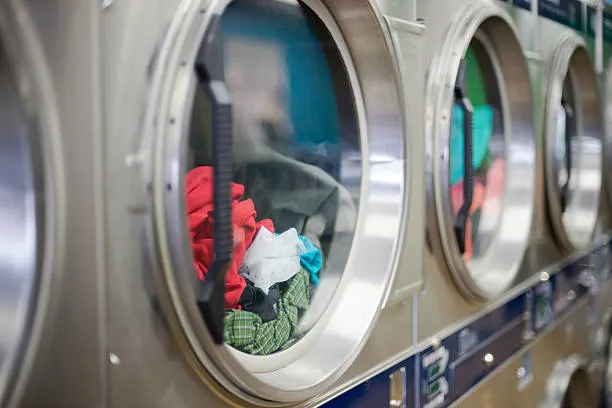
- Industrial Washing Machines: Front-loading commercial washers with a capacity of 10 to 25 kilograms per cycle are the baseline for a professional operation. Multiple machines allow you to run simultaneous loads and maintain throughput during peak periods.
- Industrial Dryers: Tumble dryers matched to your washer capacity reduce turnaround time dramatically compared to line drying and allow you to offer same-day or next-day service as a standard offer.
- Steam Irons and Vacuum Ironing Tables: A vacuum ironing table holds garments flat under suction while steam penetrates the fabric, producing a professional finish that no household iron can replicate. This is the piece of equipment that separates the quality of your finished product from informal competitors.
- Dry Cleaning Machine: If you intend to handle suits, traditional fabrics, and delicate garments, a dry cleaning unit that uses solvent is essential. Not all fabrics can go through a wet wash cycle without damage, and offering dry cleaning significantly expands your potential client base.
- Tagging System: A tagging gun with numbered waterproof tags is non-negotiable from day one. Every garment that enters your premises must carry a tag that ties it to the correct customer record. Mixing up clothes destroys client trust faster than almost any other operational failure.
- Cleaning Chemicals: Bulk detergents, fabric softeners, stain pre-treatment solutions, starch, and solvent chemicals for dry cleaning should be sourced from reliable suppliers and stored correctly. Using the wrong chemical on the wrong fabric is the most common cause of garment damage claims.
Commercial Laundry Business in Ghana
The commercial side of the laundry industry in Ghana extends well beyond individual household clients and offers some of the most consistent and predictable revenue available in the sector.
Hotel and hospitality laundry is one of the highest-volume commercial segments. Hotels need linens, towels, staff uniforms, and guest garments laundered on a daily basis. A single mid-size hotel can generate more daily laundry volume than 50 residential clients combined. Contract laundry services for hotels are negotiated on a per-kilogram or per-item rate and billed monthly.
Corporate uniform laundering covers companies with large field teams, security firms, healthcare providers, and manufacturing companies whose staff wear branded uniforms daily. These contracts are reliable, recurring, and relatively easy to price once volume is confirmed.
Student hostel services are a growing segment in university towns like Accra, Kumasi, Cape Coast, and Winneba. Students with limited time and shared laundry infrastructure are willing to pay for a convenient, affordable collection and delivery service. Subscription packages priced weekly or per semester are the most popular model in this segment.
Event and bridal laundry covers the cleaning and pressing of wedding attire, traditional wear, and event garments. This segment commands premium pricing because of the value and emotional significance of the items involved, and it generates word-of-mouth referrals when handled well.
Pickup and delivery services are now a mainstream expectation in urban markets. A branded motorbike or small van that offers scheduled collection and drop-off dramatically expands your service radius beyond the clients who can walk to your location, and it is one of the differentiators for a laundry targeting busy professionals.
How Profitable Is a Laundry Business in Ghana
Laundry businesses in Ghana can generate good margins when equipment is properly maintained, pricing reflects the true cost of service, and the client base includes a healthy mix of residential and commercial accounts.
A mid-size laundry with two industrial washers, two dryers, and a pressing section can process 200 to 400 kilograms of laundry per day operating at reasonable capacity. At retail pricing of GHS 15 to GHS 35 per kilogram depending on service type, gross daily revenue ranges from GHS 3,000 to GHS 14,000. Monthly gross revenue at consistent utilization can reach GHS 60,000 to GHS 250,000 for a well-located, well-marketed operation.
After labor (around 25 to 35% of revenue), utilities including water, electricity, and generator fuel (15 to 20%), chemical and consumable costs (8 to 12%), rent (8 to 15%), and equipment depreciation, net profit margins for a well-managed laundry range from 20 to 30%.
The most common profitability risks are underpricing to win clients, untracked chemical consumption, high garment damage claims from poorly trained pressers, and equipment downtime from deferred maintenance during peak periods.
Staffing and Operations
The daily standard of your service depends entirely on the people doing the pressing, the washing, and the customer intake. One poorly trained presser who damages a client’s kente fabric or an expensive imported suit can undo weeks of marketing effort.
- Experienced Pressers: Staff who understand how to handle delicate fabrics including silk, lace, kente, and galam prints are among the most valuable employees in a laundry business. Pressing technique and heat calibration for different fabric types require real skill, and it is worth paying appropriately for it.
- Customer Intake Staff: The person at the receiving counter sets the tone for every client relationship. Accurate tagging, clear explanation of pricing and turnaround times, and professional handling of complaints all begin at intake.
- Pickup and Delivery Riders: A branded motorbike or van assigned to a punctual, customer-facing rider extends your service footprint and reduces the friction of clients having to visit your premises. Route scheduling and mobile payment integration make this operation easier to manage as volume grows.
- Pricing Structure: Publish a clear price list covering wash and fold, wash and press, dry cleaning, ironing only, and pickup and delivery fees. Transparent pricing reduces disputes and makes it easier for clients to refer others confidently.
Marketing and Client Acquisition
A laundry business in Ghana grows fastest when it has a visible physical presence supported by a consistent digital strategy.
Before-and-after photos of stain removal, fabric restoration, and professional packaging on Instagram and Facebook are among the most effective content formats for attracting new clients. Video content showing your pressing process and your clean, organized facility builds confidence with potential clients who have had negative experiences with informal laundry services.
Partnerships with residential estate managers, hotel procurement teams, student housing administrators, and corporate facilities managers are worth investing in directly. These relationships generate high-volume recurring accounts that a social media post alone cannot reach. A simple referral incentive for existing clients who bring in new ones is also one of the lowest-cost growth tools available.
List Your Laundry Business on QuePosts
Clients looking for a reliable laundry service increasingly search online before making a decision, and a laundry business without a professional digital listing loses those clients to competitors before any conversation begins. QuePosts is a digital business directory and discovery portal built specifically for Ghanaian brands and entrepreneurs. It gives your laundry business a professional online listing where hotels, corporate clients, residential estate managers, and individual customers can find your contact details, understand your service offerings, and reach out directly.
QuePosts also integrates job posting features, so when your business grows and you need to hire additional pressers, a delivery rider, a customer service officer, or a machine operator, you can advertise those vacancies on the same platform where your business is already listed, reaching local job seekers within your operational area.
Starting a laundry business in Ghana does not demand extraordinary capital or a rare skill set. What it demands is reliable equipment, consistent service standards, care for people’s garments, and the discipline to build systems that hold up under daily operational pressure. The entrepreneurs who combine those four things and invest in their visibility will find that Ghana’s growing urban population generates more demand for quality laundry services than most people in the industry are currently equipped to serve.