

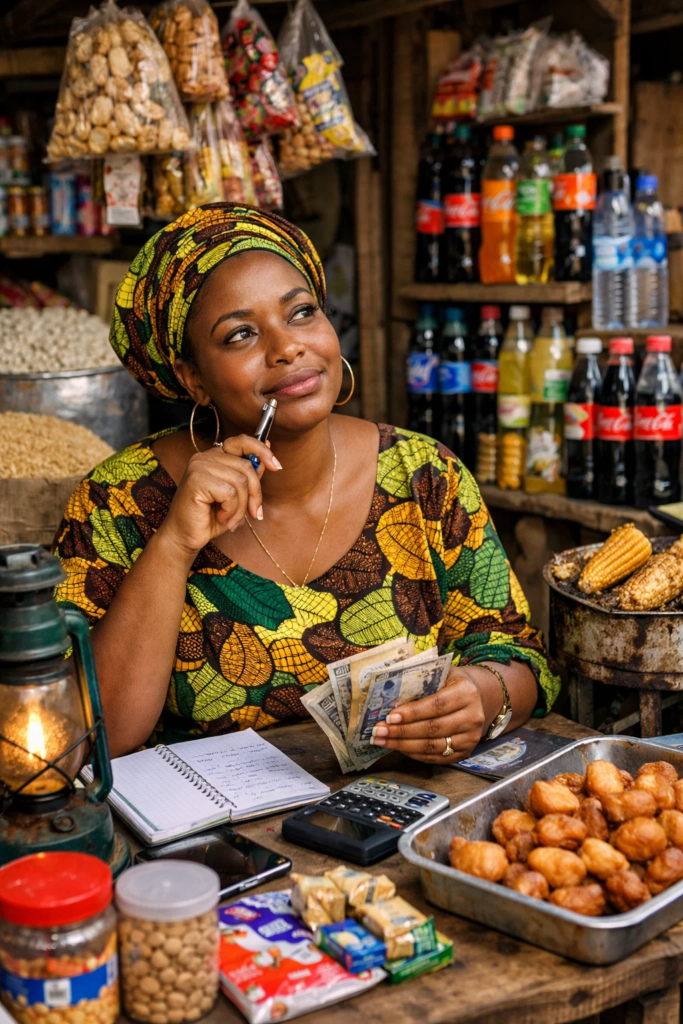

If you’re searching for small scale businesses in Nigeria that can survive tough economic conditions, you’re making a smart move. In a country where inflation, unemployment, and market uncertainty are common, small businesses have become a reliable way for many people to earn income and achieve financial independence. The good news is that there are several business ideas that continue to thrive regardless of economic challenges.
Before diving into the list, it’s important to understand what is small scale business in Nigeria. A small scale business is a venture that requires relatively low capital, employs a small number of people, and operates on a manageable scale. These businesses are easy to start, flexible, and can grow into larger enterprises over time. They play a key role in job creation and economic development.
The importance of small scale business in Nigeria cannot be overstated. They help reduce unemployment, encourage entrepreneurship, and support local communities. In this guide, you’ll discover 20 profitable small scale business in Nigeria that can thrive in any economy, along with insights to help you choose the right one.
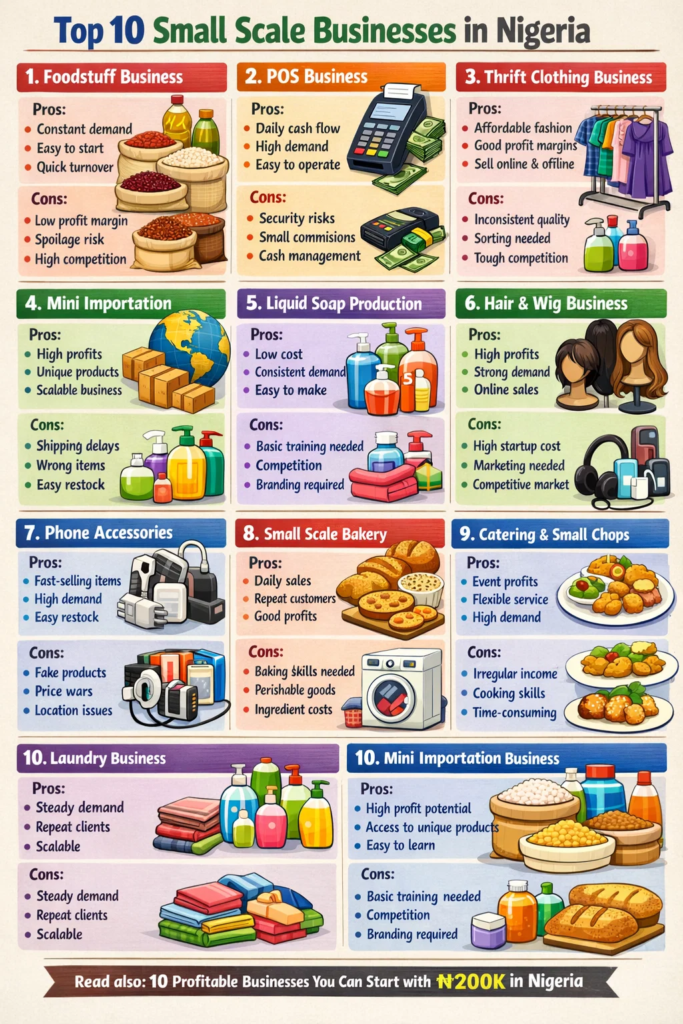
1. Foodstuff Business
Food is a basic necessity, making this one of the most reliable businesses you can start. Selling items like rice, beans, garri, yam, and cooking oil guarantees steady demand because people buy them daily. It is a classic example of a fast moving small scale business in Nigeria, especially in residential areas.
Pros:
- Constant demand and daily sales
- Easy to start and manage
- Quick turnover of goods
Cons:
- Low profit margin on some items
- Risk of spoilage if not stored properly
- Competition from nearby sellers
2. POS (Point of Sale) Business
POS services provide withdrawals, deposits, transfers, and bill payments. This business thrives in both urban and rural areas, especially where access to banks is limited. It is one of the most profitable small scale business in Nigeria because it generates income daily.
Pros:
- Daily cash flow
- High demand everywhere
- Easy to operate
Cons:
- Security risks (theft/fraud)
- Small commission per transaction
- Requires cash management discipline
3. Thrift Clothing (Okrika) Business
Affordable fashion is always in demand, and thrift clothing allows you to serve a wide customer base. You can buy bales or selected pieces and sell individually at a profit. It remains one of the best small scale business in Nigeria due to its popularity.
Pros:
- High demand for affordable clothes
- Good profit margins
- Flexible selling options (online/offline)
Cons:
- Inconsistent quality of goods
- Requires sorting and cleaning
- Competitive market
4. Mini Importation Business
This involves buying products at low cost from international suppliers and reselling them locally. Popular items include gadgets, fashion items, and beauty products. With proper research, this can become a highly lucrative small scale business in Nigeria.
Pros:
- High profit potential
- Access to unique products
- Scalable with time
Cons:
- Shipping delays
- Risk of wrong product selection
- Currency fluctuations
5. Liquid Soap Production
Cleaning products are always needed in homes and offices, making this a strong small scale production business in Nigeria. You can produce liquid soap, detergents, and disinfectants at low cost and sell in bulk or retail.
Pros:
- Low production cost
- Consistent demand
- Easy to learn
Cons:
- Requires basic training
- Competition
- Needs proper branding
6. Hair and Wig Business
The beauty industry is booming, and wigs and hair extensions are always in demand. With good marketing, especially on social media, this business can generate high profits.
Pros:
- High profit margins
- Strong demand
- Great for online sales
Cons:
- Expensive startup cost
- Requires marketing skills
- Competitive
7. Phone Accessories Business
Selling chargers, earphones, power banks, and phone cases is very profitable. These are essential items that people replace frequently, making it a fast moving small scale business in Nigeria.
Pros:
- Fast-selling products
- High demand
- Easy to restock
Cons:
- Risk of fake products
- Price competition
- Location-dependent
Read also: 10 Profitable Businesses You Can Start with ₦200K in Nigeria
8. Small Scale Bakery Business
A small scale bakery business in Nigeria is highly profitable because bread and pastries are consumed daily. With consistent quality and good hygiene, you can build a loyal customer base.
Pros:
- High daily demand
- Repeat customers
- Good profit margins
Cons:
- Requires baking skills
- Perishable products
- High cost of ingredients
9. Catering and Small Chops Business
Food services for events like weddings and parties are always in demand. Small chops such as puff-puff, samosas, and spring rolls are popular choices.
Pros:
- High profit during events
- Flexible operations
- Growing demand
Cons:
- Irregular income (event-based)
- Requires cooking skills
- Time-consuming
10. Laundry and Dry Cleaning Business
Busy lifestyles have increased demand for laundry services, especially in cities. This business is simple to run and attracts repeat customers.
Pros:
- Steady demand
- Repeat customers
- Scalable
Cons:
- Equipment cost
- Power supply issues
- Maintenance required
11. Poultry Farming
Poultry farming involves raising chickens for eggs or meat. It is a key part of agriculture and a reliable source of income.
Pros:
- High demand for poultry products
- Multiple income streams
- Scalable
Cons:
- Risk of disease
- Requires constant care
- Initial setup cost
12. Printing and Photocopy Business
This business thrives near schools, offices, and business centers. It provides essential services like printing, scanning, and photocopying.
Pros:
- Constant demand
- Easy to manage
- Reliable income
Cons:
- Equipment maintenance
- Power challenges
- Location-dependent
13. Cosmetics and Skincare Business
Beauty products are always in demand, especially among young people. This is one of the most profitable small scale business in Nigeria with repeat customers.
Pros:
- High demand
- Repeat buyers
- Good profit margins
Cons:
- Risk of fake products
- Requires product knowledge
- Competitive
14. Car Wash Business
Car wash services provide cleaning for vehicles and are in high demand in busy areas. It is a simple business with steady income.
Pros:
- Daily income
- Easy to operate
- High demand
Cons:
- Weather-dependent
- Requires water supply
- Physical work
15. Digital Marketing Services
Businesses need online visibility to grow, making digital marketing a valuable service. You can help brands run ads, manage social media, and create content.
Pros:
- Low startup cost
- High demand
- Scalable
Cons:
- Requires digital skills
- Competitive
- Results-driven
16. Real Estate Agency
This involves connecting property buyers with sellers and earning commissions. It can be very profitable with strong networking.
Pros:
- High commission earnings
- Low inventory cost
- Scalable
Cons:
- Slow income at the start
- Requires trust
- Networking needed
17. Logistics and Delivery Business
With the growth of online shopping, delivery services are in high demand. You can deliver goods for businesses and individuals.
Pros:
- Growing industry
- Daily income
- Scalable
Cons:
- Fuel costs
- Maintenance
- Traffic challenges
18. Farming (Vegetables and Crops)
Crop farming is essential for food supply and remains one of the most sustainable businesses. You can grow vegetables, maize, or other crops for sale.
Pros:
- High demand for food
- Sustainable business
- Scalable
Cons:
- Weather dependence
- Requires land
- Time-consuming
19. Water Production (Pure Water Business)
Clean water is a daily necessity, making this a highly reliable business. Sachet water production is common and profitable in Nigeria.
Pros:
- Constant demand
- High sales volume
- Essential product
Cons:
- Requires equipment
- Regulatory requirements
- Competition
20. Recharge Card and Data Business
Selling airtime and data is a simple and accessible business. It can be done alongside other businesses and requires low capital.
Pros:
- Easy to start
- Low capital required
- Daily income
Cons:
- Low profit margin
- Competitive
- Depends on network providers
Challenges of Small Scale Business in Nigeria
Despite the growing popularity and importance of entrepreneurship, there are several challenges of small scale business in Nigeria that can affect growth, profitability, and long-term survival. Understanding these challenges is the first step toward overcoming them and building a successful business.
- Limited Access to Funding
One of the biggest problems facing small scale business in Nigeria is difficulty accessing capital. Many small business owners struggle to secure loans from banks due to high interest rates and strict collateral requirements. Without adequate funding, it becomes difficult to expand operations, purchase equipment, or even maintain daily business activities. - Poor Infrastructure
Inconsistent electricity supply, bad road networks, and limited internet access significantly affect business operations. Many small businesses rely on generators, which increases operating costs and reduces profit margins. Poor infrastructure also affects the movement of goods and services, making it harder to serve customers efficiently. - High Cost of Materials
The rising cost of raw materials and goods is another major challenge. Inflation and fluctuating exchange rates make it expensive to restock products or produce goods. This forces many business owners to either increase prices which may drive customers away or reduce profit margins. - Multiple Taxes and Levies
Small businesses often face multiple taxes from different levels of government, including local, state, and federal authorities. These overlapping charges can be overwhelming and reduce profitability. For many entrepreneurs, managing these taxes is one of the most frustrating problems of small scale business in Nigeria. - Economic Instability
Nigeria’s economic environment can be unpredictable, with inflation, currency fluctuations, and changing government policies. These factors make it difficult for small businesses to plan long-term or maintain stable pricing. Economic instability also affects consumer spending, which directly impacts sales. - Low Customer Purchasing Power
Many Nigerians have limited disposable income, which affects how much they can spend. This forces small businesses to compete heavily on price, sometimes at the expense of profit. It also means business owners must constantly look for ways to offer value while remaining affordable. - Lack of Business Skills and Training
Not all entrepreneurs have formal training in business management, marketing, or finance. This lack of knowledge can lead to poor decision-making, mismanagement of funds, and slow growth. It is a common but often overlooked challenge. - High Competition
The rise in small businesses means increased competition in almost every industry. Standing out in a crowded market requires strong branding, marketing, and customer service, which many small businesses struggle to maintain.
These challenges clearly show the problems facing small scale business in Nigeria, but they are not impossible to overcome. With proper planning, smart strategies, and consistency, many entrepreneurs successfully navigate these obstacles and build profitable businesses.
Smart Tips to Succeed in Small Scale Business
Starting a business is one thing, but making it successful requires strategy, discipline, and consistency. If you want your small scale business in Nigeria to thrive, these practical tips will guide you:
- Start with a Business You Understand
Choose a business that matches your skills, experience, or interest. When you understand how the business works, it becomes easier to manage, solve problems, and make better decisions. This reduces costly mistakes and increases your chances of success. - Focus on High-Demand Products or Services
Always choose a business that solves everyday problems or meets essential needs. Businesses like food, clothing, and basic services tend to perform well because demand is constant. This ensures steady sales and faster return on investment. - Manage Your Finances Carefully
Keep proper records of your income, expenses, and profits. Avoid mixing personal and business money, and always plan your spending. Good financial management helps you track growth and avoid unnecessary losses. - Use Social Media for Marketing
Platforms like WhatsApp, Instagram, and Facebook are powerful tools for promoting your business. Post regularly, share quality pictures, and engage with your audience. Consistent online presence increases visibility and attracts more customers. - Be Consistent and Patient
Business success does not happen overnight. Stay committed, keep improving your products or services, and remain patient. Consistency builds trust, and over time, it leads to growth and profitability. - Provide Excellent Customer Service
Treat your customers well and respond to their needs quickly. A satisfied customer is more likely to return and refer others to your business. Good customer service is one of the easiest ways to stand out from competitors. - Reinvest in Your Business
Instead of spending all your profits, reinvest a portion back into the business. This helps you expand, improve quality, and increase your earning potential over time.
By understanding the challenges of small scale business in Nigeria and applying these smart tips, you can position your business for long-term success and growth.
Frequently Asked Questions (FAQ)
What is small scale business in Nigeria?
A small scale business in Nigeria is a type of business that operates with relatively low capital, a small workforce, and limited production or service capacity. Despite its size, it has the potential to grow into a medium or large enterprise with proper management and support. These businesses are common in Nigeria because they are easier to start and maintain compared to large corporations.
What small scale business can I start in Nigeria?
You can start several small scale businesses in Nigeria depending on your budget and interest. Popular options include POS services, foodstuff sales, thrift clothing (okrika), liquid soap production, hair and wig business, and phone accessories sales. The best choice depends on your location, demand in your area, and your personal skills.
Which is the most profitable small scale business in Nigeria?
Some of the most profitable small scale businesses in Nigeria include food businesses, POS operations, fashion and beauty businesses, and mini importation. These businesses perform well because they meet daily needs and have consistent customer demand. Profitability also depends on good location, marketing, and customer service.
What are the problems of small scale business in Nigeria?
The major problems include lack of access to funding, poor infrastructure, high cost of materials, multiple taxation, and economic instability. Other challenges include low customer purchasing power, high competition, and limited business knowledge. These issues can affect growth if not properly managed.
Why are small scale businesses important in Nigeria?
Small scale businesses are important because they create employment opportunities, reduce poverty, and support economic development. They also encourage entrepreneurship and help circulate money within local communities. Without small businesses, many people would struggle to find jobs or sources of income.
How much capital do I need to start a small scale business in Nigeria?
The amount of capital needed depends on the type of business. Some businesses like recharge card sales or POS can start with as low as ₦20,000–₦100,000, while others like mini supermarkets or poultry farming may require ₦300,000 and above. The key is starting small and scaling gradually.
Can small scale businesses grow into large businesses?
Yes, many successful large companies today started as small scale businesses. With consistency, good management, and reinvestment of profits, a small business can grow into a medium or even large enterprise over time.
What are the roles of small scale businesses in Nigeria?
Small scale businesses help in job creation, poverty reduction, and improving local economic development. They also promote innovation and provide essential goods and services to communities at affordable prices.
What are the characteristics of small scale businesses?
They typically require low capital, employ few workers, operate locally, and are often owned and managed by individuals or families. They are flexible and can easily adapt to market changes.
How can I make my small scale business successful in Nigeria?
Success depends on choosing the right business, understanding your market, managing finances properly, and using social media for marketing. Consistency, good customer service, and reinvesting profits are also key factors for growth.
Final Thoughts on Small Scale Businesses in Nigeria
Starting a small scale business in Nigeria is one of the most practical ways to achieve financial independence. These businesses require low capital, are easy to manage, and can grow into larger ventures over time. With the right mindset and strategy, you can build a successful business even in a challenging economy.
The key is to choose wisely, stay consistent, and keep improving your business. Whether you’re starting small or planning to expand, these 20 ideas provide a solid foundation to help you succeed.