
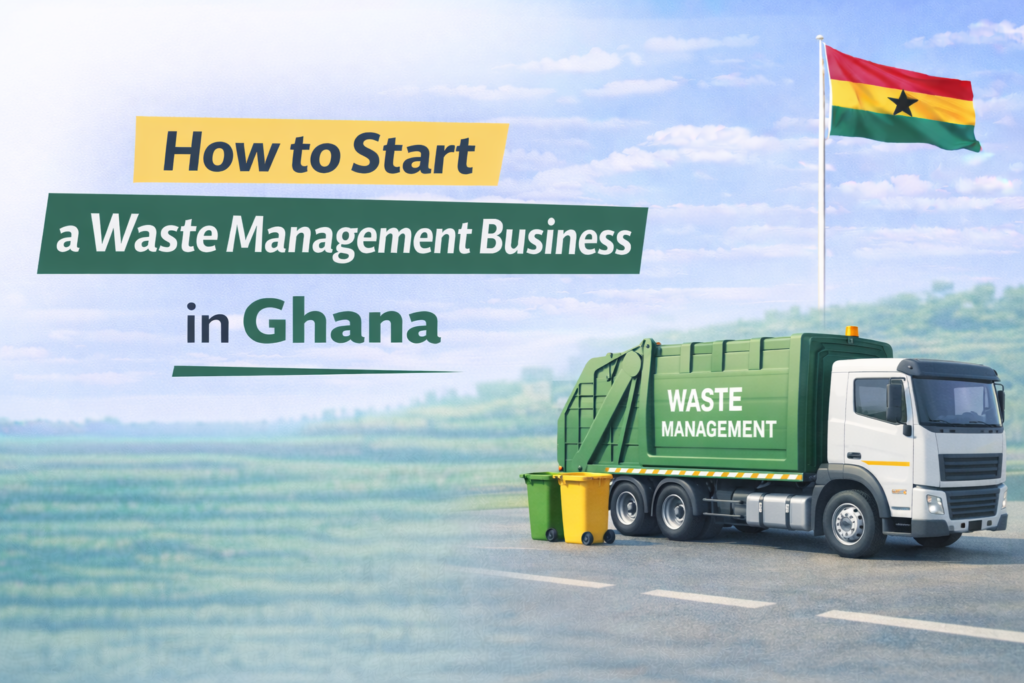

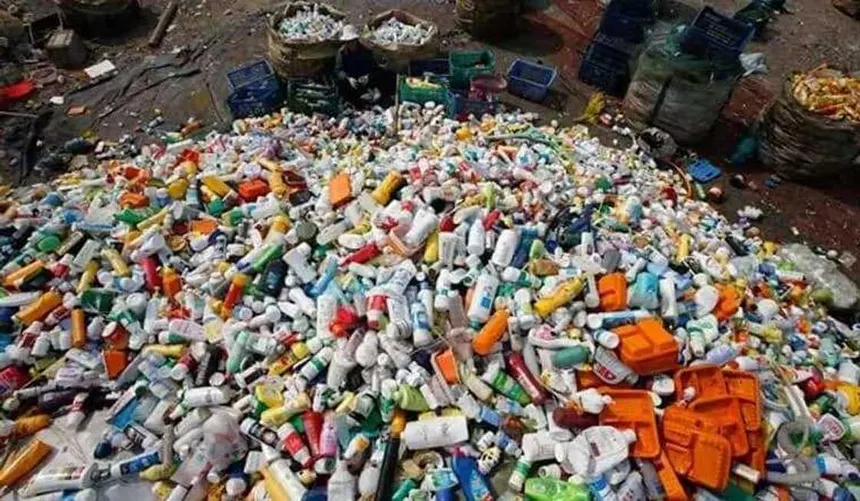
The Waste Management Business in Ghana occupies a space where national urgency and commercial opportunity is at exactly the same address. Ghana generates over 12,000 metric tons of solid waste every single day, and a significant portion of that waste ends up in choked drains, unauthorized dumpsites, and open lots because the collection infrastructure has never kept pace with the rate of urbanization.
Accra floods every rainy season not because the clouds are particularly aggressive but because the drainage channels are full of plastic waste that was never collected. In this environment, a properly licensed, well-equipped waste management company is not competing in a saturated market. It is filling a gap that local assemblies, stretched beyond their capacity, are actively looking for private operators to help close. The business is hard work, it is unglamorous, and it requires operational discipline. But it is also one of the few sectors in Ghana where the government is motivated to give you a concession zone and a customer base on the day you qualify.
Legal and Regulatory Setup
Waste management in Ghana is a regulated utility service, and the licensing requirements reflect that. Operating without the correct permits exposes you to prosecution, vehicle impoundment, and exclusion from the concession zones that make the business commercially viable.
- Registrar General’s Department: Incorporate your business as a limited liability company to receive your Certificate of Incorporation. A company structure is appropriate given that waste management involves government contracts, vehicle financing, and potential liability claims from operational incidents.
- Tax Identification Number: Register with the Ghana Revenue Authority for your TIN immediately after incorporation. Assembly contracts and corporate clients will ask for this before signing any service agreement.
- EPA Environmental Permit: The Environmental Protection Agency conducts an environmental assessment of your operational site before issuing your permit. The assessment covers waste handling procedures, vehicle emissions, leachate management, and site runoff controls.
- District Assembly Accreditation: The Waste Management Department of your Metropolitan, Municipal, or District Assembly licenses private waste collectors operating within their jurisdiction. This accreditation defines the specific geographic zone, service standards, and reporting obligations tied to your operation.
- Service Level Agreement: Once accredited, you sign a formal SLA with the local assembly that defines your assigned concession area, collection frequency, disposal requirements, and the penalty structure for service failures. This agreement is the commercial foundation of your operation.
How to Register a Waste Management Business in Ghana
The registration pathway for a waste management company involves both standard business registration and sector-specific environmental and assembly licensing.
Start at the Registrar General’s Department to secure your Certificate of Incorporation and then proceed to the Ghana Revenue Authority for your TIN. With these in hand, identify the specific MMDA (Metropolitan, Municipal and District Assemblies) whose jurisdiction covers your intended operational area and submit a formal application to their Waste Management Department for accreditation. Simultaneously, prepare your operational site for an EPA inspection. The EPA will assess your yard, your proposed waste handling procedures, and your vehicle maintenance arrangements before issuing your environmental permit. Once both the assembly accreditation and the EPA permit are confirmed, negotiate and sign your Service Level Agreement with the assembly to formalize your concession zone and service obligations.
Some assemblies also require proof of financial capacity, such as a bank statement or equipment purchase documentation, before granting accreditation. Preparing these in advance prevents last-minute delays at the final stage of the process.
Equipment and Infrastructure
Your vehicles and containers are your primary operating assets. The right equipment for the right terrain and service area determines if your collection routes are financially viable or fuel-burning liabilities.
Equipment for a standard waste collection operation:
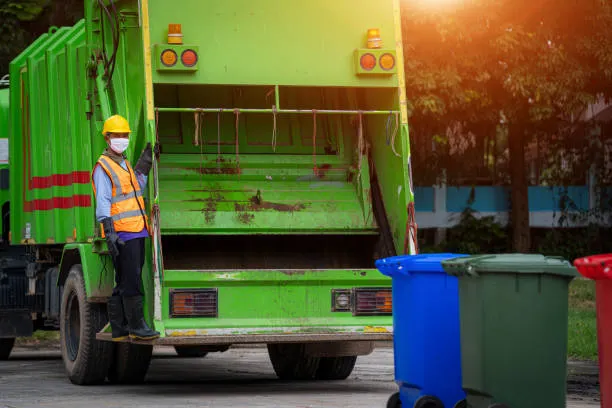
- Compactor Trucks: The most efficient vehicle for medium to large-scale residential and commercial waste collection. Compactors compress waste to maximize load volume per trip, reducing the number of disposal runs and saving significantly on fuel and tipping fees.
- Skip Loader Trucks: Designed for lifting and transporting large metal skip containers. Useful for industrial clients, construction sites, and communal collection points in dense urban areas.
- Tricycles (Aboboyaa): Essential for collection in congested areas, narrow lanes, and communities where large trucks cannot access. Many successful waste companies use tricycles for last-mile collection and transfer points where the waste is consolidated for truck pickup.
- Waste Containers: Stock a range of bin sizes, from 120-litre household bins to 240-litre commercial bins to large metal skips for communal and industrial use. Branded containers improve your visibility and prevent theft.
- Operational Yard: A secure yard for parking trucks overnight, washing vehicles, storing containers, and managing sorted recyclables is not optional once you are operating more than two vehicles. The yard is also the location the EPA assesses during your permit application.
- PPE (Personal Protective Equipment): Heavy-duty gloves, high-visibility vests, safety boots, and industrial nose masks are legal and ethical obligations for every field worker on your team.
Commercial Waste Management Business in Ghana
The waste management sector in Ghana operates across several distinct commercial segments, each with its own revenue model and operational requirements.
Residential waste collection is the highest-volume segment and the most common entry point for new operators. Assembly concession agreements assign you a geographic zone where you collect household fees, either monthly or quarterly, from registered subscribers. Revenue is predictable but income per household is relatively modest, making route density and operational efficiency the drivers of profitability in this segment.
Commercial and institutional waste collection covers offices, markets, shopping malls, hotels, restaurants, schools, and hospitals. Corporate contracts are negotiated directly with the client and command significantly higher fees than residential collection. A single hospital or shopping mall contract can generate monthly revenue equivalent to hundreds of household subscriptions.
Construction and demolition waste is a growing segment as Ghana’s building activity accelerates across Accra, Kumasi, and secondary cities. Construction sites generate large volumes of rubble, packaging materials, and demolition debris that developers need removed quickly. Skip loader trucks are the primary equipment for this segment.
Recycling and waste trading is an emerging revenue stream that converts collected materials into additional income. Plastics, aluminium cans, cardboard, and scrap metal all have established buyers in Ghana’s recycling market. Sorting and selling these materials at your yard adds revenue without adding collection vehicles.
Industrial waste management covers factories, food processing plants, and manufacturing facilities that generate specialized waste streams. This segment is more technically demanding but commands premium contract values and is less price-sensitive than residential or commercial collection.
How Profitable Is a Waste Management Business in Ghana
Waste management profitability is genuine but takes longer to materialize than most operators expect during the startup phase. The business model involves high upfront capital expenditure on vehicles, a gradual subscriber enrollment process, and operating costs that include fuel, tipping fees, maintenance, and labor on every working day.
A compactor truck on a dense urban residential route can service 200 to 400 households per day depending on road conditions and collection frequency. At a monthly household subscription rate of GHS 25 to GHS 60, a route of 800 enrolled households generates GHS 20,000 to GHS 48,000 in monthly gross revenue. After fuel, driver and loader wages, tipping fees, maintenance contributions, and insurance, net margins on a well-managed residential route range from 20 to 30%.
Corporate contracts generate higher revenue per client with lower enrollment effort. A single hotel or hospital contract can be worth GHS 3,000 to GHS 15,000 per month depending on waste volume and collection frequency. Building a mixed portfolio of residential subscribers and corporate accounts creates both volume and margin stability.
The variables that most damage profitability in Ghanaian waste management are high fuel consumption from inefficient routing, deferred vehicle maintenance that leads to costly breakdowns during collection windows, and low subscriber payment compliance on residential routes. Mobile Money billing improves collection rates compared to cash-based systems.
Operations and Staffing
The daily operational layer of a waste management business is where the business either runs efficiently or burns through its margins route by route.
- Driver Recruitment: Hire drivers with the correct commercial license class for your vehicle type. Compactor truck and skip loader drivers need Class D or E licenses. Verify driving records and conduct reference checks before any offer is made.
- Route Mapping: Design collection routes that minimize travel distance between pickup points and the disposal site. Every additional kilometer driven that is not directly productive is a fuel cost that reduces your net margin. Route efficiency is one of the most impactful variables in your operating cost structure.
- Disposal Site Access: Register with the managers of your nearest licensed landfill site or transfer station before you begin operations. Tipping fees are a significant recurring cost, and your route economics must account for the disposal cost per ton-load from the beginning.
- Maintenance Schedule: Hydraulic systems on compactor trucks are expensive to repair when they fail unexpectedly. Partner with a specialized mechanic who understands commercial waste vehicle systems and schedule preventive maintenance based on operating hours, not just calendar weeks.
- Mobile Money Billing: Implementing a Mobile Money payment system for household and commercial subscriber billing reduces the cash handling risk that comes with large numbers of small payments and improves collection rates across all subscriber categories.
- Recycling Separation: Sorting recyclable materials at your yard before disposal reduces the volume of waste you pay to tip and generates additional income from material buyers. Even a simple manual sorting process for plastics and metals adds a meaningful revenue line with no additional collection cost.
Customer Enrollment and Growth
Growing a waste management business in Ghana is partly an operational challenge and partly a community engagement process. New residential subscribers do not sign up automatically because a truck passes their street.
Door-to-door enrollment campaigns, community radio advertising in your operational zone, and partnerships with community leaders and neighbourhood associations are the most effective tools for building your subscriber base quickly. Businesses respond to direct pitches that quantify the cost and liability of unmanaged waste on their premises. Hospitals, restaurants, and food processing facilities in particular have regulatory obligations around waste disposal that your licensed service helps them meet.
Corporate contract pitches should lead with your EPA permit, your assembly accreditation, and your disposal documentation. Institutional buyers are not just buying collection. They are buying legal compliance and accountability that an unlicensed operator cannot provide.
Grow Your Waste Management Business with QuePosts
A licensed, well-equipped waste management company that cannot be found by the businesses and property developers looking for exactly your service is leaving contract value on the table. QuePosts is a digital business directory and discovery portal built specifically for Ghanaian brands and entrepreneurs. It gives your waste management business a professional online listing where corporate procurement teams, hospital administrators, school operators, real estate developers, and assembly procurement officers can find your contact details, verify your service offerings, and reach out directly.
Since licensing and credibility drive most purchase decisions in this sector, you cannot afford to skip a verified, professional digital presence on a platform built for the Ghanaian business ecosystem. QuePosts also integrates job posting features, which addresses one of the most persistent staffing challenges in waste management. When you need to recruit drivers, loaders, route supervisors, or billing officers, you can post those vacancies directly on the same platform where your business is already active. You get to reach people looking for work in your local area and cut out the extra spending normally required for traditional job adverts.
Building a sustainable waste management business in Ghana is a significant commitment that goes far beyond simply owning a truck. Success in this industry depends on your ability to handle local assembly regulations and maintain a strict maintenance schedule for your fleet to avoid service interruptions.