


Creating a website for your business in Ghana is no longer a luxury that only large companies can justify. It is the difference between a business that exists only where its owner is standing and one that is findable, credible, and open for business at any hour of the day. The reality is that most Ghanaians who hear about a product or service now search for it online before they call, visit, or buy. If that search returns nothing, or returns a Facebook page that was last updated in 2021, the business loses the customer before a single conversation has happened.
A website does not replace the personal relationships that Ghanaian commerce runs on. It makes those relationships possible with people who have never heard of you.
What a Business Website Actually Does for You
Before choosing a platform or hiring a developer, it is worth being clear about what a website is actually supposed to do for your business.
A website is not a brochure that lives online. It is a sales and credibility tool that works continuously without requiring your presence. For a cleaning company, it converts a search for “cleaning services in Accra” into an enquiry. For a restaurant, it shows the menu, the location, and the opening hours to someone sitting in traffic deciding where to eat. For a construction firm, it displays past projects and a contact form to a developer who found the company through a Google search. The function determines the build. A five-page informational website and an e-commerce store with 200 products are both websites, but they are completely different projects with different costs, timelines, and skill requirements.
Domain Name and Hosting
Every website needs two foundational elements before anything else: a domain name and a hosting plan.
Domain name is your website’s address on the internet, the part that comes after www. A .com domain is the most universally recognised and trusted. A .com.gh domain signals a Ghanaian business specifically and can improve local search relevance. Domain names are registered through domain registrars including GoDaddy, Namecheap, and several Ghanaian providers. The cost is modest and paid annually.
Choose a domain name that matches your business name as closely as possible, is easy to spell when said aloud, and does not include unnecessary hyphens or numbers. If your exact business name is taken as a .com, a .com.gh version is often available and is a credible alternative for a Ghana-focused business.
Web hosting is the service that stores your website files and makes them accessible on the internet. Hosting plans range from shared hosting, which is the most affordable option and sufficient for most small business websites, to VPS and dedicated server hosting for high-traffic or e-commerce sites.
For most Ghanaian small businesses starting out, a shared hosting plan from a reputable provider costs between $15 and $25 per month and is sufficient to run a professional website without performance problems.
Platform Options: Build It Yourself or Hire a Developer
The platform you use to build your website depends on your technical confidence, your budget, and how much ongoing management your site will need.
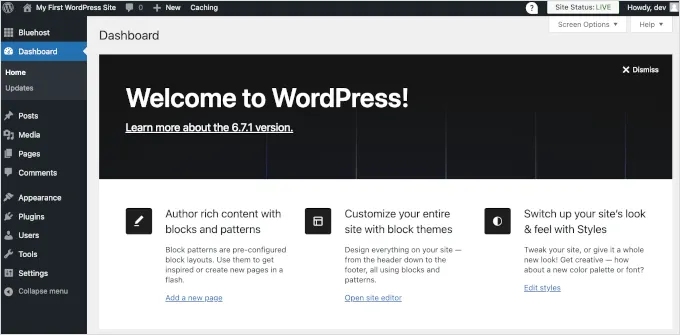
WordPress is the most widely used website platform in the world and the most practical choice for most Ghanaian business websites. It powers everything from simple five-page company sites to complex e-commerce stores. WordPress is free to install, has thousands of free and paid themes that determine how your site looks, and has an enormous library of plugins that add functionality including contact forms, booking systems, payment gateways, and SEO tools. The learning curve is manageable for a non-technical user who is willing to spend time on it, and the ecosystem of WordPress developers in Ghana means that hiring local help when needed is straightforward.
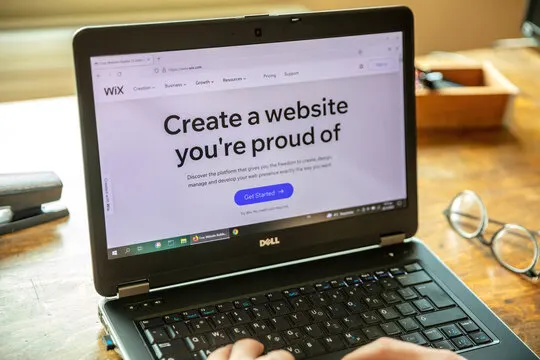
Wix and Squarespace are fully hosted, drag-and-drop builders that allow anyone to create a functional, visually appealing website without technical knowledge. They are faster to set up than WordPress and include hosting in their subscription price. The trade-off is less flexibility and higher ongoing monthly costs than a self-hosted WordPress site. For a business that needs a basic, professional-looking online presence quickly and has no plans to build anything complex, these platforms are a legitimate option.
Shopify is the platform of choice for businesses whose primary purpose is selling products online. It handles inventory management, payment processing, shipping integrations, and customer accounts with less manual setup than a WordPress e-commerce build. If your website’s main function is an online store, Shopify’s monthly subscription cost is justified by the functionality it delivers out of the box.
Custom-built websites developed by a web developer from scratch are appropriate for businesses with unique functional requirements that standard platforms cannot meet. For most Ghanaian small businesses, a custom build is more expensive and slower to launch than a well-configured WordPress site and is not the right starting point.
Essential Pages Every Business Website Needs
Regardless of platform or industry, a business website in Ghana that is meant to generate enquiries and build credibility needs a core set of pages.
Home page: The first thing visitors see. It should communicate within five seconds what your business does, who it serves, and what action the visitor should take next. A clear headline, a brief description, and a visible call-to-action button are the non-negotiable elements.
About page: Ghanaian customers buy from people they trust, and trust is built faster when there is a human face and a real story behind a business. An about page that explains who you are, how the business started, and what it stands for does more credibility work than any technical feature on the site.
Services or products page: A clear, organized description of what you offer, with enough detail for a potential buyer to understand the scope and start forming a price expectation. Vague service descriptions push visitors to ask questions before they are ready to enquire, which adds friction to the conversion process.
Contact page: A contact form, your phone number, your email address, your physical location if relevant, and your social media links. Make it as easy as possible for someone who is ready to do business to reach you. A contact page that forces visitors to hunt for a phone number loses the customer at the moment they are most likely to act.
Gallery or portfolio page: For visual businesses including construction, interior design, catering, photography, and fashion, a gallery of real work is your most powerful sales page. Quality photos of completed projects convert browsers into enquirers faster than any amount of written copy.
Ghana Payment Integration
If your website takes orders or bookings, you need a payment gateway that Ghanaian customers can actually use.
Paystack and Flutterwave are the two most widely used payment gateways for Ghanaian e-commerce. Both support Mobile Money payments through MTN MoMo, Telecel Cash, and AT Money, as well as Visa and Mastercard transactions. Both integrate cleanly with WordPress WooCommerce and Shopify.
Mobile Money payment integration is non-negotiable for a Ghanaian e-commerce business. A significant portion of your potential customers do not have bank cards and will not complete a purchase if the only payment option is a credit or debit card. Building your payment system around Ghana’s actual payment habits converts more visitors into paying customers.
SEO and Local Visibility
A website that nobody finds is not a business asset. Getting found on Google by Ghanaian customers searching for what you offer is the most commercially valuable function a business website can perform.
Search engine optimisation (SEO) is the practice of structuring your website and its content so that Google understands what your business does and presents it to people searching for related terms. For a Ghanaian business, local SEO is the highest-return starting point. This means using location-specific terms in your page titles and content (for example, “cleaning services in Accra” instead of just “cleaning services”), registering your business on Google Business Profile so it appears in Google Maps results, and collecting customer reviews that improve your local search ranking over time.
Content pages that answer specific questions Ghanaian customers search for, such as “how to start a restaurant in Accra” or “best accounting software for small businesses in Ghana,” bring targeted traffic to your site from people who are already interested in what you offer. Every page of useful content is a permanent asset that generates traffic without ongoing advertising spend.
Website Costs in Ghana
Understanding the cost range for a business website in Ghana prevents two common mistakes: overpaying for features you do not need and underpaying for work that produces a site that does not function as intended.
DIY website (Wix or Squarespace)
Domain registration plus a monthly or annual platform subscription. This is the lowest-cost route and produces a functional result for businesses with straightforward needs and an owner willing to invest the time to build it.
WordPress site built by a local developer
The cost range in Ghana for a professionally built WordPress business website varies based on the developer’s experience, the number of pages, and the complexity of the functionality needed. A simple five to eight page company website with a contact form and a gallery costs less than a full e-commerce store with payment integration, inventory management, and a customer account system. Prices in Ghana range from a few hundred to several thousand Ghana cedis depending on scope. Get at least three quotes, ask to see the developer’s previous work, and confirm that they will hand over full ownership of the site files and credentials when the project is complete.
Ongoing maintenance
Websites need regular updates to their platform, plugins, and security patches. Budgeting for either a monthly maintenance retainer with a developer or investing time to manage this yourself is part of the true cost of website ownership.
Why QuePosts Complements Your Website
A website and a QuePosts listing serve different but complementary functions in your digital presence strategy. Your website is your owned platform where you control every element of the experience, the design, the content, the calls to action, and the brand story. QuePosts is a digital business directory and discovery portal built specifically for Ghanaian brands and entrepreneurs, and it puts your business in front of people who are actively browsing for Ghanaian services and products through a platform they already trust.
The advantage of combining both is that customers find you through multiple channels. Someone searching on Google finds your website. Someone browsing QuePosts for a specific service category in their area finds your listing. Both lead to the same business. QuePosts also integrates job posting features, so your staffing needs are handled through the same ecosystem where your business is already visible to a local audience.
For a Ghanaian business building its digital presence from the ground up, a professional website paired with a QuePosts listing covers both the owned and the directory-driven discovery channels that together produce the widest possible reach within the Ghanaian market.
Building a website for your business in Ghana is a project with a beginning and no real end. The site you launch is not finished. It is the starting point of an ongoing process of adding content, updating information, responding to how customers use it, and improving the pages that are not converting as well as they should. The businesses that treat their website as a living commercial asset, and not a box to tick, consistently outperform those that build once and walk away.