

Cast your mind back to what shopping looked like in Nigeria not so long ago. You woke up on a Saturday morning, negotiated Lagos traffic or navigated a crowded Onitsha market, spent three hours looking for what you needed, haggled with sellers who may or may not have had what you came for, and returned home exhausted, occasionally victorious, and always wondering whether you paid a fair price.
Then the internet happened. Then smartphones happened. Then online shopping happened.
And everything changed.
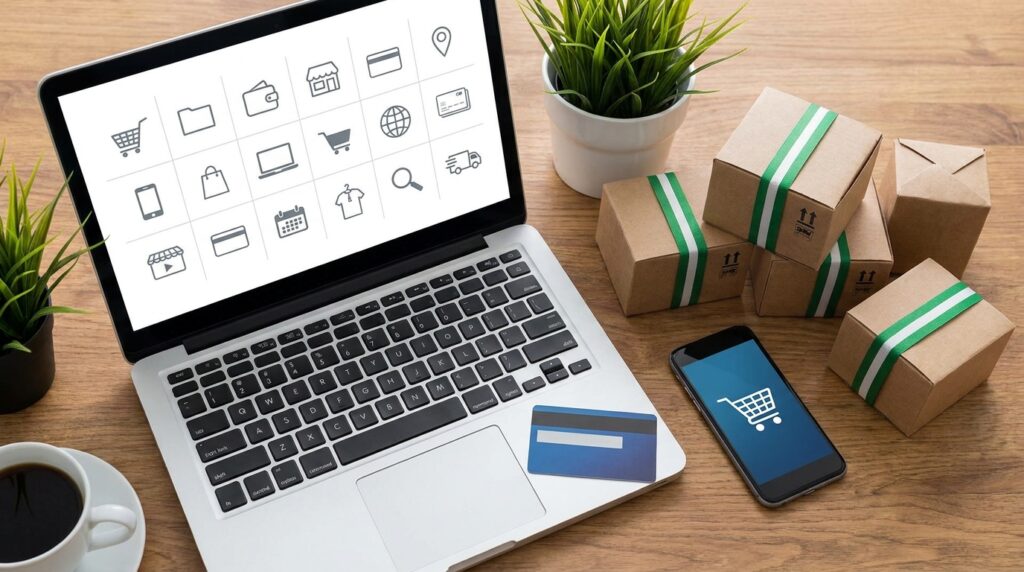
Today, millions of Nigerians shop online every single week. They buy clothes, electronics, groceries, baby products, beauty items, furniture, books, and everything in between, from the comfort of their homes, their offices, and their bed, paying with Paystack or Flutterwave, and receiving deliveries from logistics companies that have built their entire business models around this new reality.
But here is where it gets interesting. The Nigerian online shopping landscape in 2026 is not what it was five years ago. New platforms have emerged. Old ones have evolved, some dramatically. The competition for the Nigerian online shopper’s attention and trust has never been more intense. And for shoppers navigating all of this, the question is no longer whether to shop online. It is where to shop online, and who to trust with your money.
That is exactly what this article answers.
We have done the research, compared the platforms, and put together the most comprehensive, honest guide to the best online shopping websites in Nigeria in 2026. We cover what each platform is best for, who it serves most effectively, what makes it trustworthy, and what you need to watch out for. Whether you are a first-time online shopper or a seasoned digital consumer who just wants to make sure you are not missing a better option, this guide is for you.
What Makes an Online Shopping Website Trustworthy in Nigeria?
Before we get into the platforms themselves, it is worth spending a moment on what makes any online shopping website genuinely trustworthy in the Nigerian context. Because trust is not uniform across platforms, understanding what to look for helps you shop more confidently regardless of which platform you use.
Secure payment processing. A trustworthy Nigerian shopping platform uses recognised, secure payment gateways. Paystack, Flutterwave, and Interswitch are the most widely trusted payment processors in Nigeria, and their presence on a platform is a positive signal. If a platform asks you to pay directly into a personal bank account with no formal payment gateway, that is a significant red flag.
Clear return and refund policies. The best online shopping websites in Nigeria have documented, accessible policies that tell you exactly what happens if what you receive is not what you ordered, is damaged, or does not work. The clarity and fairness of these policies is a strong indicator of how a platform treats its customers when things go wrong.
Buyer protection mechanisms. Does the platform hold your payment in escrow until you confirm receipt and satisfaction? Does it have a dispute resolution process? The most trusted platforms in Nigeria have buyer protection built into their transaction model, not bolted on as an afterthought.
Verified seller programmes. Platforms that allow third-party sellers, which most major Nigerian shopping websites do, should have systems for verifying sellers and holding them accountable for product quality and delivery commitments. Look for platforms that verify sellers and have robust rating and review systems.
Delivery and logistics infrastructure. A platform is only as good as its ability to get your purchase to you. The best online shopping websites in Nigeria either operate their own logistics networks or partner with established, reliable logistics companies to ensure consistent delivery.
Responsive customer service. When something goes wrong, and occasionally something will, the quality of the platform’s customer service response determines whether the experience ends in satisfaction or frustration. Test this before you commit significant purchases to any platform by sending a customer service enquiry and seeing how quickly and helpfully they respond.
With these criteria in mind, here are the best online shopping websites in Nigeria in 2026.
The Best Online Shopping Websites in Nigeria in 2026
1. Jumia Nigeria
Best for: Everything from electronics to fashion to groceries. Nigeria’s largest online marketplace.
If Nigerian online shopping were a country, Jumia would be its capital city. Launched in Nigeria in 2012, Jumia has grown into the largest e-commerce platform on the African continent, and it remains the first name most Nigerians associate with online shopping.
The sheer scale of Jumia’s product catalogue is staggering. At any given moment, millions of products across hundreds of categories are available on the platform, from budget smartphones and imported electronics to fresh groceries, baby products, home appliances, fashion, beauty, sports equipment, and more. Whatever you are looking for, there is a very high probability that it is available on Jumia from at least one seller.
What makes Jumia consistently rank among the best online shopping websites in Nigeria is not just its size but its infrastructure. Jumia operates its own logistics network, JumiaPay for payments, and a buyer protection programme that gives shoppers meaningful recourse when transactions go wrong. The platform’s seller rating and review system, while imperfect, provides useful signals about which vendors are consistently reliable.
Jumia’s flash sales, particularly the annual Jumia Black Friday and Jumia Anniversary promotions, have become genuine events in the Nigerian consumer calendar, offering significant discounts on popular products that attract millions of shoppers.
The trade-off with Jumia is the inconsistency that comes with a marketplace model at scale. Product quality varies across sellers. Delivery times are not always as advertised. And customer service, while improving, can be slow to resolve complex disputes. Shopping smart on Jumia means reading seller reviews carefully, buying from verified sellers where possible, and using JumiaPay rather than other payment methods to ensure you are covered by the platform’s buyer protection.
What we love: Enormous product selection, established logistics network, buyer protection, regular sales and promotions. Watch out for: Variable seller quality, delivery time inconsistencies, and occasional counterfeit products from unverified sellers.
2. Konga
Best for: Electronics, gadgets, and fashion. Nigeria’s second-largest e-commerce platform with strong authenticity guarantees.
Konga has had one of the more interesting journeys in Nigerian e-commerce. Founded in 2012, acquired by Zinox Group in 2018, and significantly restructured, Konga today operates as a leaner, more focused platform than its early days, and many Nigerian shoppers who have been burned by counterfeit products on other platforms have found Konga’s commitment to product authenticity to be a meaningful differentiator.
Konga’s electronics category is particularly strong. The platform has invested significantly in ensuring that electronics sold through its marketplace are genuine products from authorised distributors, which matters enormously in a Nigerian market that has long been plagued by counterfeit and substandard electronics. Konga’s KongaPay payment system and its focus on verified sellers give shoppers a level of confidence that is genuinely valuable.
The platform’s physical KongaExpress pickup points in major cities across Nigeria are a practical solution to the last-mile delivery challenge, giving customers who prefer to collect their purchases in person the option to do so at convenient locations.
What we love: Strong focus on product authenticity, good electronics selection, physical pickup points, and KongaPay buyer protection. Watch out for: Smaller product catalogue than Jumia, less frequent promotional pricing.
3. Queposts
Best for: Discovering businesses, products, services, and classified listings across Nigeria and beyond. A next-generation shopping and discovery portal unlike anything else on this list.
Here is where this guide takes an interesting turn, because Queposts represents something genuinely different from the traditional e-commerce platforms we have covered so far, and it deserves more than a passing mention.
While Jumia and Konga are fundamentally product warehouses, massive catalogues of listed goods sold through a centralised marketplace, Queposts is something more interesting and in many ways more powerful. Queposts is a next-generation business portal designed to help businesses, professionals, and consumers discover each other with ease. From company listings and classified ads to jobs, events, and industry content, Queposts connects people to opportunities locally and globally.
Think of Queposts as the place where the Nigerian economy comes alive in searchable, discoverable form. When you shop on Queposts, you are not just browsing a product catalogue. You are discovering the actual businesses behind the products, the real people, the real shops, the real service providers, in your city and across Nigeria.

For shoppers, this creates a fundamentally different experience. Instead of buying an unbranded product from an anonymous marketplace seller with a string of numbers for a name, you are engaging with a real Nigerian business that has listed its products and services with its full business profile visible. You know who you are buying from, where they are based, what else they offer, and how to reach them if you have questions or need support.
For the kinds of purchases that Nigerians make every day, products from local businesses, services from local professionals, classified items in your neighbourhood, Queposts offers a discovery experience that large marketplaces simply cannot replicate. Looking for a small business selling handmade jewellery in Abuja? A caterer in Port Harcourt for your upcoming event? A verified supplier for your mini importation business in Lagos? A freelance photographer in Ibadan? Queposts is where those discoveries happen.
What also makes Queposts particularly compelling for Nigerian consumers in 2026 is the combination of classified ads, business listings, and product listings in one place. You can find a product, learn about the business selling it, and contact them directly, all without leaving the platform.
For sellers and businesses on Queposts, the platform offers something equally valuable: visibility to consumers who are actively searching for what they offer, without the steep commission structures and fierce competition of the major marketplaces. A small business on Queposts is not competing against a thousand other sellers for the same search placement. It is presenting its products and services to an audience that is discovering it as a business, which creates a fundamentally more trust-based and relationship-oriented transaction.
What we love: Real business discovery, classified ads and product listings in one place, local and global reach, direct seller-buyer connection, and no anonymous marketplace sellers. Best for: Local business discovery, classified purchases, service providers, SMEs selling directly to consumers, buyers who want to know exactly who they are buying from.
4. Jiji Nigeria
Best for: Classified ads, second-hand goods, real estate, vehicles, and direct seller-to-buyer transactions.
Jiji is Nigeria’s classifieds king, and for a specific type of shopping experience, it genuinely cannot be beaten. With millions of active listings across categories, including electronics, vehicles, real estate, fashion, furniture, services, and more, Jiji is the platform most Nigerians turn to when they want to buy directly from another individual or a small business without the intermediary layer of a managed marketplace.
The appeal of Jiji for Nigerian shoppers is the combination of breadth, price, and direct access. Because sellers on Jiji are listing directly, often pricing below what you would find on a managed marketplace, the platform is a favourite for deal-hunters, bargain shoppers, and buyers of second-hand or pre-owned goods.
Jiji’s real estate and vehicle sections are particularly strong, with millions of property and car listings making it arguably the most comprehensive property and vehicle discovery platform in Nigeria. For anyone looking to buy, sell, or rent property in any Nigerian city, Jiji is an essential starting point.
The platform’s safety score system, which rates sellers based on verification and transaction history, provides some guidance on which sellers are more trustworthy. But the fundamental nature of a classifieds platform means that buyer due diligence is more important here than on managed marketplaces. Always meet in a safe, public location for in-person transactions, verify goods before paying, and use the platform’s recommended safe payment practices.
What we love: Enormous classified listings, direct seller access, competitive pricing, and strong real estate and vehicle sections. Watch out for: Requires more buyer due diligence than managed marketplaces, occasional fraudulent listings, and no centrally managed buyer protection.
5. Payporte
Best for: Fashion, clothing, and lifestyle products with a focus on Nigerian and African style.
Payporte has carved out a genuinely distinctive niche in the Nigerian e-commerce landscape as the platform most dedicated to fashion, clothing, footwear, and lifestyle products. If Jumia is the generalist supermarket of Nigerian e-commerce, Payporte is the fashion-forward department store.
What makes Payporte worth visiting specifically for fashion purchases is its curated approach to product selection and its emphasis on Nigerian and African fashion designers and brands alongside international labels. In a market where many platforms are flooded with generic, unbranded fashion from anonymous sellers, Payporte’s commitment to quality curation is refreshing.
The platform has also been notably consistent in its product authenticity standards for fashion items, which matters in a market where counterfeit clothing and footwear are a persistent problem on some platforms.
What we love: Strong fashion and lifestyle curation, support for Nigerian designers, and quality product standards. Watch out for: Narrower product range than general marketplaces, higher price points than budget alternatives.
6. Slot Nigeria
Best for: Smartphones, tablets, laptops, and consumer electronics with strong authenticity guarantees.
Slot is one of Nigeria’s most trusted electronics retailers, and its online store brings the credibility of its physical chain to the digital shopping experience. If you are buying a smartphone, tablet, laptop, or other consumer electronics in Nigeria and you want absolute confidence in the product’s authenticity and the validity of the warranty, Slot’s online store is one of the safest options available.
Slot’s online platform is not a marketplace where third-party sellers list products. It is the direct online presence of a company with established physical stores across Nigeria, which means product authenticity, genuine warranties, and access to physical after-sales support are all assured. For electronics purchases, particularly high-value ones, this distinction is enormously valuable.
The trade-off is that Slot’s prices reflect the confidence their brand commands, meaning you will sometimes find similar devices listed at lower prices on marketplace platforms. Whether that price difference is worth the extra confidence is a calculation each buyer needs to make for themselves.
What we love: Guaranteed product authenticity, genuine warranties, physical stores for after-sales support, trusted brand. Watch out for: Higher prices than marketplace alternatives, limited to electronics and tech products.
7. Instagram Shopping (Nigerian Sellers)
Best for: Fashion, beauty, food, handmade products, and anything sold by Nigeria’s thriving community of Instagram-based businesses.
Technically, Instagram is not an online shopping website in the traditional sense. But any honest guide to where Nigerians actually shop online in 2026 would be incomplete without acknowledging the enormous and growing role of Instagram as a shopping platform in this country.
Hundreds of thousands of Nigerian businesses sell primarily or exclusively through Instagram. Fashion designers, beauty product sellers, food vendors, imported goods sellers, handmade craft businesses, and service providers of every description have built thriving customer bases on Instagram, taking orders through DMs, processing payments through Paystack links or bank transfers, and fulfilling through logistics partners.
For many product categories, particularly fashion and beauty, some of the best quality and most unique products available to Nigerian consumers are sold exclusively by Instagram-based businesses that do not list on any formal marketplace. Finding them requires following the right hashtags, paying attention to recommendations from people you trust, and engaging with the platform as a discovery tool as much as a social network.
The trade-off is that buyer protection on Instagram transactions is minimal. You are relying primarily on the seller’s reputation and your own due diligence. Checking a seller’s comment section for reviews, asking for references, and starting with a smaller purchase before committing significant money are all sensible practices.
What we love: Access to unique, quality products from Nigerian small businesses, direct relationship with sellers, wide variety of products not available elsewhere. Watch out for: Minimal buyer protection, requires significant due diligence, and occasional fraudulent sellers.
Smart Online Shopping Tips for Nigerian Consumers
Knowing the best online shopping websites in Nigeria is only half the equation. Shopping smartly on those platforms is the other half. Here are the habits that protect your money and maximise your value as a Nigerian online shopper.
Always read seller reviews before buying. On marketplace platforms like Jumia and Konga, seller reviews are your primary signal of reliability. Read recent reviews specifically. A seller with excellent reviews from two years ago and nothing recent might have changed significantly.
Use platform payment gateways, never personal accounts. If a seller on any platform asks you to pay directly into their personal bank account rather than through the platform’s payment system, decline and report the listing. Platform payment gateways provide buyer protection. Personal transfers provide none.
Screenshot everything. Before you complete any online purchase, screenshot the product listing, the price, the seller’s profile, and the order confirmation. If a dispute arises, this documentation is invaluable.
Understand the return policy before you buy. Do not wait until you receive a wrong or faulty product to discover what the return policy says. Read it before you buy, and only proceed if you are comfortable with the terms.
Track your delivery. Most reputable Nigerian logistics companies and e-commerce platforms provide tracking numbers for shipments. Use them. Proactive tracking lets you identify and report delivery issues faster.
Start small with new sellers. When buying from a seller you have not used before, make a smaller initial purchase before committing significant money. This tests their reliability before you are exposed to a meaningful financial risk.
A Note for Shopping Mall Owners and Retail Businesses
The rise of online shopping in Nigeria does not mean the death of physical retail. In fact, the most successful retail businesses in Nigeria in 2026 are the ones that have learned to operate both channels effectively, using their physical presence to build trust and provide experiences that online platforms cannot replicate, while using digital channels to reach customers who might never walk through their doors otherwise.
If you own or manage a shopping mall or physical retail outlet in Nigeria and you are thinking about how to compete in an era of growing online shopping, the answer is not to abandon physical retail. It is to make your physical space so compelling, so experiential, and so well-marketed that it becomes a destination rather than just a transaction point.
Our detailed guide on How to Attract Customers to a Shopping Mall: Events, Offers, and Foot Traffic Hacks covers exactly this challenge with practical, proven strategies for driving foot traffic, creating compelling in-mall experiences, and building the kind of customer loyalty that keeps people coming back to your physical space even when online alternatives exist.
The future of Nigerian retail is not online versus offline. It is the smart integration of both.
How Queposts Fits Into the Bigger Picture of Nigerian Online Shopping
We introduced Queposts earlier as one of the best online shopping websites in Nigeria, but it is worth expanding on why it represents something genuinely different and important in the Nigerian digital commerce landscape.
The fundamental limitation of traditional e-commerce marketplaces is that they commoditise both products and sellers. When you buy on a large marketplace, the seller behind the listing is often invisible. You see a product, a price, and a rating. The business behind it is abstracted away.
Queposts works differently. At its core, Queposts is a next-generation business portal designed to help businesses, professionals, and consumers discover each other with ease. From company listings and classified ads to jobs, events, and industry content, Queposts connects people to opportunities locally and globally.
In the context of online shopping, this means Queposts brings the human dimension back to digital commerce. When you find a product on Queposts, you are finding it as part of a real business’s presence on the platform. You can see the business behind the product, understand what they do, where they are based, what else they offer, and how to contact them. That context is enormously valuable for Nigerian consumers who want to build ongoing relationships with suppliers they trust rather than making one-off anonymous marketplace transactions.
For Nigerian businesses, Queposts offers a way to be discovered by consumers without competing in a race-to-the-bottom on price against thousands of other marketplace sellers. Your business is presented as a business, with all the credibility and relationship potential that entails.
As Nigerian digital commerce continues to mature, the platforms that enable genuine discovery, real relationships, and trusted transactions between buyers and sellers will become increasingly important. Queposts is positioning itself as exactly that kind of platform, and for Nigerian consumers and businesses alike, that is a development worth paying attention to.