

Walk through Palms Shopping Mall in Lekki on a quiet Tuesday afternoon, and you understand immediately what it means for a mall to lose its pull. The anchor stores are open. The air conditioning is working. The security guards are in position. But the foot traffic is thin, the energy is flat, and the retailers inside are watching the entrance more than they are serving customers.
Now walk through on a Saturday when there is a live music event in the atrium, a weekend market in the car park, and a half-price offer running across three anchor brands simultaneously. The mall feels different. It feels like somewhere people chose to be, not just somewhere they ended up because it was closest.
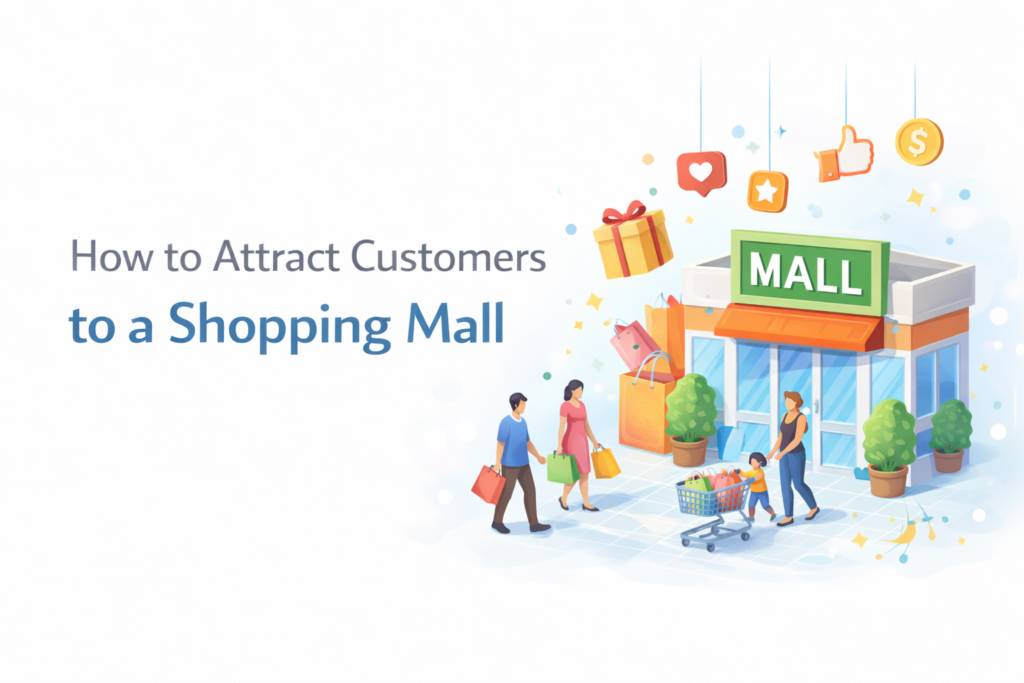
That difference is not accidental. It is the result of deliberate, well-executed strategies to attract customers to a shopping mall, sustain their visits, and give them reasons to come back before the memory of the last visit fades.
This guide covers the specific tactics that work for Nigerian shopping malls in 2026, from the digital tools that drive awareness to the on-ground events and offer structures that turn casual browsers into repeat visitors, and the structural thinking that keeps foot traffic healthy across every day of the week, not just weekends.
Understand Who Your Mall Serves and Why They Come
The first step to attracting customers to a shopping mall is understanding who those customers are and what actually brings them through the doors in the first place.
Nigerian mall visitors do not arrive with a single motivation. Some come specifically to shop. Others come to eat, watch a movie, meet friends, or simply to be somewhere air-conditioned with reliable power for a few hours. Families come for the play areas and food courts. Young professionals come for the restaurant and café options. Teenagers come for the cinema and fast food. Investors and business owners come to browse and compare. Understanding which of these groups makes up the bulk of your current visitors, and which groups you want to attract more of, shapes everything from your tenant mix to your event calendar to your marketing channels.
Nigerian shopping malls in Lagos, Abuja, Port Harcourt, Ibadan, Enugu, and Kano each serve communities with distinct income levels, cultural compositions, and shopping habits. A mall in Victoria Island draws differently from one in Ikeja or Festac. A mall in Wuse II attracts a different demographic from one in Garki or Kubwa. Marketing strategies that ignore these local differences and rely on generic promotional content consistently underperform compared to those built around a genuine understanding of the specific community the mall serves.
Before spending on any campaign or event designed to attract customers to a shopping mall, spend time in the mall itself. Watch who comes in, when they come, how long they stay, what they spend on, and crucially, what makes them leave earlier than they might have. That observational intelligence is worth more than any marketing report.
Events: The Most Powerful Tool to Attract Customers to a Shopping Mall
Nothing draws foot traffic to a shopping mall like an event that gives people a compelling reason to visit beyond the act of shopping itself. The malls that consistently attract customers and maintain strong foot traffic throughout the week are the ones that programme their common areas, their car parks, their atriums, and their rooftop spaces with a regular rotation of experiences that make visiting feel like an occasion.
Weekend markets and pop-up fairs have proven consistently effective at bringing new customers into Nigerian malls. A curated market featuring local designers, artisans, food vendors, and small business owners draws two audiences simultaneously: the shoppers who come to browse and buy, and the vendors and their networks who come to trade and bring their own customers with them. A well-organised pop-up market in a mall like Jabi Lake Mall in Abuja or Ikeja City Mall in Lagos can add several thousand visitors to a weekend’s foot traffic without high cost to the mall management.
Live entertainment draws visitors who would not otherwise have a reason to be at the mall on a particular day. A live music performance in the atrium on a Friday evening, a comedy show in the food court on a Saturday afternoon, a children’s entertainment show during school holidays. These events do not need large production budgets. They need to be genuine, well-marketed in advance, and aligned with the tastes of the specific community the mall serves.
Seasonal and cultural events are among the strongest traffic drivers in the Nigerian mall calendar. Eid festivals, Christmas markets, Children’s Day activations, Valentine’s Day promotions, Independence Day events, and back-to-school campaigns all give malls a natural hook to build programming around. The malls that attract customers most consistently during these periods are the ones that plan their events and promotions at least four to six weeks in advance and market them aggressively across digital and offline channels.
Experiential activations from brands and corporate partners bring footfall without cost to mall management. Product launches, sampling campaigns, interactive brand experiences, and competition activations set up in high-traffic areas within the mall create entertainment value for visitors and draw in passersby who were not originally planning to enter. Building a pipeline of brand activation partnerships is one of the highest-return activities a mall marketing team can invest in.
Promotional Offers That Drive Urgency and Repeat Visits
Events bring people in. Offers give them a reason to spend while they are there and a reason to come back before the offer expires.
The most effective promotional strategies to attract customers to a shopping mall are built around two things: genuine value that visitors can feel, and time pressure that creates urgency without feeling manipulative.
Mall-wide sale events coordinated across multiple tenants simultaneously, where the mall sets a promotional window and tenants participate with their own branded discounts, create a shopping atmosphere that draws visitors who specifically plan their shopping trips around the promotion. The success of these events depends on the marketing preceding them. A mall-wide sale announced three days before it begins generates a fraction of the foot traffic of one marketed across social media, WhatsApp broadcasts, billboards, and radio for two to three weeks in advance.
Loyalty and reward programmes are underused by Nigerian shopping malls and represent a significant opportunity to convert occasional visitors into habitual ones. A mall loyalty card or app that rewards spending across any tenant in the mall gives shoppers a reason to consolidate their retail activity in your mall rather than spreading it across multiple locations. Points accumulated through repeat visits, redeemable for discounts, free parking, cinema tickets, or food court vouchers, change a visitor’s relationship with the mall from transactional to invested.
Flash sales and limited-time offers during typically slow periods, like midweek afternoons or early morning hours, pull visitors who are specifically looking to take advantage of time-sensitive deals. These can be communicated through WhatsApp broadcasts, push notifications from a mall app, Instagram Stories with countdown stickers, and in-mall digital signage that creates urgency at the point of presence.
Bundle promotions that combine retail with food, entertainment, or parking benefits incentivise longer dwell time and higher per-visit spending. “Spend ₦20,000 at any store and get a free cinema ticket” or “Lunch at any food court restaurant and get two hours of free parking” are the kinds of offers that are straightforward to communicate and genuinely change spending behaviour.
Digital Marketing: Reach Your Audience Before They Leave Home
The decision to visit a shopping mall increasingly begins online. A resident in Lekki, considering how to spend a Saturday afternoon, is making that decision based partly on what they have seen on Instagram, in WhatsApp groups, and on Google in the days leading up to the weekend. A mall that is not actively marketing itself in those spaces is invisible during the consideration phase.
Instagram and Facebook are the primary digital channels for Nigerian mall marketing. Your mall’s Instagram should function as a live editorial feed of what is happening at the mall: event previews, retail highlights, food and beverage features, transformation photos of newly opened stores, behind-the-scenes content from events in setup, and user-generated content from visitors who tag the mall in their posts. Post at least five times per week. Use Reels for event previews and highlights, as Reels generate the widest organic reach of any Instagram content format.
Paid social media ads targeted to Nigerians in specific cities and neighbourhoods surrounding your mall are one of the most cost-effective ways to attract customers to a shopping mall who are not yet in your organic audience. A well-executed Instagram ad promoting a weekend event, targeted to adults within a twenty-kilometre radius of the mall, running for five to seven days before the event, consistently produces measurable foot traffic at a predictable cost.
Google Business Profile for the mall and for individual tenants within the mall improves local search visibility significantly. When someone searches “malls near me in Abuja” or “shopping centres in Ikeja,” a complete, well-reviewed Google profile determines whether your mall appears at the top of those results. Encourage tenant retailers within the mall to claim and optimise their own Google Business Profiles, listing the mall address, as this creates a cluster of Google signals all pointing to your location.
WhatsApp is the highest-reach direct marketing channel for Nigerian malls. Build an opt-in subscriber list through sign-up points at the mall entrance, on the mall website, and through social media. Send weekly broadcasts covering upcoming events, current promotions, new store openings, and tenant-specific offers. The personal, direct nature of a WhatsApp broadcast means it reaches subscribers in a way that a social media post algorithm cannot guarantee.
Get Your Mall Listed on Queposts for Broader Discovery
When someone is new to a city, a traveller passing through, or a diaspora Nigerian visiting family wants to find a shopping mall with specific amenities, they search across multiple platforms. They check Google Maps. They ask in WhatsApp groups. They look at Instagram. And they check business discovery platforms that aggregate trusted, professional business listings.
Queposts is a modern business portal built for local and global discovery, and for Nigerian shopping malls, it provides visibility in searches that Google and Instagram alone do not always capture.
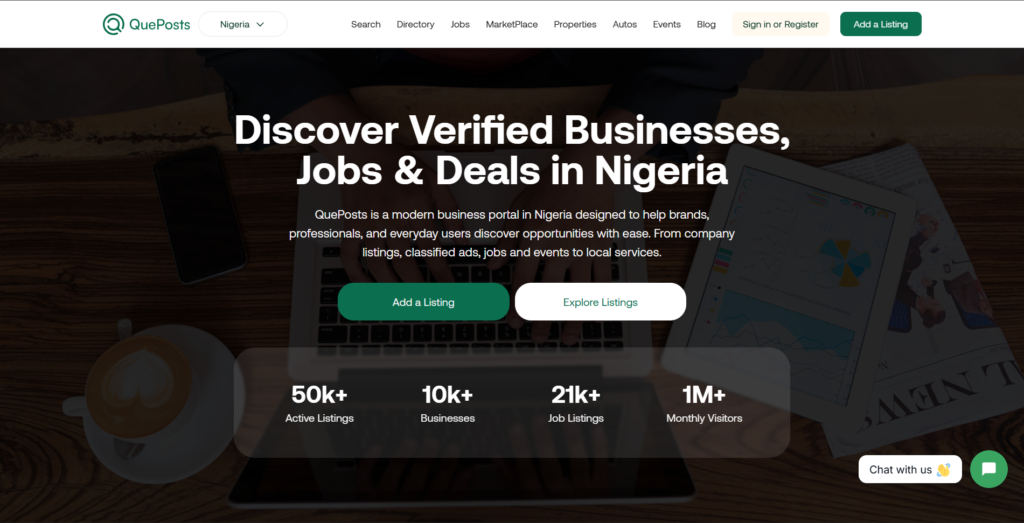
A complete Queposts listing for your mall includes the mall’s name, location, the range of retail and entertainment options it offers, contact information, operating hours, and links to social media and the mall website. For potential visitors who are researching their options before committing to a visit, this kind of organised, professional information in a single, trusted location reduces friction and increases the likelihood that they choose your mall over a competitor.
For malls that host regular events, list the types of events your mall offers and the kinds of brands and experiences visitors can expect to find. A shopper searching for a mall in Lagos that has a food court, a cinema, a children’s play area, and hosts weekend markets is more likely to choose your mall if that information is clearly and professionally presented where they are searching.
For malls with tenants that serve diaspora visitors or international travellers, Queposts’ reach across local and global audiences is a specific advantage. Someone visiting Lagos from abroad and looking for a shopping centre that carries certain brands or offers specific services can find your mall through a Queposts listing, even if they are searching from outside Nigeria.
Like all good permanent listings, a Queposts profile for your mall works continuously without requiring ongoing spend. Every marketing campaign you run, every event you promote, and every ad you place benefits from a professional, easily found business presence on a trusted discovery platform.
List your shopping mall on Queposts and make it easy for every potential visitor to find exactly what they are looking for before they decide where to spend their day.
Foot Traffic Hacks That Work During Slow Periods
Weekends largely take care of themselves in Nigerian shopping malls. The challenge is midweek, particularly Tuesday through Thursday, when foot traffic drops and tenant retailers start questioning whether their rents are justified.
The most effective approaches to attract customers to a shopping mall during slow periods are those that create a specific reason to visit on those days, not just a general reason to visit the mall at some point.
Midweek exclusive offers from specific tenants, promoted actively on social media and WhatsApp with a clear “only available Tuesday to Thursday” framing, pull deal-seekers who prefer to avoid weekend crowds. For tenants who are also struggling with midweek traffic, this is a genuine service that builds mall-tenant goodwill while also building foot traffic.
Corporate lunch drives in malls near business districts are a significantly underexploited opportunity. A mall near commercial offices in Abuja’s Central Business District, Victoria Island in Lagos, or Trans-Amadi in Port Harcourt has thousands of office workers within a ten-minute drive at lunchtime every weekday. A targeted digital campaign promoting the food court, quick dining options, and lunchtime-only offers directly to employees and businesses in those office clusters converts office workers who did not previously think of the mall as a lunch destination.
Morning visitor programmes targeting retirees, stay-at-home parents, and early-morning exercisers who use mall walking as part of a fitness routine are another underused traffic source. A mall that opens early, welcomes morning walkers, and hosts a small morning market or breakfast café activation in the atrium from 8am to 10am on weekdays builds a loyal regular morning visitor base that also generates spending in food and beverage tenants.
University and school partnerships work well for malls near educational institutions. Student discount programmes, events timed around academic calendars, and partnerships with student unions create a consistent flow of young visitors who become habitual mall visitors from an early stage of their relationship with the mall.
Maximising Dwell Time Once Visitors Arrive
Attracting customers to a shopping mall is only half of the job. The second half is keeping them there long enough to discover, browse, and spend.
Dwell time is a function of how comfortable and engaging the environment is. Nigerian mall visitors in 2026 make a direct assessment within the first few minutes of arriving: is this a place where I want to spend time? The answer depends on a combination of the physical environment, the tenant mix, the current activity in the common areas, and the practical amenities available.
Clean, well-maintained common areas with comfortable seating, reliable air conditioning, and accessible power points send a clear signal that the mall is well-managed and that spending time there is comfortable rather than just convenient. Food and beverage options that cover a genuine range of price points and cuisines serve a wider range of visitors than malls that only have premium dining. Free and reliable WiFi in food courts encourages young visitors to spend multiple hours at the mall rather than leaving after a single purchase. Children’s play areas give families a reason to stay significantly longer than they would without them.
The physical layout of the mall also affects dwell time. Tenants positioned to encourage exploration, with anchor stores at opposite ends of the mall and compelling smaller tenants filling the walk between them, create the kind of natural browsing journey that converts a visitor who came for one specific item into one who spends at three or four locations before leaving.
Tenant Mix and Anchor Strategy
The individual tenants in a mall do their own marketing and attract their own customers. But the collective marketing power of the right tenant mix is one of the most significant competitive advantages a well-managed Nigerian shopping mall can have.
An anchor tenant with strong brand recognition and high visit frequency, a major supermarket, a cinema, a popular fast food chain, or a large fashion retailer, drives consistent baseline traffic that smaller specialty tenants benefit from. A mall with a Shoprite, a Genesis Cinema, and a KFC will draw visitors for those brands specifically who then browse and spend in surrounding stores. A mall without a single strong anchor brand has to work significantly harder to attract customers because there is no existing pull from a well-loved brand.
The gap between anchor traffic and specialty tenant traffic is where the mall’s own marketing and events programming fills in. A mall with strong anchors and a good events calendar creates an environment where foot traffic is sustained across the week by a combination of destination visits for specific brands and occasion visits for specific experiences.
Measure What Is Working and Adjust Accordingly
Foot traffic counters at each entrance of the mall, combined with data from tenant sales, parking records, and social media analytics, give mall management a reliable picture of which marketing activities are driving actual visits and which are generating impressions without impact.
Track foot traffic week-on-week and month-on-month. Note what changed in the weeks where traffic was notably higher or lower than average. Identify which events drove the highest visitor numbers. Track which social media posts drove the most direct enquiries about mall visits or events. Ask visitors, through brief surveys or digital feedback tools, what they came for, what they found, and what would bring them back more frequently.
This data does not need to be sophisticated to be useful. A consistent habit of tracking and reviewing the connection between specific marketing activities and measurable foot traffic outcomes tells you more about what to do next than any industry report or generic marketing framework.
Retail Neighbours Are Worth Learning From Too
The strategies that work to attract customers to a shopping mall share significant common ground with the tactics that work for individual retailers operating within malls and in standalone locations across Nigeria. The underlying mechanics of visibility, trust, community engagement, and promotional offers translate directly from mall-level marketing to store-level marketing.
Also Read: How to Attract Customers to Your Supermarket in Nigeria: 12 Proven Strategies That Work — a practical breakdown of the specific local marketing strategies that fill supermarket aisles across Nigerian cities in 2026, from Google Business Profile optimisation and WhatsApp marketing to loyalty programmes and community partnerships. Many of the strategies in that guide apply directly to individual retailers operating within your mall, and encouraging your tenants to implement them increases traffic to your mall as a whole.
The Long Game
Attracting customers to a shopping mall in Nigeria consistently and sustainably is not a campaign. It is a management discipline. It is the daily work of programming events, communicating promotions, maintaining relationships with tenants and brand partners, keeping the physical environment exceptional, and staying visible across every digital and physical channel where potential visitors encounter information about where to spend their time and money.
The Nigerian malls that are winning in 2026 are the ones that understand themselves as entertainment and community destinations first and retail environments second. Shopping is what people do while they are there. The experience of being there is what makes them choose to come.
Build that experience intentionally. Market it consistently. Measure what works and invest in more of it. And make sure that every Nigerian in your catchment area who is deciding how to spend their day can find your mall, know what is happening there, and feel like making the trip is worth their time.