

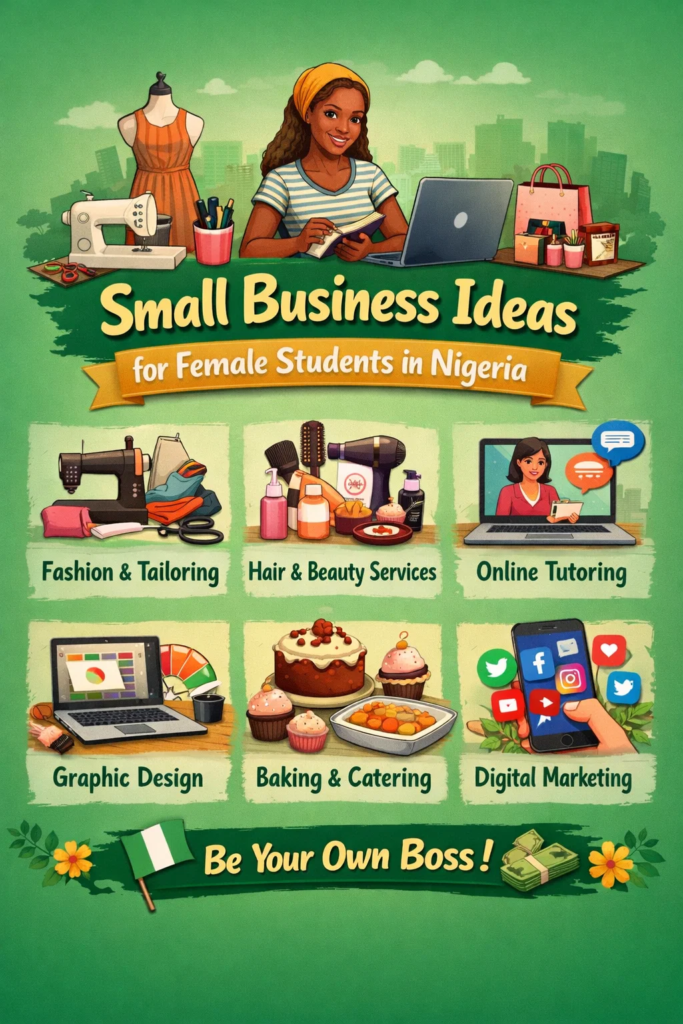

In Nigeria’s dynamic economy, entrepreneurship isn’t just an option; it’s increasingly becoming an essential strategy for financial independence, especially for women and youths. According to a report on entrepreneurship in Nigeria, 67% of business owners are youths aged 18–35, and women account for about 43% of all entrepreneurs in the country.
For female students navigating academic life while shouldering personal and school expenses, starting a small business can be both empowering and profitable. This comprehensive guide explores small business ideas tailored for female students in Nigeria covering online and offline options, with real examples, practical steps, startup costs, and the pros and cons of each.
Why Female Students Should Start a Small Business
Financial Independence
With rising living costs and limited allowances, female students who run their own businesses gain autonomy over their finances.
Skill & Career Development
Entrepreneurial activities teach budgeting, marketing, customer service, and time management, skills that are invaluable beyond campus life.
Flexible Work Schedule
Unlike full‑time jobs, many small business ideas allow students to earn while still prioritizing their studies.
Women Are Significant Drivers of Nigeria’s Entrepreneurial Economy
Despite historical barriers, women in Nigeria are increasingly engaging in entrepreneurial ventures and small business ownership.

Top Small Business Ideas for Female Students
1. Hair Styling, Wig Making & Beauty Services
Beauty and personal grooming are perennial money makers in Nigeria. Female students with skills in braiding, wig styling, threading, manicure/pedicure, and basic makeup can turn passion into profit.
Startup Requirements
- Braiding kit (combs, scissors, clips)
- Wig accessories
- Makeup tools
- Mirror and portable chair
Case Example
A final‑year female student in the university of Lagos started offering wig installations to peers during weekends. Within two months, she expanded to hair care products and made ₦20,000–₦40,000 weekly.
Pros
- High and repeatable demand on campus
- Minimal startup costs compared to formal salon businesses
- Can operate from hostels or rented space
Cons
- Requires skill development and practice
- Time‑intensive (long hours for detailed styles)
- Competition from existing salons and stylists
2. Thrift Clothing & Accessories (Okrika)
Reselling thrift (used) clothing locally known as Okrika is trendy on campuses. Female students can curate stylish, affordable outfits and sell them via social media or small pop‑ups.
Startup Requirements
- Capital to buy bulk thrift clothing
- Photography setup (even smartphone is fine)
- Social media platforms (Instagram, WhatsApp)
Practical Steps
- Source quality thrift items at markets (e.g., Balogun market in Lagos or Onitsha main market).
- Take appealing photos with sizing and prices.
- Share items on WhatsApp status and Instagram stories.
Pros
- High profit margins
- Fashion continuously evolves trendier pieces sell fast
- Works well with Instagram and TikTok marketing
Cons
- Must pick quality items carefully
- Some items may not sell, tying up capital
- Competition from other thrift sellers
3. Homemade Snacks & Small Chops Business
Nigeria has a thriving street food culture. Students love quick, affordable snacks like puff‑puff, chin‑chin, buns, and small chops (assorted finger foods).
Startup Requirements
- Ingredients (flour, sugar, oil)
- Basic cookware or electric fryer
- Packaging materials (cups, boxes)
Case Example
A female student in Ibadan sold puff‑puff and chin‑chin to hostels around her campus. Using WhatsApp broadcast lists and group chats, she quickly made repeat customers and doubled her profits within a semester.
Pros
- Daily demand — food has constant, everyday buyers
- Fast turnover with consistent reinvestment
- Can scale to catering for small events
Cons
- Food is perishable — unsold goods can go bad
- Requires daily preparation time
- May be affected by supply cost fluctuations
4. Perfume Oils & Skincare Products
Perfume oils, body creams, soaps, and skincare products are high‑selling items among female students. These products are affordable and easy to carry.
Startup Requirements
- Reliable supplier (bulk buying lowers cost)
- Containers (small bottles) for repackaging
- Branding materials (stickers, labels)
Example Strategy
Buy wholesale perfume oil bottles, decant into smaller branded bottles, and sell bundles (e.g., 3 for ₦1,500). Use WhatsApp status and Lagos campus groups for visibility.
Pros
- Small startup capital needed
- High repeated sales (customers return frequently)
- Loved by students for personal use and gifts
Cons
- Quality varies by supplier, you must vet carefully
- Packaging and branding matter a lot for sales
- Competition from imported perfume brands
5. Digital Skills & Freelancing
Digital skills are among the most profitable small business ideas for female students. With a laptop or smartphone, students can offer services like:
- Graphic design
- Content writing
- Virtual assistance
- Video editing
- Social media management
Statistics and Opportunity
Freelancing connects students to global markets. Remote clients often pay in foreign currencies, boosting income in Naira terms.
Practical Example
A Nigerian student learned graphic design on YouTube and started offering flyer and logo design services. She built a portfolio, joined Fiverr, and made ₦50,000 in her first month.
Pros
- No physical inventory required
- Flexible schedule
- Builds skills that enhance employability later
Cons
- Requires skill acquisition and consistent learning
- Income is project‑based and may vary
- Competition is global
6. Blogging & Content Creation
Female students passionate about writing or content can start blogs or social media channels highlighting niche topics like:
- Campus lifestyle
- Fashion trends
- Study tips and productivity
- Health and relationships
With consistency, these platforms can be monetized through ads, sponsorships, and affiliate marketing.
Case Study
A lifestyle blogger started a YouTube channel reviewing campus fashion trends. After growing her audience, brands began sponsoring videos, turning views into revenue.
Growth Paths
- Google AdSense on blogs
- YouTube monetization
- Sponsored Instagram Reels or TikToks
Pros
- Establishes personal brand
- Multiple revenue streams
- Works with just a smartphone
Cons
- Requires consistency and creativity
- Income isn’t instant, audience growth takes time
- Platforms change policies regularly, impacting monetization

7. Tutorial & Academic Coaching
Female students who excel academically can tutor peers or secondary school students. Subjects like mathematics, chemistry, and English are always in demand.
Startup Requirements
- Mastery of subject area
- Teaching materials or guided notes
- Online tools (Zoom, WhatsApp)
Practical Example
A biology student offered weekend tutorials to WAEC and UTME candidates. She charged per session and also sold study notes.
Pros
- No startup cost
- Flexible hours
- Regular clients possible
Cons
- Requires strong subject knowledge
- Students may cancel if they don’t see progress
- Tough during exam peaks due to scheduling
8. Handmade Crafts & Accessories
Crafting handmade bracelets, earrings, anklets, and personalized gifts offers a creative and profitable venture.
Startup Requirements
- Beads, wires, tools
- Packaging materials
- Social media storefront
Example
One student made custom beaded jewelry that matched Nigerian fabric styles. She sold them at social events around campus, earning ₦10,000–₦30,000 weekly.
Pros
- Creative and customizable
- High profit margins for unique items
- Works well with personal branding
Cons
- Time‑consuming production
- Materials can be pricey if buying quality supplies
- Scaling requires delegation or assistance
9. POS (Mobile Money) Services
Point‑of‑Sale (POS) services allow students to facilitate withdrawals, transfers, airtime purchases, and utility payments. With many campuses lacking functional ATMs, this service is in demand.
Startup Requirements
- POS machine or app (Moniepoint, Opay, PalmPay)
- Initial float (cash for transactions)
Pros
- Daily income potential
- High demand on campus
- Flexible hours
Cons
- Requires initial capital for float
- Risk of theft requires caution
- Internet or network outage disrupts service
10. Photography & Event Content Creation
Before social events, graduations, and matriculation ceremonies, quality photography is in high demand. Students with smartphones or cameras can shoot photos and videos for events and portraits.
Startup Requirements
- Smartphone or camera
- Basic lighting or reflector
- Editing app (CapCut, Lightroom)
Example
A student used her phone and ring light to capture event highlights. She later offered editing services and created Instagram reels for clients.
Pros
- High demand for memories and social media content
- Builds personal brand portfolio
- Can turn into a full business after school
Cons
- Equipment costs increase with upgrades
- Seasonal demand (event‑dependent)
- Editing skills take time to master
11. YouTube & TikTok Content Creation
Short‑form video content is booming. Female students can create content around student life, comedy skits, beauty hacks, and study routines. With the right audience, monetization comes from ads and brand deals.
Pros
- Immediate exposure with viral potential
- Low startup cost
- Multiple monetization avenues
Cons
- Consistency is key
- Platforms can be unpredictable
- Negative comments or online pressure
12. Mini Importation (Campus Niche Products)
Students can import trendy, low‑cost items like accessories, gadgets, press‑on nails, and fashion items from international suppliers and resell locally.
Startup Requirements
- Capital for mini import (₦30,000+)
- Reliable supplier and shipping plan
Pros
- High earning potential
- Students love fashion and tech accessories
Cons
- Shipping delays and customs charges
- Quality control challenges
13. Juice & Smoothie Bar
Health‑conscious students are a growing demographic. Smoothies, zobo drinks, and juices can be sold near student gatherings.
Startup Requirements
- Fruits or juice concentrates
- Blender and serving cups
- Location near hostels or lecture halls
Pros
- Good daily demand
- Lower initial costs than food catering
Cons
- Perishability of fruit
- Competition from established vendors
14. Recharge Cards & Data Sales
Selling airtime, data bundles, and subscription cards caters to constant student connectivity needs.
Pros
- Very low startup cost
- Frequent small sales
Cons
- Small profit each sale
- Must maintain competitive pricing
Practical Tips Before You Start Your Business
Starting a small business while in school can be exciting, but success requires careful planning and strategy. Here are practical tips to help you get started, avoid common mistakes, and maximize profits while balancing academics.
1. Conduct Thorough Market Research
Before investing money, it’s crucial to understand your potential customers and competitors. Start by asking questions like:
- What products or services do my peers need most?
- What price ranges are students willing to pay?
- When and where are they most likely to buy?
For example, if you plan to sell snacks, find out whether students prefer quick meals between lectures, late-night snacks, or event catering. If you’re offering fashion items, see which styles are trending and which sizes sell faster. You can also study competitors: what are they doing well, and where can you offer something better or unique?
Pro Tip: Use social media polls, WhatsApp groups, and informal surveys on campus to gather insights, it’s free and effective.
2. Start Small and Test the Market
Starting small reduces risk and gives you room to learn. Instead of buying a large stock or offering a wide range of services immediately, begin with a limited batch of products or a single service.
For instance:
- If you’re selling perfume oils, start with 10–20 bottles to test which scents are most popular.
- If you’re offering tutoring, begin with one or two students before accepting a larger class.
Using a pre-order model can also minimize losses. Students pay in advance, allowing you to produce or order only what is needed. This method ensures you avoid unsold inventory and helps manage cash flow effectively.
3. Build and Maintain a Strong Brand
Branding is more than a logo, it’s how customers perceive you and your business. Consistent branding helps your products or services stand out and builds trust.
Tips for branding as a student entrepreneur:
- Create a simple, memorable logo.
- Use consistent color themes, fonts, and imagery across all platforms (Instagram, WhatsApp, TikTok, or even flyers).
- Develop a short, catchy business name that reflects your products or services.
- Keep messaging consistent — for example, if your focus is affordable fashion, highlight value and style in all your posts.
Example: A student selling handmade jewelry used a pastel-themed Instagram feed, clear product descriptions, and attractive packaging. Within three months, she gained loyal repeat customers and a growing online following.
4. Track Expenses and Profits
Many student entrepreneurs fail because they don’t track finances. Smart money management is key to sustaining and growing your business.
- Record every expense, from materials to transportation costs.
- Track all sales and income, even small transactions.
- Calculate profit margins regularly to understand which products or services are most profitable.
Pro Tip: Use simple tools like Excel, Google Sheets, or even dedicated mobile apps to manage your finances. Over time, this will help you plan for expansion and make informed business decisions.
5. Balance Your Time Between Business and Studies
A common challenge for student entrepreneurs is juggling academics and business activities. Effective time management ensures that your business doesn’t negatively impact your grades.
Strategies include:
- Use planners or digital calendars to allocate time for classes, study sessions, and business operations.
- Schedule business activities during free periods, weekends, or after lectures.
- Set realistic daily or weekly sales goals to avoid burnout.
- Consider collaborating with friends or classmates to share workload.
Example: A student running a campus snack business allocated mornings for baking, afternoons for classes, and evenings for delivery. This schedule allowed her to maintain good academic performance while steadily growing her business.
6. Build a Network and Gather Feedback
Your first customers are likely to be classmates, friends, and peers. Use this to your advantage:
- Ask for honest feedback on product quality, pricing, and service.
- Encourage satisfied customers to refer friends.
- Attend campus events to promote your business and meet potential customers.
Pro Tip: Word-of-mouth marketing on campus is one of the most effective ways to grow. A single satisfied customer can bring multiple new clients.
7. Be Adaptable and Learn Continuously
Student markets change quickly, trends, tastes, and demands evolve every semester. A successful entrepreneur adapts by:
- Monitoring what sells best and adjusting your offerings.
- Learning new skills (e.g., digital marketing, design, or customer service).
- Observing competitors and finding ways to innovate.
Example: A student who initially sold hand-painted notebooks noticed more demand for custom phone cases. She adapted and expanded her business line, significantly increasing revenue.
8. Start With Minimal Investment
Especially for students, minimizing risk is essential. Choose business ideas that require little upfront capital. Many small businesses like freelance services, digital skills, and reselling products can start with as low as ₦10,000–₦30,000.
This approach reduces financial pressure while giving you the chance to test your business skills and market demand before scaling.
9. Leverage Online Platforms
Social media and online marketplaces are powerful tools for student entrepreneurs:
- Instagram and TikTok for visual marketing.
- WhatsApp groups and status updates for quick sales.
- Jiji.ng or Facebook Marketplace for wider reach.
Pro Tip: Consistent posting and engaging content will make your business more visible. Share behind-the-scenes content, customer testimonials, or product tutorials to attract attention.
10. Maintain Quality and Customer Service
No matter how small your business, delivering quality products or services is essential for repeat customers. Pay attention to:
- Packaging and presentation
- Timely delivery
- Clear communication
- Professionalism in handling complaints
Satisfied customers are your best advertising, especially in a campus environment where recommendations spread quickly.
Final Thoughts
Nigeria’s entrepreneurial landscape is ripe with opportunities for female students. With proper planning, consistency, and strategy, the businesses listed above can generate sustainable income, build valuable skills, and even become lifelong careers.
Remember: entrepreneurship is a journey, not a sprint. Start small, learn fast, adapt often your next big success could begin right here on campus.