


Registering a business with the Corporate Affairs Commission (CAC) is a major milestone for any entrepreneur in Nigeria. However, incorporation is only the first step. After registration, companies must continue to comply with statutory obligations through what is known as CAC post incorporation services.
Understanding CAC post incorporation fees, the relevant forms, application processes, and online procedures is essential for maintaining legal standing and avoiding penalties. Many business owners only discover post-incorporation costs when they urgently need a document or are facing compliance issues.
This comprehensive guide explains everything you need to know about CAC post incorporation fees, common forms, online applications, Certified True Copy (CTC) procedures, adding business objectives, and more.
What Is CAC Post Incorporation?
CAC post incorporation refers to all filings, updates, corrections, and statutory obligations that arise after a business has been officially registered.
Once a company receives its Certificate of Incorporation, it is legally required under the Companies and Allied Matters Act (CAMA) to:
- Keep its records updated
- File annual returns
- Notify CAC of structural changes
- Maintain transparency in corporate governance
These activities fall under post incorporation matters in CAC.
Post incorporation services apply to:
- Limited Liability Companies (LTD)
- Public Limited Companies (PLC)
- Companies Limited by Guarantee (GTE)
- Business Names
- Limited Partnerships (LP)
- Incorporated Trustees
Each category has its own fee structure under cac fees for post incorporation.
Why CAC Post Incorporation Compliance Is Critical
Many business owners focus heavily on registration but overlook compliance after incorporation. This can lead to serious consequences.
Failure to comply with CAC post incorporation requirements may result in:
- Accumulated penalties
- Inability to obtain a Letter of Good Standing
- Difficulty opening or maintaining corporate bank accounts
- Ineligibility for grants or government contracts
- Risk of company being struck off the register
- Complications during investor due diligence
For businesses seeking funding, partnerships, or expansion, maintaining updated post incorporation records is non-negotiable.
CAC Fee Structure: Revisions and Important Changes (2025)
Recent Fee Updates
On the 1st of August 2025, the CAC officially revised its fees, adjusting many services upwards, particularly post-incorporation filings. These revisions aim to support digital transformation and sustainable service delivery.
Some key changes include:
| Service | Old Fee (₦) | New Fee (₦) |
| Voluntary Striking-off (Small Companies) | 25,000 | 50,000 |
| Voluntary Striking-off (Public Companies) | 25,000 | 100,000 |
| Relisting (Ltd/GTE) | 25,000 | 50,000 |
| Due Diligence Search (Self-Service) | — | 50,000 |
| Historical Search Reports | — | 20,000–30,000 |
| Restriction of Director’s Address | — | 25,000 |
| CTC of Documents/Extracts | 2,000–3,000 | 5,000 per page |
Figure for historical CTC is based on previous practice; official now fixed.
Post-Incorporation Fees: Comprehensive Breakdown
Post-incorporation CAC fees depend on the type of entity: companies, business names, limited partnerships (LP), or incorporated trustees. Fees for companies are more expensive than fees for limited partnership because it is believed that they earn more.
Below is the latest official fee schedule extracted from the CAC 2025 fee schedule (Official Gazette).
A. Post-Incorporation Fees for Companies (Ltd / PLC / GTE)
| Service / Task | Fee (₦) |
| Name Reservation | 5,000 |
| Name Reservation (Restricted Words) | 5,000 |
| Post-Incorporation / Miscellaneous Filings (excl. Annual Returns) | 5,000 |
| Status Report / Good Standing | 5,000 |
| Letter of Good Standing | 10,000 |
| Historical Search Report (All Information) | 20,000–30,000 |
| Due Diligence Search (Self-Service) | 50,000 |
| Voluntary Striking-off | 50,000 |
| Same-Day Post Incorporation Filing (Add’l) | 30,000 |
| Relisting of Company | 50,000 |
| Restriction of Director’s Address | 25,000 |
| Extension of Time to Hold AGM | 50,000–100,000 |
| Certified True Copies of Docs / Extracts | 5,000 each |
Note: These fees are for post-registration compliance and do not include professional or agency fees.
B. Business Names – Post-Incorporation Fees
| Service | Fee (₦) |
| Name Reservation | 1,000 |
| Name Reservation (Restricted Words) | 5,000 |
| Registration / Post-Incorporation Filing | 5,000 |
| Status Report | 5,000 |
| Letter of Good Standing | 10,000 |
| Voluntary Striking-off | 10,000 |
| Same-Day Post Filing | 10,000 |
| Relisting | 25,000 |
| Restriction of Proprietor’s Address | 25,000 |
| Certified True Copy | 5,000 each |
| Application for Cessation | 10,000 |
Note that certified true copies apply per document.
C. Limited Partnerships (LP) – Post-Incorporation Fees
| Service | Fee (₦) |
| Name Reservation | 1,000 |
| Name Reservation (Restricted Words) | 5,000 |
| Registration / CTC of Documents | 30,000 |
| Annual Returns / Miscellaneous Filings | 5,000 |
| Status Report / Letter of Good Standing | 5,000 / 10,000 |
| Voluntary Striking-off | 25,000 |
| Same-Day Post Filing | 25,000 |
| Relisting | 25,000 |
| Restriction of Partner’s Address | 25,000 |
| Certified True Copies | 5,000 each |
Fees also include statutory filings and certificate retrievals. It is important to note the Caveats at the end of every fees breakdown.
Key CAC Post-Incorporation Forms Explained
The post-incorporation process is driven by specific CAC forms. Below are the most common ones:
1. Form CAC 7 – Particulars of Directors / Secretaries
- Used to update details of directors, secretary or key officers.
- Common in changes of directorship.
- Cost depends on certified copy requests (usually ₦5,000 per page).
2. Form for Adding Objects of Business / Memorandum Amendment
- Required when broadening business objectives.
- Typically attracts miscellaneous filing fees for post-incorporation alterations.
3. Certified True Copy (CTC) Requests
Documents often requested:
- Certificate of Incorporation
- Memorandum & Articles of Association
- Director particulars
- Share certificates / registers
Fees are generally ₦5,000 per copy for companies.
4. Annual Return / Statutory Filings
Mandatory yearly filings required to maintain compliance.
- Categories include company accounts, share capital disclosures, and compliance reports.
Fees vary by entity type.
Adding Objects of Business CAC Post Incorporation
One of the most common filings is adding objects of business CAC post incorporation. When a company wants to expand its business activities beyond what is stated in its Memorandum of Association, it must officially amend its objects.
For example:
- A tech company adding real estate services
- A logistics firm expanding into oil and gas
- A consulting firm adding import/export
The process typically involves:
- Passing a board resolution
- Passing a special resolution
- Filing amendment documents
- Paying the CAC post incorporation fee (usually ₦5,000 plus applicable charges)
Operating outside registered business objects can create compliance risks, especially during audits or regulatory inspections.
Form CAC 7 Post Incorporation
Form CAC 7 post incorporation is used to notify CAC of changes relating to directors or secretaries. You must file Form CAC 7 when:
- A new director is appointed
- A director resigns
- Director details change
- Company secretary changes
The filing falls under miscellaneous post incorporation services and attracts ₦5,000.
If a certified copy of Form CAC 7 is required, the CTC fee is ₦5,000.
Maintaining accurate director records is essential for:
- Loan applications
- Investor due diligence
- Regulatory compliance
- Corporate restructuring
Application for CTC of CAC 3 Post Incorporation
The application for CTC of CAC 3 post incorporation is one of the most requested services.
Form CAC 3 contains critical incorporation information including:
- Share capital
- Shareholders
- Directors
- Registered address
How to Apply for CTC of CAC 3 Post Incorporation
- Log into the CAC portal
- Select CTC request service
- Choose Form CAC 3
- Generate Remita payment reference
- Pay ₦5,000
- Download approved copy
Businesses typically request CTC for:
- Bank documentation
- Loan processing
- Immigration processes
- Regulatory approvals
- Tender applications
The entire process can now be completed via CAC post incorporation online services.
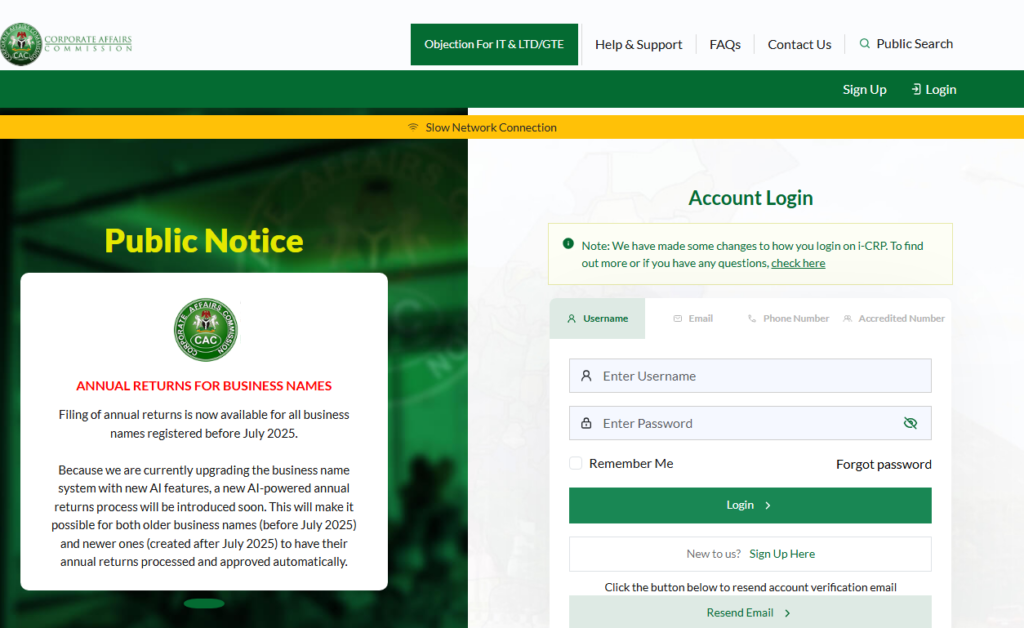
CAC Post Incorporation Online Process
The CAC has digitized most of its services. Through the online portal, you can:
- Submit CAC post incorporation application forms
- Download post incorporation form download CAC templates
- Pay CAC post incorporation fees
- Track status updates
- Requesting for CTC on CAC post incorporation services
Online filing benefits include:
- Faster turnaround
- Transparency
- Reduced paperwork
- Secure payment processing
Payments are processed via Remita.
Post Incorporation Forms Download CAC
When searching for post incorporation form download CAC, always ensure you download directly from the official CAC portal to avoid outdated templates.
Common forms include:
- Form CAC 7
- Notice of Change of Address
- Share Capital Alteration Form
- Annual Return Form
- Amendment of Memorandum Form
- CTC Request Form
Using incorrect forms may result in rejection and repeated payment.
10 Factors That Affect CAC Fees for Post Incorporation
While many business owners assume there is a fixed amount for every CAC post incorporation service, the reality is more nuanced. Several important variables influence the final amount payable. Understanding these factors helps businesses budget accurately and avoid unexpected expenses.
Below is a detailed breakdown of what determines the total CAC post incorporation fee you may pay.
1. Type of Entity
The type of business structure registered with the CAC significantly affects the cost of post incorporation filings. Different entities are regulated differently under the Companies and Allied Matters Act (CAMA), and their compliance obligations vary.
The main entity types include:
- Limited Liability Companies (LTD)
- Public Limited Companies (PLC)
- Companies Limited by Guarantee (GTE)
- Business Names (Sole Proprietorship or Partnership)
- Limited Partnerships (LP)
- Incorporated Trustees
For example:
- A Limited Liability Company generally pays higher post incorporation fees than a Business Name.
- A Public Company may pay more for services such as voluntary striking-off or AGM extensions.
- Business Names usually have simpler structures and therefore lower filing costs.
A striking-off application for a small company may cost ₦50,000, while the same process for a public company may cost ₦100,000. Meanwhile, a Business Name striking-off may cost ₦10,000.
This difference exists because corporate entities have more regulatory responsibilities and more complex documentation requirements.
2. Nature of Filing
Not all post incorporation services are equal. The type of filing you are making directly impacts the fee payable. Some filings are simple notifications, while others involve structural changes to the company. For example:
Low-cost filings:
- Change of director details (Form CAC 7)
- Notice of change of address
- Miscellaneous updates
These often attract a base filing fee of ₦5,000.
Higher-cost filings:
- Voluntary striking-off
- Relisting of company
- Extension of time to hold AGM
- Share capital restructuring
- Amendment of Memorandum and Articles
- Restriction of director’s residential address
These may cost between ₦25,000 and ₦100,000 depending on the service.
Structural filings typically require:
- Board resolutions
- Special resolutions
- Supporting documentation
- Publication requirements (in some cases)
The more complex the filing, the higher the cost.
3. Number of Documents Requested
Another major factor is the volume of documents requested, especially when applying for Certified True Copies (CTC).
The CAC charges per document or per page in some cases.
For example:
- CTC of Certificate of Incorporation – ₦5,000
- CTC of Memorandum and Articles – ₦5,000
- CTC of Form CAC 3 – ₦5,000
- CTC of Form CAC 7 – ₦5,000
If a bank requests five different certified documents, you could pay ₦25,000 just for CTCs.
Businesses applying for loans, visas, government tenders, or investor funding often require multiple certified documents at once. The more documents you request, the higher the total payable amount.
This is why it is advisable to confirm all required documents before submitting a CTC application, to avoid multiple separate payments.
4. Same-Day Service Request
The CAC offers an expedited or same-day processing option for certain post incorporation services.
This service significantly increases the total cost.
For example:
- Standard miscellaneous filing – ₦5,000
- Same-day processing surcharge – ₦30,000 (additional)
That means a filing that normally costs ₦5,000 could total ₦35,000 if urgent processing is selected.
Businesses typically use same-day services when:
- Facing tight contract deadlines
- Submitting urgent tender documents
- Finalizing investor agreements
- Meeting banking compliance deadlines
While convenient, same-day services should be used strategically due to the added cost.
5. Share Capital Size
Share capital plays a major role in determining some post incorporation costs.
For example:
- When increasing share capital, filing fees may scale depending on the new capital amount.
- Stamp duties may also apply based on capital structure.
- Larger companies with higher authorized share capital often pay more during capital restructuring.
If a company increases its share capital from ₦1 million to ₦50 million, the compliance cost will differ significantly from a small adjustment.
Share capital also affects:
- Annual return classification
- Regulatory scrutiny
- Due diligence documentation
Therefore, companies planning to expand shareholding or bring in investors should factor in additional post incorporation compliance costs.
6. Late Filing Penalties
One of the most avoidable cost factors is late filing.
Under CAMA, companies must file annual returns within prescribed deadlines. Failure to do so attracts penalties.
Late filing penalties can accumulate yearly and vary depending on:
- How long the company has defaulted
- Type of entity
- Company size
Consequences of late filing include:
- Monetary penalties
- Inability to obtain Letter of Good Standing
- Company marked inactive
- Risk of being struck off the register
Relisting a struck-off company can cost ₦50,000 or more; a much higher amount than filing annual returns on time. Proactive compliance helps avoid unnecessary financial strain.
7. Complexity of Corporate Changes
Beyond the standard categories, complex corporate restructuring can significantly increase costs.
Examples include:
- Mergers and acquisitions filings
- Conversion from business name to limited liability company
- Alteration of company status (e.g., LTD to PLC)
- Re-registration processes
- Court-ordered changes
Such filings may require:
- Legal documentation
- Additional statutory filings
- Gazette publications
- Multiple CAC submissions
Although official CAC fees may be fixed per filing, multiple filings combined can increase overall expenses.
8. Volume and Frequency of Changes
Businesses that frequently update their records may incur more cumulative costs over time.
For example:
- Frequent director changes
- Repeated share transfers
- Regular amendments of business objectives
- Multiple address changes
Each change attracts a filing fee. Companies with stable governance structures generally incur lower long-term post incorporation costs. Strategic planning can reduce repetitive filings.
9. Regulatory or Policy Updates
CAC occasionally revises its fee schedule. When this happens:
- Filing fees may increase
- New service charges may be introduced
- Processing categories may change
Businesses that delay filings sometimes end up paying higher fees due to policy revisions. Monitoring official announcements ensures accurate budgeting.
10. Professional Service Fees Are Separate
It is important to note that professional service fees are not included in official CAC post incorporation fees. If you hire:
- A lawyer
- A company secretary
- A corporate consultant
- An agent
They will charge professional fees for:
- Preparing resolutions
- Drafting documentation
- Filing on your behalf
- Compliance advisory services
These professional charges vary widely and are separate from CAC government filing fees.
For complex filings such as share restructuring or object amendments, professional assistance may be advisable to avoid costly mistakes.
Annual Returns: Mandatory Post Incorporation Requirement
Annual returns are compulsory for all registered companies and business names. Failure to file annual returns may result in:
- Accumulated penalties
- Company marked inactive
- Risk of striking off
- Difficulty obtaining status report
Annual return fees:
- Companies: ₦5,000 – ₦10,000
- Business Names: ₦5,000
Every company must budget yearly for this statutory obligation.
Budgeting for CAC Post Incorporation
Small companies should expect annual compliance costs between:
₦15,000 – ₦30,000 (excluding professional fees)
This may cover:
- Annual returns
- One or two miscellaneous filings
- CTC requests
Larger companies may incur higher expenses due to restructuring or capital changes.
Frequently Asked Questions (FAQ)
Here are some frequently asked questions about post incorporation fees.
1. What is CAC post incorporation?
CAC post incorporation refers to all statutory filings, updates, and compliance obligations required after a company has been registered.
2. How much is CAC post incorporation fee in Nigeria?
General miscellaneous post incorporation filings cost ₦5,000. However, fees vary depending on the service, such as CTC requests, striking-off, relisting, or AGM extensions.
3. How do I apply for CTC of CAC 3 post incorporation?
Log into the CAC portal, select CTC request, choose Form CAC 3, generate Remita, pay ₦5,000, and download once approved.
4. What is Form CAC 7 post incorporation used for?
Form CAC 7 is used to update director and secretary details after incorporation.
5. Can I complete CAC post incorporation online?
Yes. Most post incorporation CAC services can be completed online via the CAC portal.
6. How much is certified true copy at CAC?
Certified True Copy costs ₦5,000 per document or per page depending on the document type.
7. What happens if I don’t file annual returns?
Your company may incur penalties and risk being struck off the register.
8. How much does it cost to add objects of business?
Typically ₦5,000 for filing, plus associated documentation requirements.
9. Is same-day post incorporation service available?
Yes. Same-day processing is available at an additional ₦30,000.
10. What are common post incorporation matters in CAC?
They include:
- Director changes
- Share capital adjustments
- CTC requests
- Address updates
- Business object amendments
- Annual returns
Final Thoughts
Being a business owner is not easy especially when you have to battle understanding the whole concept of CAC and what it entails. Understanding CAC post incorporation, applicable forms, and accurate CAC post incorporation fees is crucial for every Nigerian business.
From filing form CAC 7 post incorporation, applying for CTC of CAC 3 post incorporation, handling annual returns, to updating business objectives, compliance ensures your business remains credible and legally protected.
Using cac post incorporation online services simplifies the process, but proactive compliance is the key to avoiding penalties and maintaining corporate integrity.