

If you’re searching for the best online marketplace to sell in Nigeria, you’re not alone. Every day, thousands of Nigerian vendors are looking for the most profitable online marketplace in Nigeria to grow their businesses. And honestly? Choosing the right platform can determine whether you struggle for visibility or scale into a nationwide brand.
Nigeria has over 120 million active internet users, and ecommerce adoption continues to grow steadily. Smartphone usage dominates digital access, meaning most buyers browse, compare, and purchase directly from their mobile devices. This shift has fueled the rapid growth of every major online marketplace Nigeria vendors rely on today from structured ecommerce giants to free online marketplace platforms.
Globally, online marketplaces generate more than half of all ecommerce sales. The largest online marketplaces like Amazon and Alibaba have redefined retail, while local players in Nigeria continue building ecosystems tailored to African consumers. For Nigerian vendors, this presents massive opportunity, but only if you understand how each marketplace online platform works.
In this detailed guide, we’ll cover:
- What is an online marketplace?
- Types of online marketplaces
- The top 10 online marketplaces in Nigeria and globally
- Free online marketplace in Nigeria options
- B2B and online wholesale marketplace platforms
- International and global online marketplace opportunities
- How to start an online marketplace
- FAQ section for Google snippets
Let’s break it down properly.
What Is an Online Marketplace?
An online marketplace is a digital platform where multiple independent sellers list products or services and customers purchase directly through that platform.
Unlike a standalone ecommerce website, a marketplace online platform:
- Already has traffic
- Handles payments (in most cases)
- Offers trust systems like reviews and ratings
- May provide logistics integration
Examples of online marketplace models include Jumia (retail), Jiji (classifieds), Alibaba (B2B wholesale), and Fiverr (services).
Simply put, if multiple vendors are selling under one digital roof, it’s an online marketplace.
Types of Online Marketplaces
Understanding the types of online marketplaces helps vendors choose the best online marketplace to sell online based on the kind of products or services they offer. Each marketplace model connects buyers and sellers differently, which affects pricing, customer interaction, and profit potential. Below are some of the most common types of online marketplaces used by Nigerian vendors today.
1. B2C (Business to Consumer)
A B2C online marketplace allows businesses to sell products directly to individual consumers through a centralized platform. These marketplaces usually handle payments, customer reviews, and sometimes logistics, making them structured and reliable for vendors. Examples include Jumia and Konga, which are among the most popular retail online marketplace platforms in Nigeria.
2. C2C (Consumer to Consumer)
A C2C online marketplace enables individuals to sell products directly to other individuals without needing to operate a formal business. These platforms are often easy to join and usually function as a free online marketplace, making them ideal for quick sales or second-hand items. Popular examples include Jiji and Facebook Marketplace, both widely used across Nigeria.
3. B2B Online Marketplace
A B2B online marketplace connects businesses that want to buy and sell goods in bulk or wholesale quantities. Instead of individual purchases, transactions typically involve larger orders between manufacturers, distributors, and retailers. A major example is Alibaba, a Chinese online marketplace widely used by Nigerian entrepreneurs for sourcing products.
4. Online Freelance Marketplace
An online freelance marketplace connects professionals who offer digital services with clients who need specific skills. Instead of physical goods, freelancers sell services such as writing, programming, graphic design, and marketing. Examples include Fiverr and Upwork, which allow Nigerians to earn income from global clients.
5. Online Food Marketplace
An online food marketplace allows restaurants, food vendors, and home chefs to sell meals to customers through mobile apps or websites. These platforms typically handle delivery logistics while vendors focus on preparing the food. Examples include Chowdeck and Glovo, which operate in major Nigerian cities.
6. Online Marketplace for Cars
An online marketplace for cars specializes in vehicle buying and selling, allowing dealers and individuals to list automobiles for potential buyers. Customers can compare prices, vehicle specifications, and seller details before making a purchase decision. Examples include Jiji Autos and Cars45, which have become popular digital platforms for car transactions in Nigeria.
Choosing the right category determines whether your online marketplace Nigeria journey will succeed.
List of Online Marketplaces in Nigeria (Top Platforms Compared)
Here is a well-structured online marketplace list relevant to Nigerian vendors.
1. Jumia
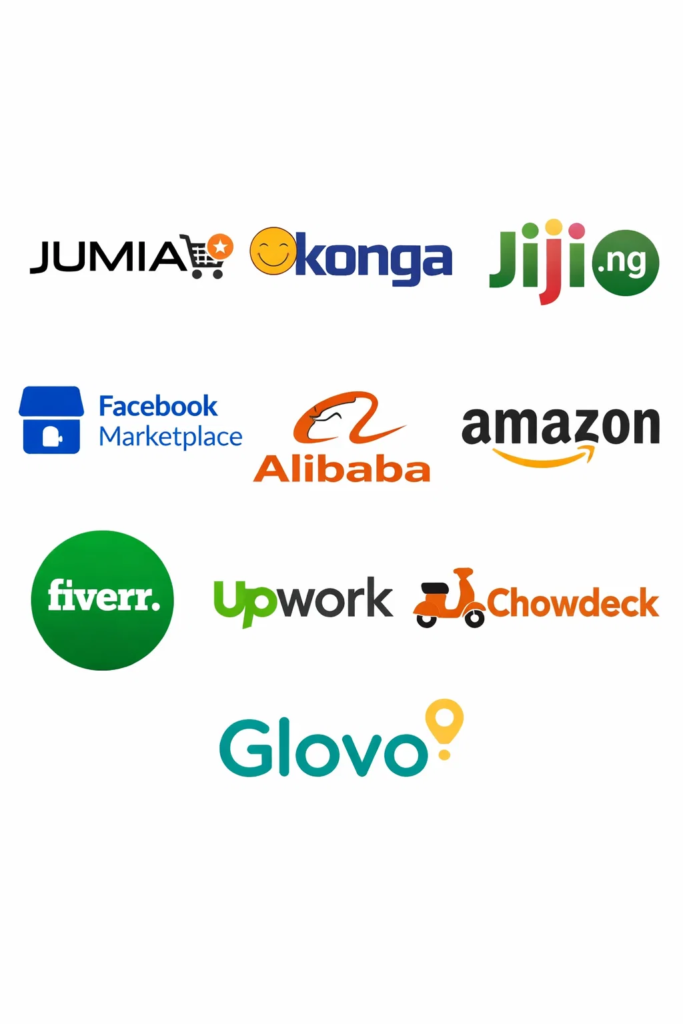
Jumia remains one of the biggest online marketplaces in Nigeria. It operates a structured B2C system where vendors list products and Jumia manages payments and sometimes logistics. For many vendors, it is the first serious online marketplace in Nigeria they consider.
Pros:
- Large customer traffic
- Integrated logistics support
- High brand recognition
Cons:
- Commission fees
- Strict performance standards
- Intense competition
Best for vendors who want scale and structure.
2. Konga
Konga online marketplace is another strong Nigerian ecommerce platform. It provides both marketplace listing and warehouse fulfillment options. Though smaller than Jumia, it remains one of the largest online marketplaces locally.
Pros:
- Nigerian-focused operations
- Warehousing available
- Growing enterprise partnerships
Cons:
- Lower traffic than Jumia
- Onboarding process may take time
Best for vendors seeking a strong local platform.
3. Jiji Nigeria
Jiji online marketplace is a classified C2C platform. It is widely known as a free online marketplace in Nigeria where sellers connect directly with buyers.
Pros:
- Free listing option
- Strong presence in car sales
- No mandatory commission
Cons:
- No built-in payment protection
- Requires negotiation
- Scam risks if careless
Best for small vendors and car dealers.
4. Facebook Marketplace
Facebook marketplace online is integrated into Facebook’s ecosystem. It functions as a free online marketplace and allows sellers to reach local buyers instantly.
Pros:
- Free listings
- Massive user base
- Easy communication
Cons:
- No integrated payment system
- Visibility depends on algorithm
Best for beginners and social sellers.
5. Alibaba
Alibaba is a Chinese online marketplace and one of the largest online marketplaces globally. It functions primarily as a B2B online marketplace for wholesale purchasing.
Pros:
- Wholesale pricing
- Large supplier network
- Global online marketplace access
Cons:
- Shipping complexity
- Supplier verification needed
- Longer delivery timelines
Best for importers and bulk resellers.
6. Amazon
Amazon is among the biggest international online marketplaces in the world. Nigerian vendors can access US online marketplaces through global selling programs.
Pros:
- Massive international traffic
- Fulfillment by Amazon (FBA)
- Secure payment systems
Cons:
- Complex setup
- Strict compliance
- Competitive marketplace
Best for vendors targeting international buyers.
7. Fiverr
Fiverr is an online freelance marketplace where Nigerians sell digital services globally. It’s ideal for creatives and tech professionals.
Pros:
- Low startup cost
- Global reach
- Flexible service model
Cons:
- Service fees
- High competition
Best for freelancers and digital entrepreneurs.
8. Upwork
Upwork is another international online freelance marketplace. It connects professionals with long-term contracts and serious clients.
Pros:
- Escrow protection
- Higher-paying contracts
- Professional client base
Cons:
- Strict approval
- Competitive bidding
Best for experienced freelancers.
9. Chowdeck
Chowdeck is an online food marketplace operating in major Nigerian cities. It allows restaurants to digitize their sales.
Pros:
- Growing urban demand
- Delivery integration
- Repeat customers
Cons:
- Commission charges
- Limited geographic coverage
Best for restaurants and food vendors.
10. Glovo
Glovo operates as an international online food marketplace in Nigeria. It allows vendors to sell food and convenience items.
Pros:
- Strong logistics system
- International credibility
- App convenience
Cons:
- Commission fees
- Competitive food space
Best for established food businesses.
Read also: Small Business Ideas for Female Students in Nigeria
Biggest Online Marketplaces vs Free Online Marketplace Options
If you want structure and scalability, the biggest online marketplaces like Jumia and Amazon offer systems, protection, and infrastructure.
If you want flexibility and zero capital entry, a free online marketplace in Nigeria like Jiji or Facebook Marketplace may be ideal.
Both models work depending on your strategy.
How to Start an Online Marketplace in Nigeria
If you are thinking beyond selling products and want to build your own online marketplace in Nigeria, the opportunity can be extremely rewarding. An online marketplace connects multiple vendors with buyers on a single platform, creating a digital ecosystem where transactions happen every day. However, building a successful marketplace online platform requires proper planning, technology, and a clear revenue model.
Below is a simplified structure that explains the key steps involved in launching an online marketplace.
1. Identify a Niche
The first step is choosing a specific niche for your online marketplace. Instead of trying to sell everything, it is usually smarter to focus on a particular category such as fashion, electronics, cars, or even a building materials online marketplace. A well-defined niche helps you attract the right vendors and target a clear audience from the beginning.
2. Validate Demand
Before investing heavily in technology, you need to confirm that there is real demand for your marketplace idea. This can be done through market research, surveys, competitor analysis, and testing your idea with a small audience. Understanding customer behavior and identifying gaps in existing online marketplace Nigeria platforms will help you build a platform people actually need.
3. Build a Website or Mobile App
Once the idea is validated, the next step is building the digital platform where buyers and sellers will interact. Most successful marketplaces operate through both websites and mobile apps to provide convenient access for users. The platform must include essential features like vendor registration, product listings, search filters, order management, and customer support tools.
4. Integrate Payment Gateways
Secure and reliable payment systems are essential for any online marketplace. In Nigeria, platforms often integrate payment gateways such as Paystack, Flutterwave, or other digital payment providers to allow customers to pay easily. A smooth payment process builds trust and reduces the chances of abandoned transactions.
5. Recruit Vendors
A marketplace is only as strong as the vendors selling on it. This means actively recruiting sellers who can offer quality products or services on your platform. Early-stage marketplaces often attract vendors by offering low commissions, promotional support, or free listings during the launch phase.
6. Launch Marketing Campaigns
After onboarding vendors, the next step is attracting customers. Marketing campaigns can include social media advertising, influencer partnerships, search engine optimization, and referral programs. Effective marketing helps your marketplace gain visibility and compete with established online marketplace platforms.
7. Implement a Commission Model
Most marketplaces generate revenue by charging a commission on each transaction. Some also earn through vendor subscription fees, listing fees, or premium advertising placements. Choosing the right monetization model ensures that your platform remains profitable while still attractive to vendors.
8. Scale Gradually
Once the marketplace begins to gain traction, the focus shifts to growth and scalability. This may involve expanding to new cities, adding more product categories, improving logistics partnerships, or enhancing platform features. Gradual scaling allows the marketplace to grow sustainably without overwhelming its infrastructure.
Building a successful marketplace online business requires capital, strong technology, effective vendor management, and compliance with relevant business regulations. However, when executed properly, an online marketplace can grow into a powerful digital ecosystem that connects thousands of buyers and sellers across Nigeria and beyond.
Frequently Asked Questions
What is an online marketplace?
An online marketplace is a digital platform where multiple independent sellers list products or services and customers purchase through that platform. It connects buyers and sellers under one system.
Which online marketplace is best in Nigeria?
The best online marketplace in Nigeria depends on your product. Jumia is ideal for structured retail, Jiji works well for cars and used goods, and Facebook Marketplace is great for free local selling.
What is the biggest online marketplace in Nigeria?
Jumia is widely considered the largest online marketplace in Nigeria based on brand recognition and ecommerce structure.
Is there a free online marketplace in Nigeria?
Yes. Jiji and Facebook Marketplace are free online marketplace options where vendors can list products without paying listing fees.
Can Nigerians sell on international online marketplaces?
Yes. Nigerians can sell on international online marketplaces like Amazon and freelance platforms like Fiverr and Upwork, provided they meet the platform requirements.
The Best Online Marketplace for You
The online marketplace Nigeria ecosystem is expanding rapidly. From B2B online marketplace platforms to online freelance marketplace options, opportunities are everywhere.
The best marketplace to sell online is not just about popularity, it’s about alignment with your product, capital, and ambition. In today’s digital economy, joining an online marketplace is not optional. It’s a strategic move.
The only question left is: which online marketplace will you dominate first?