
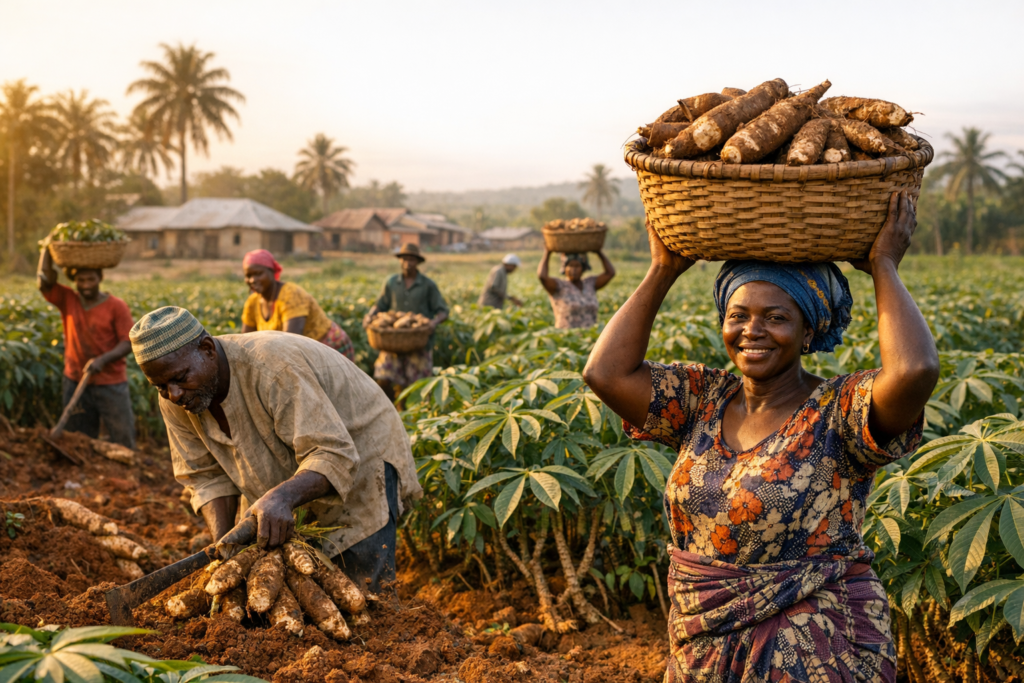

Cassava farming in Nigeria remains one of the most important agricultural activities in the country, both for food security and economic growth. Nigeria is currently the largest producer of cassava in the world, contributing millions of metric tons annually. This makes cassava farming in Nigeria not just a traditional practice, but a powerful agribusiness opportunity for anyone searching for a profitable business in Nigeria.
Cassava is a highly versatile crop used to produce staple foods like garri, fufu, and starch, as well as industrial products such as ethanol and animal feed. Its ability to grow in different soil types and withstand harsh weather conditions makes it ideal for both small-scale and commercial farmers. As food demand continues to rise, more Nigerians are turning to cassava farming as one of the most profitable business ideas in Nigeria.
However, while cassava farming is widely practiced, not everyone succeeds. Many beginners enter the business without proper knowledge of land preparation, improved seedlings, or market strategies. This leads to low yields and reduced profits. In this detailed guide, you will learn how to start cassava farming in Nigeria, understand the costs involved, and discover practical strategies to succeed as a beginner.
What Is Cassava Farming in Nigeria?
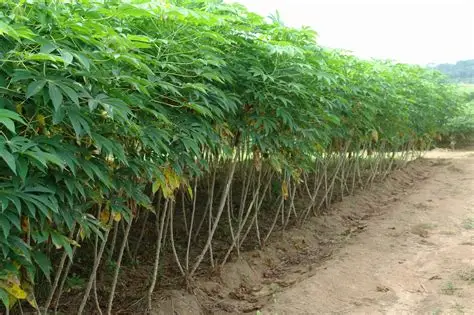
Before getting into the business, it’s important to understand what cassava farming involves. Cassava farming refers to the cultivation of cassava roots for food, processing, or industrial use. It is one of the most accessible forms of agriculture in Nigeria due to its relatively low maintenance requirements.
Farmers can engage in different forms of cassava production, including:
- Small-scale cassava farming
- Commercial cassava farming
- Mechanized cassava farming
- Cassava and maize farming (intercropping)
Each method has its own advantages, but all offer opportunities to build a cassava farming business in Nigeria that can grow over time.
Is Cassava Farming Profitable in Nigeria?
One of the most common questions beginners ask is: is cassava farming profitable in Nigeria? The simple answer is yes, but profitability depends on scale, management, and market access.
Cassava is in high demand across Nigeria because it is a staple food consumed daily by millions. Products like garri and fufu have constant market demand, while industries require cassava for starch and ethanol production.
Profit Potential
- 1 hectare of cassava can yield 10–30 tons depending on farming practices
- Profit margins increase with improved seedlings and proper farm management
- Additional income can be generated from cassava processing
This makes cassava farming one of the best profitable businesses in Nigeria, especially for beginners willing to learn and apply modern techniques.
However, profitability is influenced by:
- Cost of land and labor
- Quality of cassava stems
- Farming methods (manual vs mechanized)
- Market prices
When properly managed, cassava farming can become a business with high profit in Nigeria.
Cost of Starting Cassava Farming in Nigeria
Understanding the cost of starting cassava farming in Nigeria is essential before you begin. While cassava farming is more affordable than many businesses, it still requires planning and investment.
Land Acquisition or Leasing
- ₦50,000 – ₦300,000 per hectare (depending on location)
Land Preparation
- Clearing and plowing: ₦30,000 – ₦100,000
Cassava Stems (Planting Materials)
- ₦20,000 – ₦50,000 per hectare
Labor Costs
- Planting, weeding, and harvesting: ₦50,000 – ₦150,000
Fertilizers and Chemicals
- ₦30,000 – ₦100,000
Miscellaneous Costs
- Transportation, tools, and maintenance
Overall, the cost of cassava farming in Nigeria for 1 hectare can range from:
- ₦150,000 – ₦500,000
This relatively low startup cost makes it a small profitable business in Nigeria for beginners.
How to Start Cassava Farming in Nigeria
Starting a successful cassava farming business in Nigeria requires more than just planting stems in the soil. It involves careful planning, proper execution, and consistent farm management. Many beginners fail because they skip key steps such as feasibility studies and land preparation. Following a structured approach greatly increases your chances of building a profitable cassava farming business in Nigeria.
Conduct a Feasibility Study
Before investing in cassava farming, you need to carry out a proper feasibility study. This helps you understand land availability, market demand, expected costs, and potential risks in your chosen location.
A feasibility study also allows you to identify profitable buyers, estimate production output, and avoid unnecessary losses. It is an essential first step for anyone serious about succeeding in cassava farming in Nigeria.
Create a Business Plan
A well-structured cassava farming business plan acts as your roadmap and guides every stage of your farming journey. It helps you organize your goals, manage resources effectively, and track your progress.
Your cassava farming business plan in Nigeria should clearly include:
- Startup costs and funding sources
- Production scale and farming method
- Marketing and sales strategy
- Expected revenue and profit projections
With a solid plan, you reduce uncertainty and increase your chances of running a sustainable farm.
Choose Suitable Land
Selecting the right land is critical to achieving high cassava yield. Cassava grows best in well-drained, fertile loamy soil that supports strong root development.
Avoid waterlogged or clay-heavy soil because it can lead to root rot and poor crop performance. The location should also be accessible for transportation and farm operations.
Prepare the Land Properly
Land preparation is one of the most important stages in cassava farming. It involves clearing bushes, removing debris, and plowing the soil to make it suitable for planting.
Proper land preparation improves soil aeration, reduces weed growth, and enhances root development. This step directly influences your overall yield and farm productivity.
Plant Improved Cassava Stems
Using high-quality planting materials is essential for success. Improved cassava varieties are more resistant to diseases and produce higher yields compared to traditional stems.
Plant the stems at the correct spacing and depth to ensure proper growth and tuber development. Poor planting techniques can significantly reduce output and profitability.
Apply Fertilizer and Control Weeds
Fertilizer application helps improve soil nutrients and supports healthy plant growth. Using the right fertilizer at the right time ensures stronger stems and larger tubers.
Regular weeding is equally important because weeds compete with cassava plants for nutrients and water. Proper maintenance leads to higher productivity and better farm results.
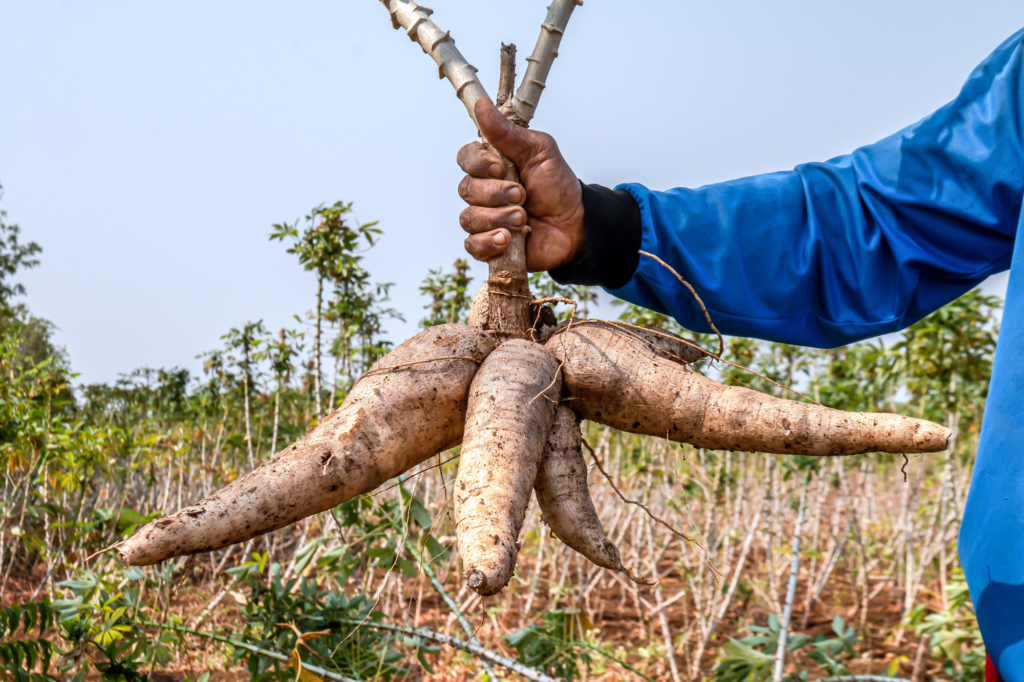
Harvest at the Right Time
Cassava is typically ready for harvest between 9 to 12 months, depending on the variety and farming method used. Harvesting too early can reduce yield, while delaying too long may affect quality.
Careful timing ensures maximum tuber size and market value. Proper harvesting practices also reduce post-harvest losses.
Mechanized vs Manual Cassava Farming
Choosing between manual and mechanized cassava farming in Nigeria depends on your budget and scale.
Manual Farming
- Lower cost
- Suitable for small-scale farmers
- Labor-intensive
Mechanized Farming
- Higher efficiency
- Suitable for large-scale operations
- Requires more capital
Mechanization can significantly increase productivity and profitability in the long run.
How to Make Money from Cassava Farming in Nigeria
Cassava farming is not limited to simply harvesting and selling raw tubers. In fact, the real wealth in cassava farming in Nigeria comes from diversifying your income streams and moving up the value chain. By processing and exploring different market opportunities, farmers can significantly increase their earnings and turn cassava farming into a truly profitable agribusiness.
Sell Raw Cassava
One of the simplest ways to make money is by selling freshly harvested cassava tubers directly to local markets or bulk buyers. Many traders, food vendors, and processors rely on farmers for steady supply, creating a consistent market.
Although this method requires less effort, profit margins are usually lower compared to processed products. However, it is still a reliable entry point for beginners in farming cassava in Nigeria.
Process into Garri or Fufu
Processing cassava into garri, fufu, or lafun is one of the most common and profitable methods of adding value. These products are widely consumed across Nigeria, ensuring constant demand throughout the year.
By processing your harvest instead of selling raw tubers, you significantly increase your profit margin. This makes value addition one of the most important strategies for successful cassava farming.
Produce Cassava Flour or Starch
Cassava flour and starch are highly valuable industrial products used in baking, confectionery, textiles, and pharmaceuticals. These products have a higher market value compared to traditional cassava products.
With proper processing and packaging, farmers can tap into both local and international markets. This creates a strong opportunity for scaling a cassava farming business in Nigeria into a commercial enterprise.
Supply to Industries
Large-scale industries use cassava as a raw material for ethanol production, animal feed, and other industrial applications. Supplying directly to these industries can provide bulk sales and stable income.
This market is particularly profitable for commercial farmers who produce cassava in large quantities. It also helps stabilize income by reducing dependence on fluctuating local market prices.
Diversify Your Income Streams
Diversification is key to long-term success in cassava farming. Instead of relying on a single product, combining raw sales, processing, and industrial supply increases your earning potential.
This approach reduces financial risk and ensures steady income even when one market segment experiences a price drop. It is one of the most effective ways to build a profitable business to start in Nigeria through agriculture.
Challenges of Cassava Farming in Nigeria
While cassava farming is profitable, it is not without challenges. Understanding these obstacles helps farmers prepare better and reduce potential losses in their operations.
Poor Farming Practices
Many farmers still rely on traditional methods that limit productivity and reduce overall yield. Lack of proper knowledge about spacing, soil management, and improved seedlings can significantly affect profits.
Without adopting modern farming techniques, farmers may struggle to achieve optimal results in cassava farming in Nigeria.
Pest and Disease Attacks
Cassava crops are vulnerable to pests and diseases such as cassava mosaic disease and bacterial blight. These can reduce yield drastically if not properly managed.
Regular monitoring, use of resistant varieties, and proper farm hygiene are essential to minimize these risks and protect farm productivity.
Market Fluctuations
Cassava prices often fluctuate depending on seasonal supply and demand conditions. During harvest periods, oversupply can lead to lower prices, affecting farmers’ income.
This instability makes it important for farmers to consider storage or processing options to maintain stable earnings throughout the year.
Limited Access to Finance
Many small-scale farmers struggle to access funding needed for expansion or mechanization. This limits their ability to scale operations and increase profitability.
Without adequate financial support, it becomes difficult to invest in modern equipment or improve production capacity. Understanding this challenge is essential for planning a sustainable cassava farming business.
Tips to Succeed in Cassava Farming in Nigeria
To build a successful cassava farming business in Nigeria, you need more than just land and planting materials. Long-term success depends on adopting smart farming strategies, proper planning, and consistent learning. These practices help you reduce risks, improve yield, and turn cassava farming into one of the most profitable business ideas in Nigeria.
Start Small and Scale Up
It is always advisable to begin with a manageable portion of land, especially if you are a beginner. Starting small allows you to understand the farming process, manage risks better, and avoid large-scale losses.
As you gain experience and confidence, you can gradually expand your farm size and production capacity. This step-by-step growth approach helps you build a stable and sustainable cassava farming business in Nigeria.
Use Improved Varieties
The type of cassava stems you plant has a major impact on your yield and profitability. Improved and high-yield varieties produce larger tubers, resist common diseases, and mature faster than local varieties.
By using quality planting materials, you significantly increase productivity per hectare, which directly improves your income. This is one of the most important factors in making cassava farming in Nigeria highly profitable.
Invest in Processing
Relying only on raw cassava sales limits your earning potential, especially when market prices fluctuate. Processing cassava into products like garri, fufu, starch, or flour adds value and increases your profit margin.
Processed cassava products also have a wider market and longer shelf life, making them easier to store and sell. This value-chain approach is one of the best ways to increase how much you can make from cassava farming.
Keep Records
Proper record-keeping is essential for running a successful farm business. You should track all expenses such as land preparation, labor, fertilizers, and transportation, along with your total income from sales.
This helps you understand whether your farm is profitable or not and allows you to make better financial decisions. Without records, it becomes difficult to measure growth or identify areas of loss.
Learn Continuously
Agriculture is constantly evolving, and cassava farming is no exception. Staying updated on modern techniques such as improved planting methods, pest control, and mechanization can greatly improve your productivity.
You can learn through agricultural workshops, online resources, or by interacting with experienced farmers. Continuous learning ensures that your farming methods remain efficient and competitive in today’s market.
Frequently Asked Questions (FAQ)
1. Is cassava farming profitable in Nigeria?
Yes, it is profitable when managed properly with good farming practices.
2. How much does it cost to start cassava farming?
It can cost between ₦150,000 and ₦500,000 per hectare.
3. How long does cassava take to grow?
Cassava matures in 9–12 months depending on the variety.
4. What is the best soil for cassava farming?
Well-drained, loamy soil is ideal.
5. Can I start cassava farming with little capital?
Yes, it is considered a small profitable business in Nigeria.
6. What are the major challenges?
Pests, diseases, and market fluctuations.
7. How can I increase my profit?
By processing cassava into value-added products like garri.
8. Is mechanized farming necessary?
Not for beginners, but it helps increase productivity.
9. Can cassava be intercropped?
Yes, cassava and maize farming in Nigeria is common.
10. Is cassava farming suitable for beginners?
Yes, it is beginner-friendly and highly scalable.
Conclusion
Cassava farming in Nigeria continues to stand out as one of the most reliable agricultural ventures in 2026. With strong demand for cassava-based products and relatively low startup costs, it offers a great opportunity for beginners looking to enter agribusiness. Whether you are interested in small-scale farming or large commercial production, the potential for growth is significant.
However, success in cassava farming requires more than just planting crops. It demands proper planning, good farm management, and a clear understanding of the market. Farmers who invest in improved seedlings, proper land preparation, and value addition are more likely to succeed.
In the end, cassava farming is not just a profitable business in Nigeria, but also a sustainable way to build long-term wealth. With the right strategy and commitment, you can turn your cassava farm into a thriving agribusiness that generates consistent income for years to come.