
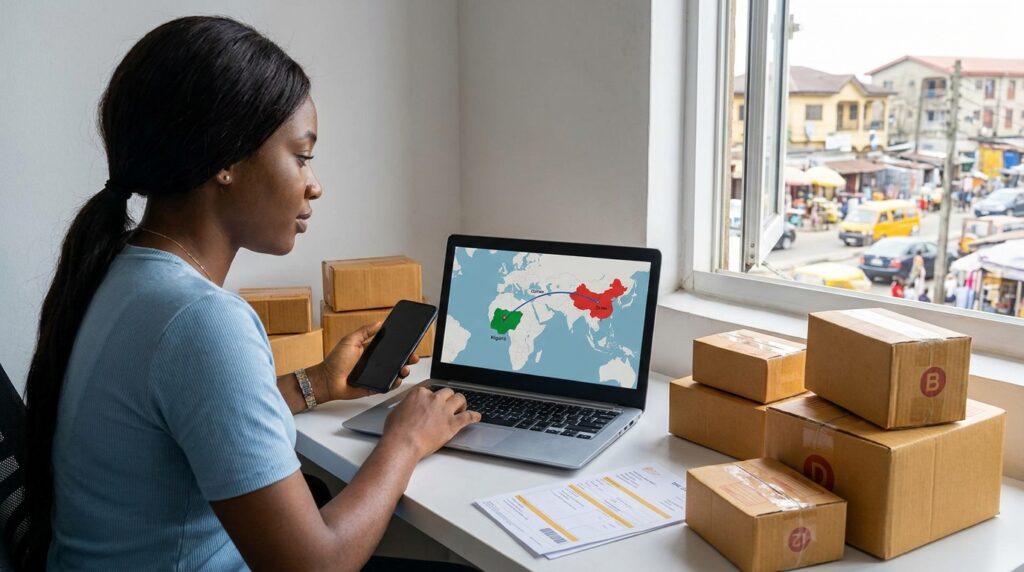

If you have been looking for a business you can start in Nigeria with relatively little capital, that does not require a university degree or years of experience, and that has the potential to grow into something truly substantial, mini importation from China is one of the most realistic options available to you right now.
Thousands of Nigerians are already doing it. The person selling phone accessories in your street market probably sources them from China. The lady on Instagram offering affordable fashion jewellery most likely imports it. The guy running a gadgets page on WhatsApp with hundreds of customers did not manufacture those products locally. They figured out how to do mini importation from China, started small, and built a business that now pays their bills and then some.
This guide is for you if you are just getting started and have no idea where to begin. We are going to walk through the entire process from scratch, in plain language, with specific details that apply to the Nigerian context. By the time you finish reading, you will know exactly what mini importation is, how it works, what to buy, where to buy it, how to get it into Nigeria, and how to start selling profitably.
What Is Mini Importation?
Mini importation simply means buying goods in small quantities from foreign suppliers, typically from China, and reselling them locally at a profit. The word mini refers to the scale. You are not filling a shipping container like a large importer. You are ordering small quantities, often as few as five to twenty units of a product, testing the market, and scaling up gradually as you make sales.
China is the most popular source country for Nigerian mini importers for a few very straightforward reasons. Chinese manufacturers produce an enormous range of products at prices that are significantly lower than what you would find anywhere else in the world. Platforms like Alibaba, AliExpress, and 1688.com make it easy to browse millions of products, compare suppliers, and place orders from anywhere in the world with just a smartphone and an internet connection.
The business model is simple. You find a product that Nigerians want to buy. You source it from China at a low price. You bring it into Nigeria. You sell it at a higher price. The difference between what you paid and what you sell for is your profit.
How Much Do You Need to Start Mini Importation in Nigeria?
This is usually the first question people ask, and the honest answer is that it depends on what you want to sell and how you plan to ship it.
As a rough guide:
- A very small start (air freight, low-cost products): ₦50,000 to ₦150,000
- A comfortable beginner budget: ₦150,000 to ₦500,000
- A solid start with good product variety: ₦500,000 to ₦1,000,000
You can technically start with less than ₦50,000 if you use certain platforms and shipping methods, but starting too small often means your profit margins are too thin to reinvest meaningfully. A budget of ₦100,000 to ₦300,000 gives most beginners enough room to order a decent quantity of products, cover shipping, and still have something left for marketing.
Step by Step: How to Do Mini Importation from China as a Nigerian
Step 1: Choose a Product to Import
This is the most important decision you will make in your mini importation business. The right product can make you consistent profit. The wrong product can leave you with stock you cannot sell and money you cannot recover.
Here is how to choose the right product to import from China:
Look for products with consistent demand in Nigeria. The best products for mini importation are things Nigerians buy regularly and in large numbers. Phone accessories, fashion items, beauty products, baby products, fitness equipment, kitchen gadgets, stationery, and small electronics all fall into this category.
Choose products that are easy to ship. Lightweight, compact items cost significantly less to ship by air than heavy, bulky ones. As a beginner, stick to items that weigh less than 5kg per unit and that are not fragile or perishable.
Look for products where there is a clear price gap. Find something you can buy from China for ₦1,500 to ₦3,000 and sell in Nigeria for ₦5,000 to ₦10,000. A markup of two to four times your landed cost (product price plus shipping) is a healthy target for mini importation.
Avoid heavily regulated or restricted items. As a beginner, stay away from pharmaceuticals, food products, electronics with strict certification requirements, and anything that requires special import permits. These add complexity and cost that beginners do not need.
Research what is already selling. Spend time on Instagram, Jiji, Jumia, and Konga looking at what sellers are actively promoting and what products have lots of buyer engagement. If people are already buying it, there is a market. Your job is to offer it competitively.
Popular product categories for Nigerian mini importers in 2026 include:
- Phone accessories (cases, chargers, earphones, holders)
- Fashion jewellery and accessories
- Human hair and hair care products
- Fitness and gym equipment (resistance bands, dumbbells, mats)
- Baby products and toys
- Kitchen gadgets and cooking tools
- Stationery and office supplies
- Car accessories
- Beauty and skincare tools
- LED lights and home decor
Step 2: Find a Reliable Supplier on the Right Platform
Once you know what you want to sell, the next step is finding the right supplier to buy from. There are three main platforms that Nigerian mini importers use to source products from China.
AliExpress (aliexpress.com)
AliExpress is the most beginner-friendly platform for mini importation from China. It is designed for international buyers, the interface is in English, prices are listed in US dollars, and most suppliers on AliExpress will sell you as few as one unit. This makes it ideal for testing products before committing to larger orders.
AliExpress also offers buyer protection, meaning if your order does not arrive or the product is significantly different from what was advertised, you can open a dispute and get a refund.
For Nigerian beginners, AliExpress is usually the best starting point.
Alibaba (alibaba.com)
Alibaba is where you go when you are ready to buy in larger quantities. Suppliers on Alibaba are typically manufacturers or large wholesalers who set minimum order quantities, often 50, 100, or 500 units. The prices are lower than AliExpress, but the minimum order requirements mean you need more capital.
As a beginner, Alibaba is better suited to your second or third order once you have already tested the market and know exactly what is selling.
1688.com
1688 is Alibaba’s domestic Chinese platform, where Chinese businesses buy from each other. Prices on 1688 are typically the lowest you will find anywhere, sometimes 30 to 50 percent cheaper than AliExpress for the same product. However, the entire platform is in Mandarin, and suppliers on 1688 generally do not deal with international buyers directly.
Most Nigerians who use 1688 do so through a sourcing agent, which we will cover in a moment.
How to evaluate a supplier on any platform:
- Check their ratings and reviews. Look for suppliers with consistently high ratings and a significant number of completed orders
- Read the negative reviews carefully. They often reveal recurring problems with product quality, packaging, or shipping times
- Check how long the supplier has been active on the platform. Longer track records generally indicate more reliable sellers
- Message the supplier before ordering. Ask questions about the product, shipping options, and customisation. A responsive, professional supplier is a good sign
- Order a sample before committing to a large quantity. This is one of the most important habits a mini importer can develop
Step 3: Understand Your Shipping Options
Getting your products from China to Nigeria is where a lot of beginners get confused, and it is also where a lot of money can be lost if you do not understand your options.
There are two main shipping methods for mini importation from China to Nigeria.
Air Freight
Air freight means your goods are flown from China to Nigeria. It is significantly faster than sea freight, typically taking between 7 and 21 days depending on the shipping company and route. It is also more expensive per kilogram, which is why it works best for lightweight, high-value products where the profit margin can absorb the shipping cost.
For Nigerian mini importers just starting out, air freight is usually the preferred option because you are not importing enough volume to make sea freight economical, and the faster delivery means you can test products and reinvest your profit more quickly.
Several Nigerian companies specialise in helping importers bring goods from China by air freight. Some of the well-known ones include Cowries Express, Easy Buy China, and various other freight agents who advertise actively on social media. These agents handle the logistics of picking up your goods from the supplier in China, consolidating them with other shipments, flying them to Nigeria, and clearing them through Nigerian customs.
Sea Freight
Sea freight is much cheaper per kilogram than air freight, but it is significantly slower, typically taking 30 to 60 days from China to Nigerian ports. It is most economical when you are importing large, heavy, or bulky items that would cost a fortune to fly.
As a beginner doing mini importation, sea freight is generally not your first choice. Once your business grows to the point where you are importing larger volumes, sea freight becomes worth the longer wait time because the cost savings are substantial.
Using a Freight Agent
Most Nigerian mini importers, especially beginners, use a freight agent rather than dealing directly with shipping companies. A good freight agent will:
- Give you their warehouse address in China where your supplier can deliver your goods
- Consolidate your shipment with others to reduce your per-kilogram cost
- Handle Chinese export documentation
- Clear your goods through Nigerian customs
- Deliver to your address in Nigeria or arrange pickup at their Nigerian office
Freight agents charge per kilogram, and rates vary. Shop around and compare rates from a few agents before committing. Ask other Nigerian importers in online communities for recommendations, as word-of-mouth referrals are the most reliable way to find trustworthy agents.
Step 4: Place Your Order and Arrange Shipping
Once you have chosen your product, found a reliable supplier, and identified a freight agent, placing your order is relatively straightforward.
Here is the typical process:
- Get your freight agent’s warehouse address in China
- Place your order on AliExpress or with your supplier, and use the freight agent’s Chinese warehouse address as the delivery address
- Inform your freight agent that a delivery is coming so they can receive it and log it under your account
- Once your goods arrive at the Chinese warehouse, your freight agent will weigh them, calculate your shipping cost, and invoice you
- Pay the shipping fee and your goods will be dispatched to Nigeria
- When your goods arrive in Nigeria, your freight agent handles customs clearance (they will inform you if any customs duties are payable)
- Collect your goods or have them delivered to you
The entire process from placing your order to receiving your goods in Nigeria typically takes between two and four weeks for air freight shipments.
Step 5: Price Your Products for Profit
Many Nigerian mini importers make the mistake of pricing their products based purely on what competitors are charging, without properly understanding their own costs. This leads to thin margins that leave no room for marketing, returns, or business reinvestment.
Here is a simple pricing framework to use:
Landed Cost = Product price + Shipping cost + Any customs duties
Selling Price = Landed Cost multiplied by your desired markup (aim for 2x to 4x for most product categories)
For example: if you buy a product for ₦2,000 and your share of the shipping cost adds ₦800, your landed cost is ₦2,800. Selling at ₦7,000 gives you a markup of 2.5x and a gross profit of ₦4,200 per unit before your selling and marketing costs.
Also factor in:
- Platform fees if you are selling on Jumia or Konga
- Packaging materials
- Delivery costs if you offer nationwide shipping
- Payment processing fees if you use Paystack or Flutterwave
Once you account for all of these, you will have a clear picture of your actual profit per unit.
Step 6: Sell Your Products and Find Customers
Having great products at competitive prices means nothing if you cannot find buyers. Here are the most effective ways Nigerian mini importers sell their products.
Instagram and Facebook
These two platforms remain the most powerful sales channels for Nigerian mini importers. Set up a dedicated business page for your imported products, post high-quality photos and videos of your items, share customer reviews, run occasional flash sales, and engage actively with your audience every day.
WhatsApp Business
Build a broadcast list of interested buyers and update your status daily with product photos, new arrivals, and special offers. WhatsApp is particularly powerful for repeat business because customers who have bought from you once and had a good experience will come back again when they see your new stock.
Jiji.ng
Jiji is one of the most visited websites in Nigeria and gets millions of product searches every day. Listing your imported products on Jiji exposes you to buyers who are actively searching for what you sell. Basic listings are free, and the platform is easy to use.
Jumia and Konga
Registering as a seller on Jumia or Konga gives you access to their massive existing customer base. These platforms handle payment processing and give buyers confidence through their buyer protection policies. The trade-off is that they charge commission on each sale, so factor this into your pricing.
TikTok
TikTok is becoming an increasingly powerful sales channel for Nigerian product sellers. Unboxing videos, product demonstrations, and before-and-after content can generate significant organic reach and drive direct enquiries to your WhatsApp or Instagram page.
How Queposts Can Help Your Mini Importation Business Reach More Customers
One of the most underused strategies for Nigerian mini importers is listing their business and products on dedicated discovery platforms. Most importers focus on Instagram and WhatsApp, which are excellent, but they miss a significant opportunity by not being present on platforms where buyers are actively searching for products.
This is where Queposts comes in, and it offers something particularly valuable for mini importation businesses.
Queposts is a next-generation business portal designed to help businesses, professionals, and consumers discover each other with ease. From company listings and classified ads to jobs, events, and industry content, Queposts connects people to opportunities locally and globally.
For your mini importation business, Queposts gives you two powerful tools in one place.
List Your Business
Create a professional company listing on Queposts that makes your importing business discoverable to customers across Nigeria and beyond. Your listing can include your business name, the product categories you sell, your location, contact details, and links to your social media pages or website.
This means that when someone searches for phone accessories in Lagos, fashion jewellery in Abuja, or kitchen gadgets in Port Harcourt, your business has the chance to appear in their results. You are not just visible to people who already follow you on Instagram. You are discoverable to entirely new customers who have never heard of you before.
List Your Products Directly
This is what makes Queposts particularly valuable for mini importation businesses. Beyond just listing your business, you can also list individual products directly on the platform. Think of it as having your own mini online store within a marketplace that already has an audience.
When buyers browse Queposts looking for a specific product, your listings appear alongside your business profile, giving potential customers two ways to find you and engage with your business. A buyer who finds your product listing can immediately see your business profile, read about what you do, contact you directly, and become a paying customer, all without you having spent a kobo on advertising.
For a mini importation business that is constantly bringing in new stock and new product lines, this ability to list products individually is a significant advantage. Every new shipment you receive is an opportunity to add fresh listings, keep your profile active, and attract new buyers who are specifically searching for what you have just imported.
Getting your business and products listed on Queposts is one of the smartest and most affordable steps you can take to grow your customer base beyond your existing social media followers.
Common Mistakes Nigerian Mini Importers Make and How to Avoid Them
Ordering large quantities without testing first. Always test a small batch before committing to a large order. No matter how promising a product looks, the Nigerian market will give you the final verdict.
Choosing products based on personal taste rather than market demand. Your job as an importer is not to sell what you like. It is to sell what your customers want to buy. Let market research guide your product choices, not personal preference.
Ignoring product quality. Cheap does not always mean good value. Consistently selling low-quality products will damage your reputation quickly in a market where customer reviews and word-of-mouth are everything.
Not building a brand. Many Nigerian mini importers operate anonymously, which makes it very hard to build customer loyalty. Give your business a proper name, create professional-looking packaging where possible, and invest in your brand identity from the beginning.
Underestimating shipping costs. Shipping from China to Nigeria is not cheap, and many beginners forget to factor the full shipping cost into their pricing. Always calculate your landed cost before deciding on your selling price.
Selling everything to everyone. The most successful mini importers in Nigeria focus on a specific niche rather than selling random products. When you become known as the go-to person for a specific category, customers trust you more and refer more people to you.
Final Thoughts
Mini importation from China is one of the most accessible and realistic business opportunities available to Nigerians today. You do not need a special connection, a government licence, or millions of naira to get started. You need a reliable internet connection, a smartphone, the willingness to research your market, and the discipline to start small, learn fast, and reinvest consistently.
The Nigerian market is enormous. There are buyers in Lagos, Abuja, Port Harcourt, Kano, Enugu, Owerri, Benin City, and every other corner of this country who are looking for quality products at fair prices. Your job as a mini importer is to find those products, bring them in, and make sure buyers can find you.
Use every platform available to you. Sell on WhatsApp and Instagram. List on Jiji and Jumia. And make sure your business and products are visible on Queposts so that customers who are actively searching for what you sell can find you quickly and easily.
Start with one product. Master the process. Then scale.