

Running a supermarket in Nigeria is not a passive business. You cannot open the doors, stack the shelves, and wait for customers to show up out of habit or goodwill. Not anymore. The Nigerian retail space has changed dramatically. Shoppers in Lagos, Abuja, Port Harcourt, Enugu, Ibadan, and across the country have more options than ever before. There are bigger supermarkets. There are informal markets. There is growing e-commerce. And there is a customer base that has become more price-conscious, more quality-aware, and considerably less loyal than it was ten years ago.
What this means for supermarket owners is simple: the business that markets itself well wins. Not the one with the largest floor space or the longest opening hours, although those things help. The one that is most visible, most trusted, and most responsive to what its customers actually need is the one that fills its aisles and keeps its tills ringing.
This guide covers twelve strategies that are working for Nigerian supermarkets in 2026, from the foundational things that many operators still get wrong to the digital tools and community tactics that are pulling real customers through real doors.
How to Attract Customers to Your Supermarket – Strategies that Help
Get Your Google Business Profile Right
Before anything else, before social media, before loyalty cards, before any of the strategies that follow, fix this one.
When a resident in Lekki types “supermarket near me” into Google, or a family in Wuse 2 searches “grocery store open now in Abuja,” what comes up at the top of the results is not always the biggest supermarket in the area. It is the one with a complete, well-maintained Google Business Profile.
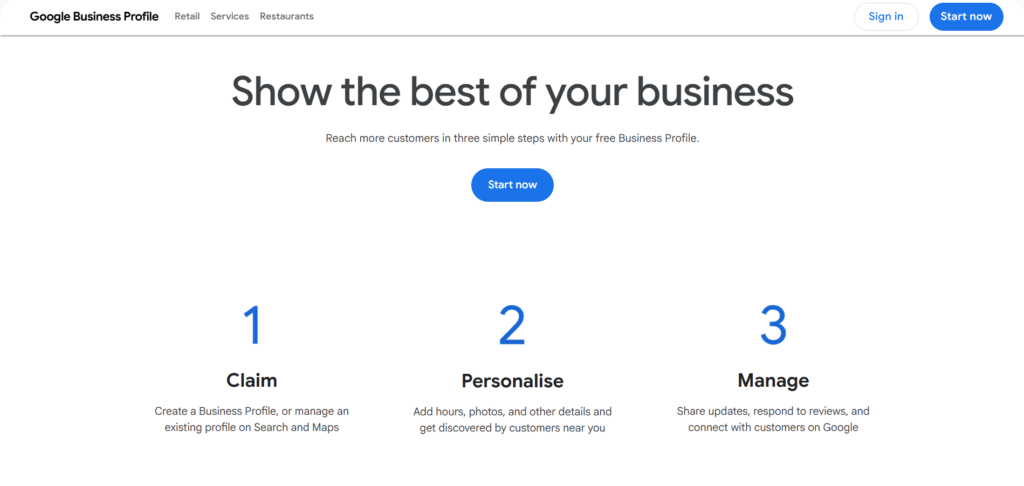
Google Business Profile is free. It puts your supermarket on Google Maps, shows your opening hours, displays your phone number, and lets customers leave reviews that others can read before deciding where to shop. A supermarket with forty reviews averaging 4.2 stars and updated photos of its aisles will consistently attract more foot traffic from local searches than a competitor with an unclaimed listing and no reviews, regardless of which one is actually better stocked.
Claim your profile at business.google.com if you have not already. Fill in every field completely: your exact address, your trading hours including Sundays and public holidays, your phone number, a description of what you stock, and photos of your interior, exterior, and product sections. Update it when your hours change. Respond to every review, positive and negative, because potential customers read both the reviews and how you respond to them.
This single step takes a few hours to set up properly and will continue to attract customers through local searches for as long as your business exists.
Make Your Store Experience Worth Talking About
The most powerful marketing any supermarket can do costs nothing extra. It is the experience of shopping in your store.
Nigerians talk. If your aisles are clean, your staff are helpful, your products are clearly labelled with accurate prices, and the checkout process does not take twenty minutes, people will tell others. If your store is disorganised, your shelves are half-empty, and customers feel ignored, they will also tell others. In a market where word of mouth is still one of the primary ways Nigerian consumers decide where to shop, your store experience is a marketing decision, not just an operations one.
The specific things that matter most in Nigerian supermarket retail are worth naming directly. Air conditioning that actually works, especially in cities like Lagos and Kano, where the heat is relentless. Clean, well-lit aisles that do not feel cramped. Prices are displayed clearly on shelves rather than requiring customers to ask. Enough checkout points to handle traffic during peak hours without creating queues that drive people away. And staff who greet customers, know where products are, and handle complaints without making customers feel like they are the problem.
None of this is glamorous. But it is the foundation on which every other marketing strategy in this guide depends.
Build a Loyalty Programme That Gives Customers a Reason to Return
Shoprite, Spar, and the larger Nigerian chains have loyalty programmes because loyalty programmes work. They convert occasional shoppers into regular ones, and regular customers spend more, visit more frequently, and are more likely to forgive the occasional stock-out or service failure.
For independent Nigerian supermarkets, a loyalty programme does not need to be technologically complex. A physical stamp card that gives customers a free item or a percentage discount after a set number of visits costs almost nothing to implement and produces a measurable increase in return visits.
If you want something more trackable, a simple points system built on a WhatsApp number database can work well in the Nigerian context. Customers provide their phone number at checkout, you log their purchase total, and they receive a WhatsApp message when they hit a redemption threshold. This approach also gives you a direct communication channel for promotions, restocking announcements, and seasonal offers. You can use tools like Loyster or Bumpa for this.
The key is making the reward feel genuinely worth having. A loyalty programme that takes six months of weekly shopping to earn a ₦500 discount will not change behaviour. One that delivers a tangible reward within a shopping cycle that people can actually see will.
Run Promotions That Drive Traffic at the Right Times
Promotions work best when they are designed around your store’s specific traffic patterns and your customers’ specific shopping habits, not just copied from what international chains do.
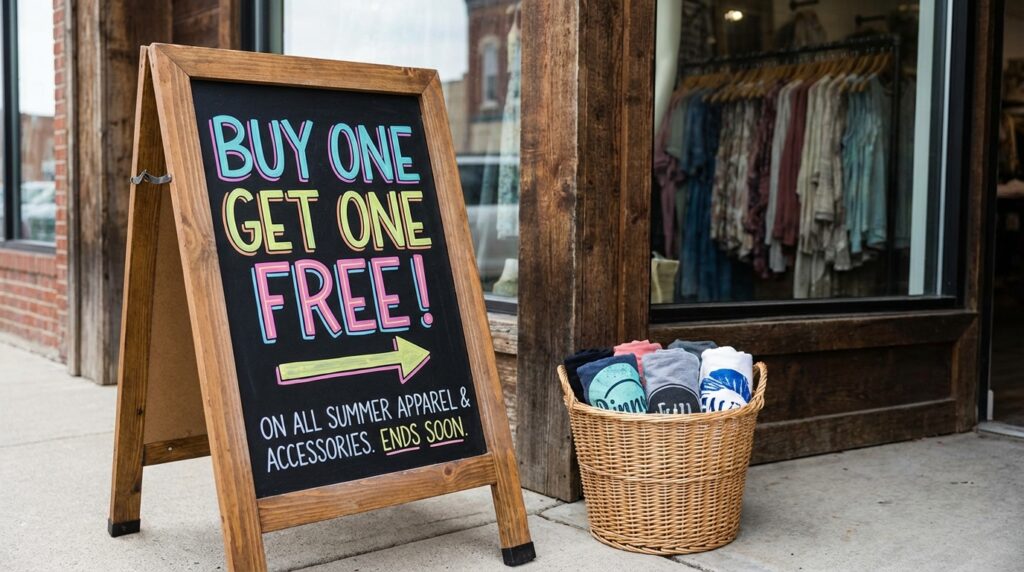
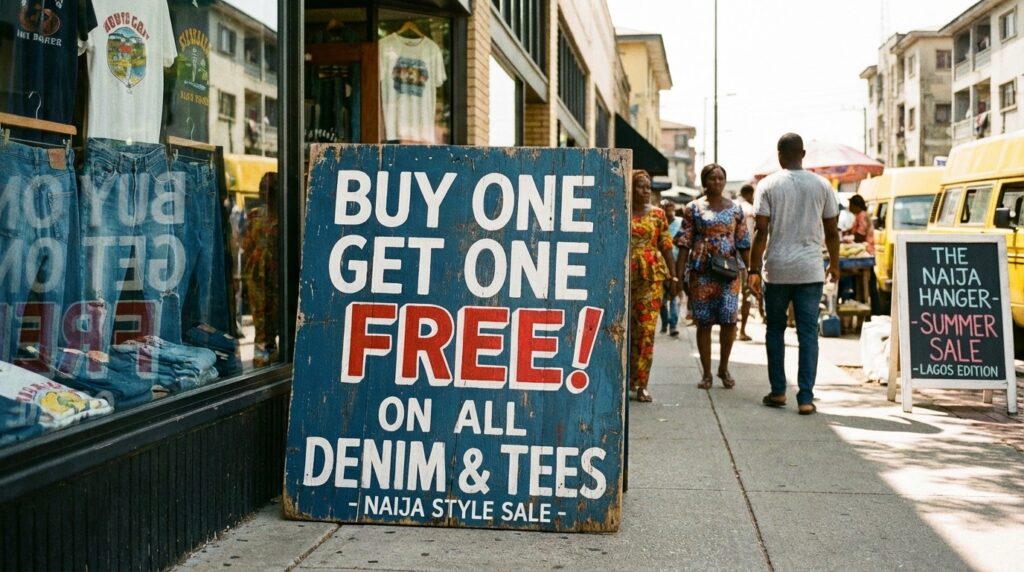
Nigerian supermarket customers respond strongly to a few formats in particular. Weekend bundles that combine frequently purchased items at a slightly reduced combined price drive basket size on the days when more people have time to shop. Monthly or weekly specials on popular staples like rice, cooking oil, tomatoes, and noodles pull price-sensitive shoppers who might otherwise buy those items from open markets. And end-of-month promotions timed around when salaries are paid in Nigeria give customers a reason to consolidate their monthly grocery run in your store rather than spreading it across several locations.
Be specific about what you discount and why. Blanket discounts on everything signal to customers that your regular prices are inflated. Targeted promotions on specific products that are genuinely good value create the impression of a store that understands its customers and rewards them for shopping there.
Promote your specials on WhatsApp broadcasts, your social media pages, and physical in-store signage at least three to four days before they begin so customers can plan their shopping trips around them.
Use WhatsApp to Stay in Your Customers’ Minds
WhatsApp is the most direct marketing channel available to any Nigerian business, and supermarkets that use it well build a level of customer retention that no social media following can replicate.
Set up a WhatsApp Business account for your supermarket. Build a broadcast list from customer numbers collected at checkout, through your loyalty programme, or from opt-in forms at your entrance. Then use it consistently but not excessively. Two to three messages per week is enough to stay visible without becoming intrusive.
What works on a supermarket WhatsApp broadcast: a short video or photo of fresh produce that just came in, a weekend special with clear pricing, a restock announcement for something that frequently sells out, and occasional genuinely useful content like recipes using ingredients you carry. What does not work: long text messages that read like brochures, daily promotional messages that feel spammy, and content that provides no value beyond reminding people that your store exists.
WhatsApp Status is equally useful and even lower effort. Posting a few photos of your daily deals or new arrivals on Status keeps your supermarket visible to every contact in your business phone’s list throughout the day. For supermarkets with established customer relationships, this kind of casual daily visibility builds the shopping habit more effectively than formal advertising.
Invest in Social Media Content That Reflects Real Nigerian Shoppers
A supermarket’s social media does not need to look like a glossy international food magazine. It needs to look like the food, the products, and the people that your actual customers recognise.
Instagram and Facebook work best for Nigerian supermarkets when the content is specific and local. A photo of your fresh tomatoes priced at ₦500 per basket will generate more engagement and more store visits than a generic food photograph. A short video of your bakery section with fresh bread just out of the oven at 7am, posted at 6:30am, reaches people planning their morning stop. A WhatsApp-linked Facebook ad promoting your weekend special to people within a five-kilometre radius of your store location reaches exactly the people who can actually shop with you.
The platform to prioritise depends on who shops at your supermarket. Facebook reaches an older, slightly more affluent Nigerian demographic that tends to do larger weekly shops. Instagram reaches younger shoppers aged 18 to 35 who are more influenced by visual presentation and tend to respond to Reels showing product quality and store atmosphere. TikTok is growing fast in Nigeria and is underused by supermarkets, which means the organic reach for a supermarket that starts posting entertaining, honest content there is currently unusually strong.
Post at least three times per week. Be consistent. Show your store, your products, your prices, and your staff in a way that feels like an authentic window into the shopping experience rather than a series of advertisements.
Partner with Food Creators and Local Influencers
In major Nigerian cities, food content creators and lifestyle influencers with between five thousand and fifty thousand followers carry real influence over where their audiences shop for groceries. A visit to your supermarket from a food blogger who posts an honest tour of your fresh produce section, your imported goods aisle, or your deli counter reaches exactly the demographic that values quality grocery shopping and is willing to travel for it.
These partnerships do not need to be expensive. Many Nigerian micro-influencers in the food and lifestyle space are willing to create content in exchange for store credit, a hamper of products, or a modest flat fee that is within the budget of most independent supermarkets.
What makes influencer content work for supermarkets is authenticity. An influencer who genuinely enjoys cooking and shopping and who shows their real experience in your store is valuable. A clearly sponsored post with forced enthusiasm for a brand the influencer never otherwise mentions is not.
Be selective. Choose creators whose audience demographics match your shopper profile and whose content style fits the image you want to build. A creator whose audience is mostly Lagos-based working women aged 25 to 40 is valuable to a mid-range supermarket with strong fresh food and imported goods sections. A creator whose audience is mostly teenagers interested in entertainment is not.
Offer Home Delivery or Click-and-Collect
Nigerian consumers increasingly expect convenience, and the supermarkets that are growing fastest in 2026 are those that have found practical ways to serve customers who cannot or prefer not to shop in person.
Home delivery does not need to be a logistics operation run from scratch. Many independent supermarkets in Lagos and Abuja have partnered with platforms like Glovo and Chowdeck, which handle the delivery infrastructure while the supermarket handles fulfilment. Others have built simple WhatsApp ordering systems where customers send a list, a staff member compiles the order, a payment is collected via transfer, and a dispatch rider delivers within the local area.
Click-and-collect, where customers order online or via WhatsApp and pick up their order at a scheduled time, eliminates delivery costs while still offering the convenience that busy urban shoppers value. For a supermarket near a major office cluster or along a commuter route, a well-promoted click-and-collect service can drive significant additional volume from customers who would otherwise shop at whichever store is most convenient in the moment.
The key in the Nigerian context is making the payment and ordering process as simple as possible. Bank transfer for payment, WhatsApp for orders, and a clear two to three-hour fulfilment window cover the vast majority of what customers need without requiring complex technology.
Get Listed on Queposts for Local and Global Visibility
Running a supermarket in Nigeria means competing for visibility in a market where customers search across multiple platforms before deciding where to shop. A strategy that covers Google, social media, and WhatsApp but misses other discovery channels leaves gaps that competitors can fill.
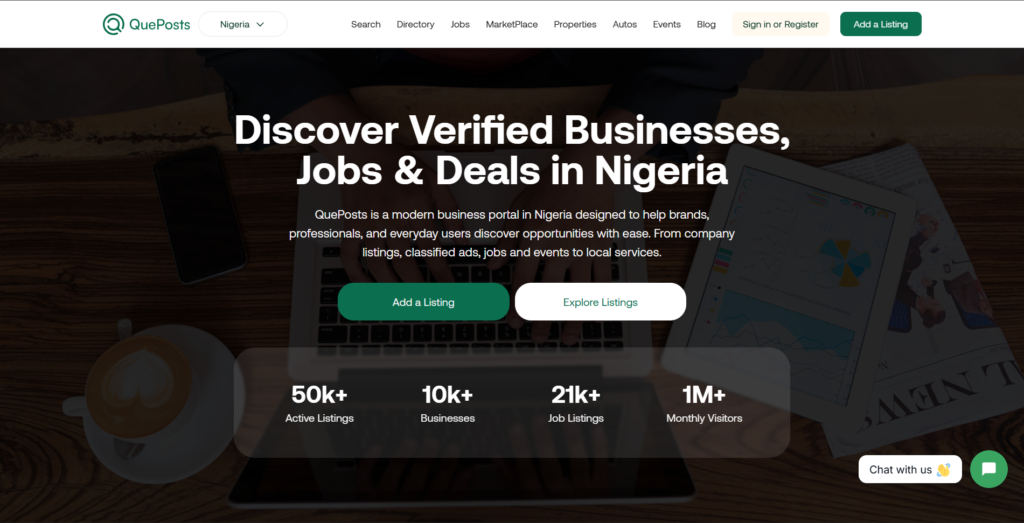
Queposts is a modern business portal built for local and global discovery, and for Nigerian supermarkets, it offers a specific kind of visibility that social media and Google alone do not provide.
When a customer moves to a new neighbourhood in Abuja and searches for a reliable supermarket nearby, or when a Nigerian living in the United Kingdom wants to recommend a good grocery store to a relative relocating to Lagos, they are searching on platforms beyond just Google and Instagram. A complete, professional Queposts listing puts your supermarket in front of those searches.
Beyond discovery, your Queposts listing functions as a credibility signal. A supermarket with a professional, detailed business profile that includes its location, product categories, opening hours, contact information, and a description of what makes it worth visiting communicates to potential customers that it is an established, serious business. In a retail environment where consumers are evaluating multiple options, this kind of third-party presence reinforces the trust that your other marketing works to build.
For supermarkets that stock imported goods and serve communities with international connections, the global reach of Queposts is particularly useful. Diaspora Nigerians often research and recommend specific local businesses to family members, and appearing on a platform with international visibility puts your supermarket in those conversations.
Getting listed is straightforward. Create a complete business profile with your supermarket name, location, operating hours, the categories of products you carry, your contact details, and a description that reflects what your store actually offers. Keep it current. A live, accurate listing continues working for your business long after the initial setup.
List your supermarket on Queposts today and make sure customers searching for quality grocery options in your area find you before they find your competitors.
Run Community-Based Marketing in Your Immediate Area
The most loyal supermarket customers are always the ones who live and work closest to the store. Community marketing targets those people specifically and builds the kind of neighbourhood reputation that drives the habitual, weekly shopping trips that make a supermarket profitable.
In Nigerian neighbourhoods, this means being visible and present in the community beyond just operating a shop. Sponsoring a local primary school’s prize-giving event. Donating to a community association’s fundraiser. Setting up a small display at a neighbourhood church’s bazaar or a mosque’s community programme. Distributing flyers through estate management offices in gated communities near your location.
None of these activities needs to be expensive to be effective. The goal is name recognition and goodwill among the specific population that can realistically shop at your store regularly. A supermarket that is known in its immediate neighbourhood as one that gives back and participates in community life builds a relationship with its local market that advertising alone cannot create.
Stock What Your Specific Customers Actually Want
This is less a marketing strategy and more an inventory strategy, but it functions as marketing because the word of mouth it generates is powerful.
The Nigerian supermarket customer base is not uniform. A supermarket in Victoria Island, Lagos serves a different shopper from one in Gbagada or one in Festac. A store in Maitama, Abuja stocks differently from one in Nyanya or Lugbe. Understanding your specific neighbourhood’s preferences, income level, cultural composition, and cooking habits, and stocking accordingly, is what differentiates a supermarket that feels right for its community from one that feels like a generic chain dropped into the wrong location.
Talk to your regular customers. Ask what they cannot find in your store that they wish you carried. Track what sells out fastest and what sits on the shelf too long. Use that information to make stocking decisions that reflect the real preferences of the people who shop with you, not just what seems logical from a supplier’s catalogue.
When customers consistently find what they are looking for in your store, they stop checking competitors. That is the most durable competitive advantage a supermarket can build.
Track Your Results and Adjust
Every strategy in this guide will produce different results for different supermarkets in different Nigerian cities. What brings in streams of new customers for a supermarket in Ikeja might underperform for one in Benin City. The only way to know what works for your specific store and your specific customers is to measure.
Keep simple records. How many new customers mentioned a specific promotion when they first visited? Which WhatsApp broadcasts generated the most replies or store visits the following day? Which social media posts drove the most people to your page or to ask about a product? What percentage of customers using your loyalty programme visit more than once per month?
You do not need analytics software or a dedicated marketing team to track these things. A simple spreadsheet updated weekly tells you enough to make better decisions month by month. The supermarket owners who improve fastest are not the ones who implement the most strategies. They are the ones who pay close attention to what their customers respond to and have the discipline to double down on what works and stop spending on what does not.
The Bigger Picture
Attracting customers to your supermarket in Nigeria in 2026 requires a combination of the foundational, the digital, and the genuinely human. The foundational things, a great store experience, an accurate Google presence, and products that match your community’s needs, create the baseline. Digital tools like WhatsApp marketing, social media, paid ads, and platforms like Queposts extend your reach and put your store in front of people who do not yet know you exist. And community engagement, influencer partnerships, and a loyalty programme build the relationships that turn new visitors into regulars.
No single strategy does all of this alone. The supermarkets winning in Nigerian retail right now are doing most of these things simultaneously, consistently, and with enough patience to let each one compound over time.
For a deeper look at the digital marketing tools that support retail growth, these guides go further into the specific channels and tactics that produce results for Nigerian businesses.
Also Read:
How to Attract More Customers Using Social Media: A Step-by-Step Guide for Small Businesses — a practical, step-by-step breakdown of how Nigerian small businesses use Instagram, Facebook, TikTok, and WhatsApp to consistently attract new customers, build community, and drive sales without large advertising budgets.
How to Advertise Your Business for Maximum Exposure in Nigeria: A Complete Guide — covers the full spectrum of advertising options available to Nigerian businesses in 2026, from digital platforms and influencer partnerships to radio, outdoor advertising, and community channels, with guidance on budgeting and measuring what works.