

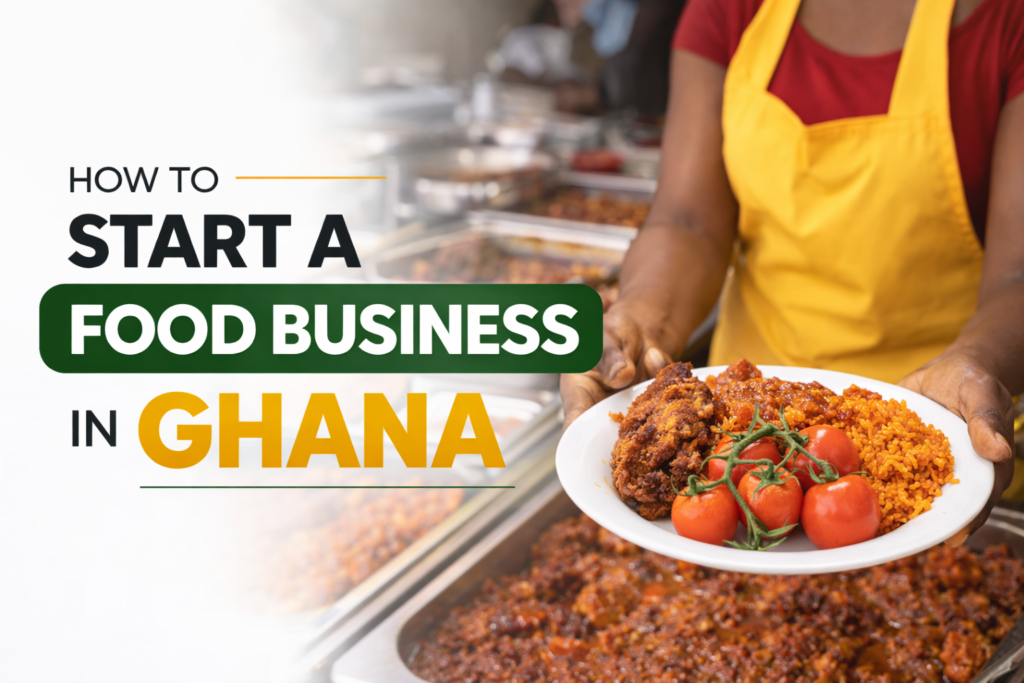

Ghana eats well, and eats often, from the roadside waakye seller who has been feeding the office block to the food café that opened recently and already has a waiting list. A food business in Ghana has one of the most accessible entry points of any commercial venture, and simultaneously one of the most unforgiving operating environments. The Food and Drugs Authority inspects without prior notice, and a single failed inspection can shut down an operation that took months to build, not because the food was bad, but because a health certificate had expired or a storage area did not meet the required hygiene standard.
Starting a food business here means accepting that the product is never finished, the standard is never set-and-forget, and the margin for inconsistency is lower than in almost any other sector. For entrepreneurs who understand that, and build the systems to meet it, Ghana’s food market is one of the most rewarding businesses in the country.
Legal Business Registration
Every food business in Ghana, regardless of size, sells to a public that is protected by law. Operating without registration is not just a legal risk. It is a commercial ceiling. Unregistered businesses cannot open business bank accounts, cannot win institutional catering contracts, and cannot partner formally with delivery platforms or retail distributors.
Office of the Registrar of Companies
Register as a sole proprietorship or limited liability company to receive your Certificate of Incorporation. A limited liability structure protects your personal assets if your business faces legal claims, which is particularly relevant in food service where customer complaints occasionally escalate to formal liability. You will need a valid Ghana Card and a digital address for your registered business location.
Tax Identification Number
The Ghana Revenue Authority issues your TIN, which is a mandatory document in every food and Drugs Authority (FDA) and Ghana Standards Authority (GSA) application and in all formal buyer relationships. Register for your TIN immediately after incorporation.
Business Operating Permit
Your Metropolitan, Municipal, or District Assembly issues this annual permit for your specific business location. The Accra Metropolitan Assembly issues Business Operating Permits (BOPs) for food businesses operating within Accra. The permit confirms your premises meet local zoning and operational standards for food service.
SSNIT Registration
If you employ staff, register as an employer with the Social Security and National Insurance Trust. This is a legal obligation from the moment you begin paying wages, and the FDA may ask to see evidence of employer compliance during facility inspections.
FDA Licensing and Food Safety Compliance
The Food and Drugs Authority is the regulatory body that licenses all food service establishments in Ghana under the Public Health Act, 2012 (Act 851). FDA licensing is not optional and is not simply a formality. FDA officers conduct surprise inspections, and operating without a valid license results in immediate closure orders, fines, and the kind of public attention that a food business cannot easily recover from.
- Food Hygiene Permit: Legally mandatory for any business selling food to the public, including restaurants, catering companies, packaged food producers, food trucks, and street vendors. The permit confirms that your cooking area, food handling practices, storage systems, and waste management meet the FDA’s minimum health and cleanliness standards.
- Health Test Certificates: Every member of your team who handles food must undergo medical screening for contagious diseases including tuberculosis, typhoid fever, and hepatitis A before beginning work, and must renew this certification periodically. The FDA verifies these certificates during facility inspections.
- Facility Inspection: FDA inspectors assess your kitchen or production space layout, surface materials, waste disposal systems, food storage temperatures, equipment cleanliness, and staff hygiene practices. Preparing your facility against the FDA’s published inspection checklist before requesting an inspection significantly improves your approval timeline.
- Approval Timeline: From complete documentation submission to license issuance, the FDA process takes about two months when all standards are met and no corrections are needed. Starting this process well ahead of your planned opening date prevents the situation of a fully equipped, staffed, and stocked business that cannot legally serve a single customer.
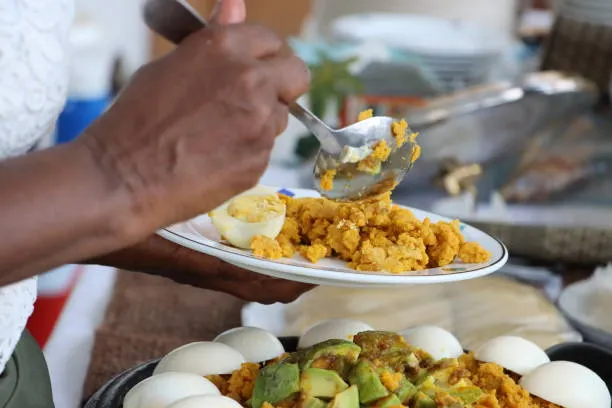
Types of Food Businesses in Ghana
Ghana’s food sector is considerably broader than the chop bar and restaurant categories that most people picture when they hear “food business.” Understanding which segment you are entering shapes every decision about licensing, equipment, staffing, and marketing.
Street food and kiosks cover waakye sellers, bread and egg vendors, roasted plantain stations, and the vast network of mobile and semi-permanent food operations that feed the majority of Ghanaians their daily meals. Entry costs are the lowest in the sector, competition is intense, and location is the primary determinant of commercial success.
Sit-down restaurants and chop bars serve customers in a fixed dining environment with a defined menu. This segment ranges from neighbourhood chop bars serving local staples to full-service restaurants targeting urban professionals, hotel guests, and the growing middle class with disposable income. Regulatory compliance is the most demanding in this segment because the FDA inspection covers the full kitchen and dining infrastructure.
Catering and event food service supplies prepared food for weddings, corporate events, funerals, school feeding programs, and institutional contracts. Revenue is event-driven and irregular, but individual event contracts can generate significant single-day income. Institutional catering contracts including school feeding and hospital food supply provide recurring revenue that individual event catering does not.
Packaged and processed food includes bottled sauces, dried snacks, spice blends, packaged stews, canned goods, and any food product sold in labeled packaging. This segment has the highest regulatory documentation burden because each product needs GSA certification in addition to FDA facility licensing, and the labeling must comply with FDA packaging regulations including ingredient lists, production and expiry dates, allergen declarations, and net weight.
Food delivery and cloud kitchen operations prepare food exclusively for delivery through platforms including Bolt Food, Glovo, and Hubtel without a traditional dine-in offering. This model has lower rent costs than full restaurant operations and reaches customers who prioritize convenience over ambience. It is among the fastest-growing food business formats in Accra and Kumasi.
Ghana Standards Authority Certification
If your food business produces packaged products for formal retail, the GSA product certification mark confirms to supermarkets, institutional buyers, and export partners that your product meets national quality standards.
The GSA certification process involves submission of your product formulation, production process documentation, and facility details, followed by laboratory analysis of your product samples. The certification mark that appears on certified products is increasingly demanded by supermarkets as a condition for shelf placement.
For producers of packaged sauces, spice blends, snack foods, packaged grains, and beverages, GSA certification is the difference between selling through informal channels and accessing formal retail and institutional distribution. The application process takes time, so starting it in parallel with your FDA licensing instead of sequentially reduces the total time to market.
Location and Infrastructure
The commercial performance of a food business in Ghana is more sensitive to location than almost any other business category. A well-executed food concept in the wrong location fails. A mediocre concept in the right location survives.
High-traffic areas near markets, transport hubs, office concentrations, schools, and health facilities generate the consistent daily foot traffic that a food business needs to cover its fixed costs and build a regular customer base. Visibility from the road, ease of parking or walk-in access, and proximity to your target customer’s daily movement pattern all affect how many people actually notice and visit your business.
Beyond foot traffic, consider utility infrastructure. A consistent water supply, three-phase electricity for commercial kitchen equipment, and reliable generator or solar backup are not optional for a serious food operation. Power outages that interrupt refrigeration are a food safety issue, a customer service problem, and a financial loss from spoiled inventory all at once.
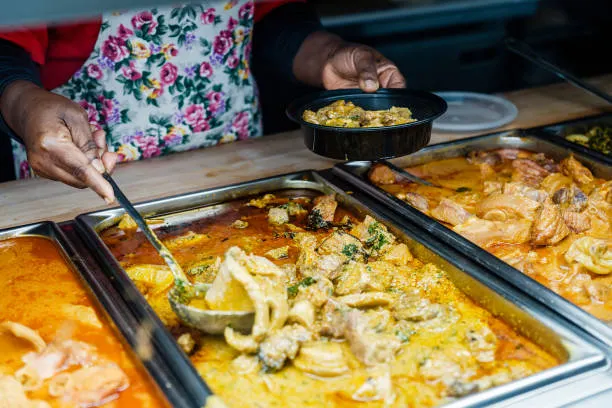
Staffing and Operations
The standard of food your business produces on day 200 of operations is almost entirely a function of the systems and the people you put in place on day one.
- Chef and Kitchen Staff: Hire cooks with demonstrable experience in the specific cuisine and volume your business serves. A chef who can produce consistent results for a table of four cannot necessarily manage a kitchen serving a hundred covers in a lunch rush without the right preparation systems.
- Food Handler Medical Certificates: Every kitchen staff member must hold a current health certificate before handling food. This is both a legal obligation and a food safety protection for your customers and your business reputation.
- Service Staff Training: Customer-facing staff who handle complaints graciously, describe the menu accurately, and maintain consistent standards of cleanliness and attentiveness are the difference between a one-time visitor and a regular who brings colleagues. This training is never finished. It is an ongoing management responsibility.
- Supplier Relationships: Build direct relationships with vegetable farmers, meat suppliers, fish traders, and dry goods wholesalers who can commit to consistent quality and reliable delivery. A restaurant whose fish supplier fails to deliver on a Friday evening does not serve fish that Friday. A business with two backup suppliers does.
Also Read: How to Start a Bakery Business in Ghana
Digital Presence and Delivery
The growth of food delivery platforms in Ghana’s major cities has created a parallel sales channel that food businesses can access without significant additional capital.
Registering your business on Bolt Food, Glovo, or Hubtel Marketplace connects your menu to customers who never walk past your physical location. Delivery platform commissions reduce the revenue per order relative to direct sales, but the incremental volume they generate during off-peak hours and from customer segments your physical location does not reach often produces net positive revenue.
Social media pages on Instagram and Facebook, updated consistently with photos of your food and your premises, are among the most cost-effective marketing tools available to Ghanaian food businesses. Customer reviews, before-and-after photos of catered events, and video of cooking in progress build trust with potential customers before they ever visit. Food is a highly visual product and the businesses that invest in good photography consistently outperform those that do not, even when the food quality is similar.
List Your Food Business on QuePosts
Event planners, corporate procurement officers, school administrators, and hotel food and beverage managers looking for catering suppliers often exhaust their immediate network before finding a quality vendor that meets their volume and needs. QuePosts is a digital business directory and discovery portal built specifically for Ghanaian brands and entrepreneurs. A listing makes your food business discoverable to these buyers through a verified, searchable Ghanaian business platform.
Seasonal staffing is a consistent challenge in food service. QuePosts job posting connects your vacancy for chefs, service staff, delivery riders, and kitchen assistants to local job seekers directly, reducing the time and cost of finding workers during busy periods.
Food businesses in Ghana are built on reputation, and reputation is built one plate at a time. The regulatory compliance protects you legally. The location brings people in. The food and the service are what bring them back, and what they tell everyone else. Every system you put in place, from the FDA permit on the wall to the way your kitchen receives its morning delivery, either supports or undermines the standard that the next customer experiences. Start with the standards you intend to maintain, not the minimum you can get away with, and the business takes care of itself.