


Maize farming in Ghana is the kind of business that looks deceptively ordinary from a distance and reveals its full commercial depth only when you get close enough to understand what is actually driving demand. Every bag of poultry feed produced in Ghana contains maize. Every batch of kenkey, banku, and tuo zaafi that feeds families across the country starts with maize. The starch processors, the breweries, the flour millers, and the animal feed manufacturers all trace their supply chains back to the same crop.
Ghana plants maize in two seasons every year and still cannot consistently produce enough to meet domestic demand, which means that a well-managed commercial maize farm, selling to the right buyers at the right time, operates in a market that is not going to disappear or get any smaller.
Land and Soil Preparation
Commercial maize production in Ghana begins with site selection and land preparation decisions that affect every season the farm operates.
- Soil Type: Deep, well-drained loamy soils with high organic matter content produce the most consistent maize yields. These soils hold moisture through dry spells without becoming waterlogged during heavy rainfall, protecting the root zone at both extremes.
- Location: The Middle Belt covering the Bono, Ahafo, and Ashanti regions and the Northern Regions are Ghana’s primary maize production hubs. These zones combine the rainfall distribution, soil depth, and temperature ranges that maize responds best to.
- Land Clearing: Clear land in February for the major season planting. Avoid burning cleared vegetation. Burning destroys the organic matter and microbial activity in the topsoil that feed directly into soil fertility. Incorporate crop residues instead through composting or surface mulching.
- Tillage: Minimum tillage using a harrow instead of deep plowing preserves soil structure, reduces erosion, and lowers preparation costs per acre. Over-tilled soils compact more easily and become less productive over successive seasons.
Variety Selection
The maize variety you plant determines your buyer, your timeline, and your response to the specific rainfall and temperature conditions of your location. Planting a high-rainfall variety in a marginal rainfall zone produces a disappointing harvest regardless of how well everything else is managed.
By market:
- Yellow Maize: The dominant variety for poultry feed production. Varieties including Mamaba and Omankwa produce the high grain density and energy content that animal feed manufacturers specify. The poultry industry is the largest and most consistent single buyer of yellow maize in Ghana.
- White Maize: Primarily for human consumption. Obatanpa is the most widely grown white maize variety in Ghana, valued for its higher protein content compared to standard white maize varieties. It serves both the fresh market and the processed food sector.
By maturity:
- Extra-Early varieties (75 days): Suited for areas with shorter or less reliable rainfall. The fast maturity cycle allows harvest before rainfall tapers off and reduces the period of crop exposure to dry-season stress.
- Medium varieties (90 to 100 days): The most common choice for farmers in the Middle Belt zones with reliable major season rainfall.
- Late varieties (110 days and above): Best suited to high-rainfall zones where the growing season is long enough to support the extended vegetative and grain-filling periods these varieties need.
Inputs and Planting
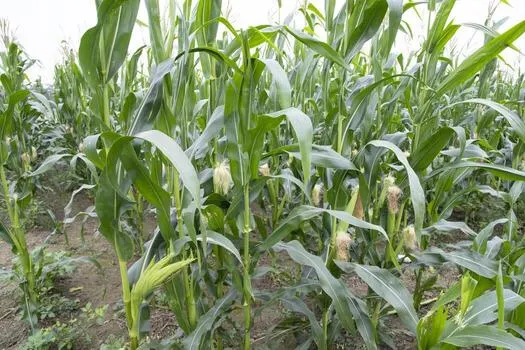
Input quality at the planting stage sets the yield ceiling for the entire season. Substituting certified seeds with market grain or applying fertilizer late costs yield that cannot be recovered.
- Certified Seeds: Source planting material from certified agro-input suppliers. Market grain sold as seed carries inconsistent germination rates, disease, and the genetic variability of open-pollinated material. Do not use it.
- Spacing: Standard commercial spacing is 75 centimetres between rows and 40 centimetres between holes when planting two seeds per hole, or 25 centimetres between holes when planting one seed per hole. Correct spacing controls competition for light, nutrients, and water across the stand.
- Fertilizer Timing: Apply NPK 15-15-15 at planting or within two weeks of emergence to establish root development and early vegetative growth. Follow with a top-dressing of Urea or CAN at six weeks after planting to support tasseling and grain filling. Late fertilizer application produces vegetative growth without grain weight. Early application without follow-up produces stunted grain development.
Maize Farming Season in Ghana
Maize farming in Ghana follows two distinct planting windows defined by the country’s bimodal rainfall pattern. Understanding both seasons, their production dynamics, and their market timing is fundamental to commercial planning.
The Major Season runs from March to July across most of southern and middle-belt Ghana. This is the primary production window with the highest rainfall reliability and the longest growing period. The majority of Ghana’s annual maize output is produced during the major season. Prices at harvest in July and August are lower because supply from multiple farms peaks.
The Minor Season runs from September to November and is most productive in the forest-transition and semi-deciduous forest zones of the Ashanti, Eastern, and Central regions. Yields in the minor season are generally lower than the major season because rainfall is less reliable and the growing period is shorter. However, grain harvested in November and December enters the market at a point when major season stocks are being depleted, and prices tend to be firmer.
The most commercially sophisticated maize farmers in Ghana manage both seasons, storing part of their major season harvest in hermetic bags and releasing it to the market in the price-premium period between January and March, while using the minor season to maintain continuous production.
Northern Ghana operates on a single-season rainfall pattern. The rains arrive between May and October, with a single productive planting window. Farmers in the Northern, Upper East, and Upper West regions plant once per year and must manage their entire annual income from a single harvest.
Pest and Weed Management
Two management challenges destroy more commercial maize yield in Ghana than any other operational factor: Fall Armyworm and early-season weed competition.
Fall Armyworm (FAW) is the single most damaging pest in Ghana’s maize sector. The caterpillar feeds on the growing point and leaf whorl of young plants and can devastate an entire field within days of a significant infestation. Scout your fields weekly from emergence onward. Look for the characteristic window-pane feeding damage on leaves and frass (excrement) in the leaf whorl. Apply EPA-approved contact insecticides including Adama or Belfast at the first confirmed sighting of larvae. Waiting for visible plant damage before scouting means the infestation is already advanced.
Weed Control: The first three weeks after planting are the most damaging period for weed competition with young maize plants. Conduct the first manual weeding within two to three weeks of emergence. For fields larger than two acres, pre-emergence herbicides applied immediately after planting provide effective weed suppression through the early growth phase without the labor cost of manual weeding at scale.
Commercial Maize Farming in Ghana
Commercial maize farming in Ghana operates across two primary supply chains with very different buyer relationships and price dynamics.
The food consumption market covers fresh cobs sold from the roadside, dried grain sold to chop bars, kenkey producers, banku sellers, and households, and milled grain sold as flour or grits. This market is served by traders who move grain from farm-gate to urban markets, and prices fluctuate between harvest season and the lean months between February and May.
The industrial and agro-processing market covers poultry feed manufacturers, starch processors, breweries, and animal feed mills. These buyers purchase large volumes of yellow maize against consistent quality specifications including moisture content, aflatoxin levels, and foreign material percentage. Industrial buyers pay at or slightly below open market prices, but they purchase in bulk, often under advance contracts, and remove the price volatility that makes open-market selling difficult to plan around.
The National Food Buffer Stock Company (NAFCO) periodically purchases maize from registered farmers at government-set floor prices as part of its mandate to stabilize food prices and build national grain reserves. Monitoring NAFCO’s procurement windows gives commercial farmers an institutional off-take option during periods of low open-market prices.
Harvesting and Post-Harvest Management
The decisions made between harvest and sale determine how much of your season’s yield actually converts into income.
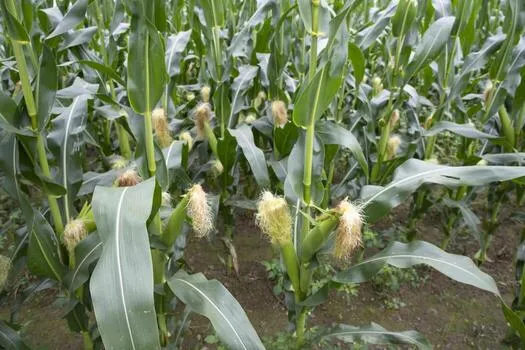
- Harvest Timing: Harvest when cob moisture content is at or below 20%. Harvesting at higher moisture levels leads to field losses from mold and aflatoxin development during drying. Leaving grain in the field beyond maturity invites bird damage and increases the risk of stalk-fall.
- Drying: Use raised drying platforms or tarpaulins spread above the ground surface. Never dry maize directly on bare soil. Ground contact introduces Aflatoxin-producing fungi, particularly in the harmattan months, and moisture reabsorption from the soil undermines your drying effort entirely. Aflatoxin-contaminated grain is rejected by industrial buyers and is unsafe for human or animal consumption.
- Storage: PICS hermetic bags (Purdue Improved Crop Storage) protect dried grain from weevil attack without chemical pesticide use. The hermetic seal eliminates the oxygen that insects and mold organisms need to develop inside stored grain. Grain stored in PICS bags at 13% moisture content or below maintains quality for six months or more, giving you the flexibility to sell during price-premium periods instead of at harvest-time lows.
Which Region in Ghana Is Best for Maize Farming
No single region in Ghana is universally best for maize farming. The right region depends on which variety you are planting, which season you are targeting, and which buyer you are supplying.
The Bono, Ahafo, and Ashanti Regions are widely considered the most productive zones for major season maize farming in Ghana. The combination of reliable bimodal rainfall, deep loamy soils, established input supply networks, and proximity to large poultry farms and feed mills in Dormaa and Kumasi gives farmers in this belt structural commercial advantages over producers in other zones. Yields on well-managed farms in this region consistently exceed national average yields.
The Eastern and Central Regions are well-suited for minor season production because their forest-transition zone rainfall extends the productive planting window further than in the savannah zones. Proximity to Accra and Kumasi markets also reduces transport costs for grain and fresh cob sales.
The Northern, Upper East, and Upper West Regions produce maize on a single annual season but benefit from large flat land areas suited to mechanization, lower land lease costs than southern regions, and proximity to the institutional buyers in Tamale who supply food aid programs and the northern hospitality sector. Government mechanization centers in the north are more accessible than in many southern districts, which reduces tillage and harvesting costs for larger farms.
How Profitable Is Maize Farming in Ghana
Maize farming profitability in Ghana is real but sensitive to timing, storage discipline, and buyer relationships in ways that other crops are not.
The profitability equation in commercial maize farming is heavily influenced by when you sell, not just how much you produce. Farmers who sell at harvest when supply is high and prices are at their seasonal low consistently earn less per kilogram than farmers who store grain in PICS bags and sell between February and May when the market between seasons tightens and prices firm.
Input costs including certified seeds, NPK fertilizer, Urea, pesticides for Fall Armyworm management, and labor for weeding and harvesting account for the largest portion of your production cost per acre. Fuel and mechanization costs for land preparation add significantly to the cost base for larger operations. Understanding your true cost per bag of dried grain before you commit to a buyer price is the foundation of any profitable sale negotiation.
The farmers who generate the most consistent returns from maize in Ghana are those who manage three variables simultaneously: they plant certified seeds on time at the onset of the rains, they store a portion of their harvest in hermetic bags until the lean-season price premium is available, and they have at least one industrial or institutional buyer relationship that provides a price floor independent of open-market fluctuations.
List Your Maize Farm on QuePosts
Poultry farms, feed mills, starch processors, and institutional buyers in Ghana are consistently looking for reliable maize suppliers who can commit to volume and quality. QuePosts is a digital business directory and discovery portal built specifically for Ghanaian brands and entrepreneurs. It gives your maize farm a professional online listing where industrial off-takers, grain traders, NAFCO procurement officers, and agro-processors can find your production capacity, location, and contact details directly.
QuePosts also integrates job posting features, so when your operation scales and you need to hire seasonal harvest labor, a tractor operator, a store manager for your grain shed, or a logistics coordinator for buyer deliveries, you can post those vacancies on the same platform where your farm is already listed.
Maize farming in Ghana rewards farmers who plan their season around the buyer, not around the rains alone. The rains are a production input. The buyer, the price window, and the storage decision are the commercial variables that determine what a season is actually worth. Farmers who understand both sides of that equation build operations that generate consistent returns across multiple seasons instead of chasing open-market prices at the worst time of year to sell.