


The Poultry Farm Business in Ghana stands at the intersection of market demand and achievable startup costs, but most people who enter it unprepared walk away convinced it does not work. Ghana imports hundreds of millions of dollars worth of frozen chicken every year, not because local farmers cannot produce enough birds, but because too few farms are structured well enough to supply consistently and at scale. The farmer who understands biosecurity, locks in buyers before the first chick arrives, and manages feed costs with discipline does not just survive in this industry. That farmer thrives while everyone else wonders why their numbers never add up. This guide is for that farmer.
Legal and Regulatory Setup
Getting your regulatory paperwork in order is not just a formality. Large buyers, hotels, and supermarkets will ask for your documentation before they commit to a supply agreement.
- Business Registration: Register your farm at the Registrar General’s Department as a sole proprietorship or limited liability company depending on your scale and long-term goals.
- VSD Registration: The Veterinary Services Directorate issues your farm animal health certificate and connects you to government vaccination programs that can reduce your health management costs significantly.
- EPA Permit: The Environmental Protection Agency must issue environmental clearance confirming that your farm location meets waste management and noise standards for agricultural use.
- District Assembly Permit: Your local assembly issues the building permit that authorizes animal housing construction within your specific zone.
How to Register a Poultry Farm in Ghana
Many first-time poultry farmers treat registration as an afterthought. It should be your first serious task because delays in getting permits can stall your construction timeline and push back your stocking date by months.
The registration process follows a logical sequence:
- Start with the Registrar General’s Department to secure your business certificate. This document is the foundation for everything else.
- Present your business certificate at the Veterinary Services Directorate nearest to your farm location to register your operation and receive your animal health documentation.
- Submit your site plan and business details to the Environmental Protection Agency for environmental clearance. The EPA will assess your proximity to water bodies, residential areas, and road infrastructure.
- Take your EPA clearance and business certificate to your District Assembly to apply for the building and development permit.
The entire process can be completed within four to eight weeks if your documents are organized from the start. Working with a local agricultural extension officer can speed things up considerably, as they are familiar with the specific requirements of each district.
Housing and Biosecurity
The way your farm is built determines how easy it is to manage disease, regulate temperature, and maintain bird welfare throughout the production cycle.
- Site Selection: Choose well-drained land with good road access. Distance from residential areas is important both for noise management and for reducing disease introduction risk from neighboring animals.
- Pen Orientation: Build all pens on an East-to-West axis so that direct sunlight never shines straight into the housing. Proper orientation reduces heat stress in the birds and lowers mortality during the dry season.
- Deep Litter vs Battery Cages: Deep-litter systems are lower in startup cost and work well for broilers. Battery cage systems suit layer operations and make egg collection and manure management more efficient. Choose based on your niche, not just your budget.
- Biosecurity Barriers: Install a perimeter fence around the entire farm and place footbaths with disinfectant at every entrance point. Bird flu and Newcastle disease spread fast on farms with open access.
- Storage: Build a dry, rodent-proof feed store and a separate cool room or staging area for eggs or dressed birds awaiting delivery.
Stock and Inputs
Every batch of birds you stock starts with a decision on quality. Compromising here creates problems that no amount of good management can fully fix.
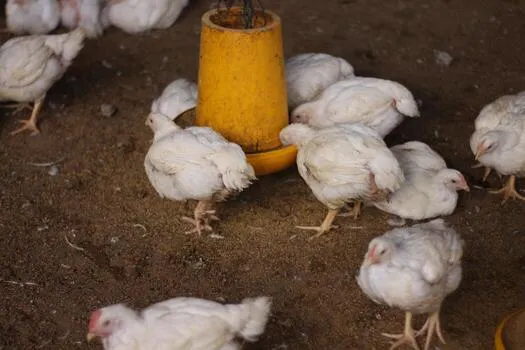
- Choose Your Niche: Layers produce eggs over a long cycle of 72 to 80 weeks. Broilers reach market weight in 6 to 8 weeks. The two systems have different housing requirements, feed costs, cash flow patterns, and buyer relationships. Decide which fits your capital situation and market access before you build anything.
- Day-Old Chicks: Source from reputable hatcheries. The survival rate and growth uniformity of your flock are directly linked to the health status of your day-old chicks.
- Feed Supply: Feed accounts for 65 to 75% of your total production cost. Partnering with a reliable feed mill or installing your own grinding and mixing equipment gives you price control and supply security. Never start a batch without at least three weeks of feed already in your store.
- Water: A 24-hour supply of clean, untreated water is non-negotiable. Chlorinated municipal water can disrupt vaccine efficacy. Sink a borehole or maintain large storage tanks dedicated solely to your poultry water supply.
Commercial Poultry Farming in Ghana
Commercial poultry farming in Ghana operates across three main production segments: broiler production for meat, layer production for eggs, and day-old chick supply from hatcheries. Each segment has its own economics and market dynamics.
Broiler production is the most accessible entry point for new farmers. A 6 to 8 week production cycle means faster cash flow compared to layers, and the market for dressed chicken in Ghana is large and relatively consistent. Accra, Kumasi, and Takoradi have established networks of buyers ranging from roadside chop bars to hotel kitchens.
Layer farming offers more predictable daily income once hens enter production, but it requires a longer wait before returns begin. The upfront cost of housing a layer flock in battery cages is higher, and managing the flock through the 72 to 80-week production cycle demands more consistent record-keeping and health management.
Contract farming arrangements with established poultry companies are also available to Ghanaian farmers. Under these arrangements, the company supplies chicks and feed while the farmer provides labor and housing. Returns per bird are lower, but the risk is shared and the market is guaranteed.
For any commercial farmer, the most important business decision is locking in offtakers before stocking. A farm with 5,000 birds and no confirmed buyers at the end of a cycle is a much harder situation to recover from than a farm with 2,000 birds and confirmed restaurant contracts waiting.
How Profitable Is Poultry Farming in Ghana
Poultry farming in Ghana can be profitable, but the margins are tighter than most people expect when they start, and wider than most people realize once they have mastered the system.
Broiler example (1,000 birds):
| Item | Estimated Cost (GHS) |
|---|---|
| Day-old chicks | 3,000 to 4,500 |
| Feed (full cycle) | 18,000 to 24,000 |
| Medications and vaccines | 1,500 to 2,500 |
| Labor and utilities | 1,500 to 2,000 |
| Miscellaneous | 500 to 1,000 |
| Total Cost | 24,500 to 34,000 |
At an average farm gate price of GHS 45 to 65 per kg and an average bird weight of 2.2 kg, revenue from 950 birds (allowing for 5% mortality) ranges from GHS 47,000 to GHS 67,000. Net profit per cycle can reach GHS 15,000 to GHS 33,000 for a well-managed 1,000-bird broiler batch.
Running four cycles per year on that same house, profit potential ranges from GHS 60,000 to over GHS 100,000 annually from a single pen.
What affects profitability most:
- Feed cost management and bulk purchasing.
- Mortality rates, which are directly tied to biosecurity and brooding management.
- Market price at the time of sale, which fluctuates seasonally.
- Whether you sell live birds, dressed birds, or both, since dressed birds command a higher per-unit price.
Operations and Health Management
What happens on the farm every single day determines whether your financial projections become reality or remain on paper.
- Vaccination Schedule: Follow a strict medical calendar covering Gumboro, Newcastle, and Marek’s disease as prescribed by your local vet. Late or missed vaccinations are among the most common causes of avoidable flock losses.
- Brooding Management: Maintain warmth using infrared bulbs or charcoal heaters for the first three weeks of the chicks’ lives. Cold brooding is one of the leading causes of high early mortality on Ghanaian farms.
- Labor: At least one experienced farm hand who understands bird behavior and can identify early signs of illness is essential. Sick birds behave differently hours before symptoms become obvious, and early detection saves entire flocks.
- Waste Management: Daily collection of poultry droppings prevents ammonia buildup, which damages respiratory health in the birds. The droppings themselves can be sold to vegetable farmers as high-grade organic fertilizer, generating a secondary income stream.
- Record Keeping: Daily logs covering feed consumption, water intake, mortality, egg production, and medication use are your most valuable management tool. Without records, you cannot pinpoint what went wrong in a bad cycle or replicate what went right in a good one.
Also Read: How to Start Rabbit Farming in Ghana
Equipment Involved in Poultry Farming
Running a modern poultry farm without the right equipment increases labor costs, raises mortality risk, and reduces production consistency.
Essential equipment for a standard poultry operation:
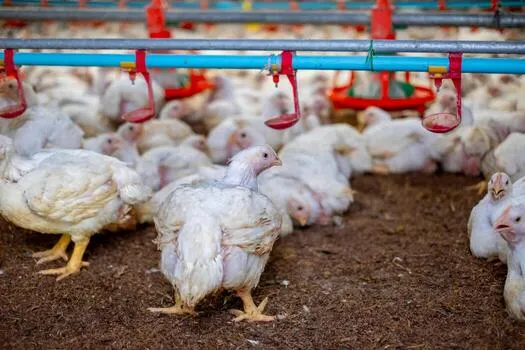
- Drinkers and Feeders: Nipple drinkers reduce water wastage and contamination. Pan feeders or trough feeders distribute feed evenly across the pen.
- Heating Equipment: Infrared brooders or gas-powered heaters for the first three weeks of brooding.
- Ventilation Fans: Tunnel ventilation fans regulate temperature and air quality in larger enclosed houses.
- Egg Trays and Crates: For layer operations, standardized crates reduce breakage during transport and storage.
- Weighing Scale: Regular weight monitoring identifies underperforming birds early and confirms that your feed conversion ratio is on track.
- Vaccination Equipment: Spray cabinets, eye droppers, and syringes for administering vaccines accurately.
- Feed Mill (optional but cost-saving): A hammer mill and mixer allow you to produce your own feed from raw materials such as maize, soya, and fishmeal, which can reduce feed costs by 20 to 35%.
- Generator or Solar Backup: Loss of lighting disrupts laying schedules in layers and compromises temperature control in brooding houses.
How to Start a Modern Poultry Farm in Ghana
A modern poultry farm in Ghana is not defined by size alone. It is defined by how systematically the farm is managed from housing design to data collection.
Modern poultry farming in Ghana involves moving away from purely manual processes and toward documented, repeatable systems. This means using standardized housing designs that allow for proper ventilation and biosecurity, investing in automatic drinkers and feeders that reduce labor dependency, maintaining complete digital or written records for every batch, and building supply chain relationships that go beyond individual market transactions.
Financing a modern setup is increasingly accessible. Agricultural loans from banks such as ADB (Agricultural Development Bank), MoFA grants, and SSNIT-backed agricultural financing schemes are available to registered farmers with proper documentation. Farmer cooperatives and out-grower schemes also provide a structure for accessing inputs, technical training, and guaranteed markets simultaneously.
The most important mindset shift for a modern poultry farmer is treating the farm as a business with systems, not a seasonal activity managed by instinct. Every input cost, every mortality figure, and every sales transaction should be recorded and reviewed at the end of each cycle.
List Your Poultry Farm on QuePosts
A well-run poultry farm with consistent supply is only as valuable as the buyers who know it exists. QuePosts is a digital business directory and discovery portal built specifically for Ghanaian brands and entrepreneurs. It gives your poultry farm a professional online listing where hotels, restaurants, supermarkets, caterers, and individual bulk buyers can find your contact details, understand your production capacity, and reach out directly.
What makes QuePosts particularly useful for agribusinesses is that it goes beyond a static directory. The platform integrates job posting features as well, so when your operation grows to the point where you need to hire a farm manager, vaccine technician, delivery driver, or sales representative, you can post that vacancy on the same platform and connect with job seekers who are already browsing businesses in your local ecosystem.
For any poultry farmer serious about building a long-term business in Ghana, getting listed on QuePosts is one of the most practical first steps toward consistent visibility, buyer credibility, and sustainable growth.