


Rice farming in Ghana is one of the most commercially promising agricultural ventures available to Ghanaian entrepreneurs and smallholder farmers. Ghana consumes over one million metric tons of rice annually, but domestic production covers less than half of that demand. The rest is imported, largely from Asia, at a significant cost to the national economy. This gap between local supply and local consumption is not a problem, it is an opportunity.
Every bag of rice that a Ghanaian farmer produces is a bag that no longer needs to be imported. For anyone with access to suitable land, water, and the right inputs, rice farming is a path to sustainable income and long-term business growth. You can choose to start with two acres in the Volta Region or plan a massive mechanized operation in the Northern Region, and this guide gives you everything you need to make your first season count.
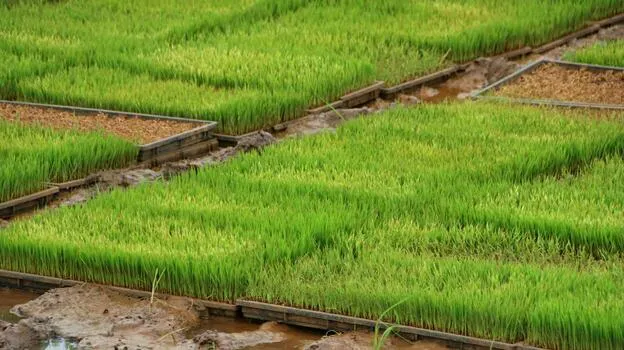
Legal and Planning
Getting the legal foundation right from the start saves you from expensive disputes and missed opportunities later.
- Business Registration: Register your farm at the Registrar General’s Department as a sole proprietorship or limited liability company.
- Land Lease Agreement: A long-term lease of at least 5 to 10 years is essential for rice farming. Have the agreement documented and witnessed by local authorities or a lawyer to protect your investment.
- MoFA Registration: Register with the district office of the Ministry of Food and Agriculture. This opens access to subsidized seeds, fertilizers, and extension services that can significantly reduce your input costs.
Land Preparation
The preparation stage is where the foundation of a good yield is built. Rushed land prep leads to uneven water distribution, weed problems, and disappointing harvests.
- Site Selection: Flat land with high clay content is ideal. Clay retains water, which is essential for paddy rice production. Valley bottoms and lowland areas are the most productive sites in Ghana for consistent yields.
- Land Clearing: Remove all trees, stumps, and thick vegetation. A bulldozer is necessary for virgin forest or dense bush. Leaving stumps causes mechanical damage during plowing and makes levelling impossible.
- Bund Construction: Build small earth dykes around your plots to hold and control water levels. Well-maintained bunds are the difference between a flooded farm and a managed paddy field.
- Levelling: A flat field distributes water evenly across every part of the plot. Uneven land creates dry patches and waterlogged pockets in the same field, both of which damage yield.
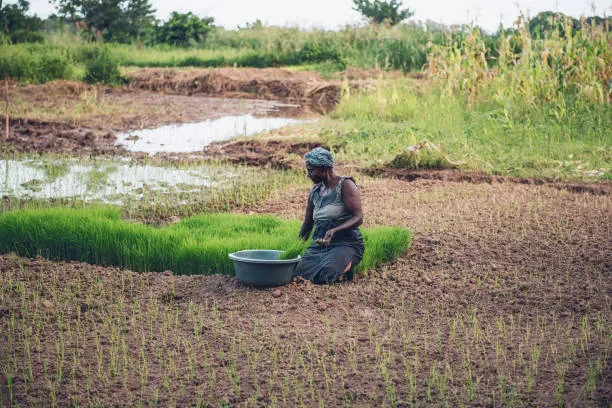
Water and Infrastructure
Water management is arguably the most important technical aspect of rice farming. Rice does not just need rain; it needs controlled, consistent moisture throughout its entire growth cycle.
- Irrigation Setup: In lowland areas with reliable seasonal flooding, natural water management may be sufficient. For upland or dry-season farming, construct diversion channels from nearby streams or invest in water pumps to maintain adequate moisture levels.
- Access Roads: Basic farm paths that allow tractors and power tillers to enter during the rainy season are not optional on a commercial farm. Inaccessible fields mean delayed operations and higher costs.
- Storage Shed: A dry, well-ventilated shed for storing harvested paddy is essential. Rice left without proper storage absorbs moisture, attracts rodents, and loses value quickly.
Inputs and Planting
The quality of your inputs determines the ceiling of your yield. Cutting corners at this stage affects everything that follows.
- Certified Seeds: Purchase high-yielding varieties such as AGRA Rice or Jasmine 85 from certified seed growers. Uncertified seeds carry inconsistent germination rates and disease susceptibility.
- Fertilizer: Rice is a heavy feeder. NPK fertilizer is applied at basal stage, and Urea follows later to support tillering and grain filling. Secure your fertilizer supply ahead of planting season, as delays in application directly reduce yield.
- Mechanization: Pre-book a tractor for plowing and a power tiller for puddling if you do not own the equipment. Mechanization services are in high demand during peak planting windows, and late booking means late planting, which affects your entire season.
Rice Farming Areas in Ghana
Ghana has several well-established rice farming zones spread across different ecological belts. Each zone has its own production advantages and seasonal patterns.
Major rice farming areas include:
- Northern Region: The most significant rice-producing region in Ghana. The White Volta basin and the plains around Tamale, Tolon, and Kumbungu support large-scale paddy production. The Savannah Region is also an active production area.
- Upper East Region: The Tono and Vea Irrigation Schemes near Navrongo and Bolgatanga are among the most productive irrigated rice farming systems in the country.
- Volta Region: Lowland areas in the Afram Plains and the Keta basin are used for rain-fed and recession rice farming.
- Ashanti and Bono East Regions: Inland valley swamps and lowland areas support rice production alongside other food crops.
- Central and Eastern Regions: Small-scale lowland rice farming is practiced in valley bottoms, though these regions are not primary production zones.
Which Regions Have Rice Farms in Ghana?
Rice is grown across a wide band of Ghana’s ecological zones, from the Guinea Savannah in the north to the forest-transition zones further south. The Northern, Upper East, and Upper West regions account for the majority of Ghana’s paddy rice output because of their flat terrain, seasonal flooding, and existing irrigation infrastructure. The Northern Region alone contributes an estimated 50 to 60% of Ghana’s total domestic rice production. The industry grows here because the region’s geography, soil type, and seasonal rainfall pattern align well with the water requirements of paddy rice.
The Oti and Bono East regions, particularly around Yeji and Kete Krachi, support active farming within the Volta Lake floodplains, while the Afram Plains provides fertile ground for large-scale grain production across the Eastern and Ashanti regions. Small-scale valley-bottom rice farming in the Ashanti Region focuses on supplying local markets rather than contributing significantly to national supply figures.
For new farmers selecting a location, the north offers more established infrastructure, access to irrigation schemes, and a longer history of rice farming knowledge within local communities. Southern and transitional zone farmers tend to rely more heavily on seasonal rainfall and face higher input costs for water management.
Also Read: How to Start Commercial Fish Farming in Ghana
Which Places in Ghana Farm Rice Year Round?
Year-round rice production in Ghana is tied almost entirely to the availability of irrigation infrastructure. Without irrigation, rice farming follows the seasonal rainfall pattern, which limits most farmers to one or two cropping cycles per year.
Places where year-round rice farming is possible include:
- Tono Irrigation Scheme (Upper East Region): One of the largest irrigation schemes in Ghana, covering over 3,000 hectares near Navrongo. Farmers here produce two to three crops annually using water from the Tono Dam.
- Vea Irrigation Scheme (Upper East Region): Located near Bolgatanga, this scheme supports perennial production for thousands of smallholder rice farmers in the area.
- Kpong Irrigation Project (Greater Accra / Eastern Region border): Fed by the Volta River, this scheme supports dry-season rice production alongside vegetable farming activities in the area.
- Golinga and Botanga Irrigation Schemes (Northern Region): These schemes near Tamale support double cropping for farmers with access to allocated plots.
Outside of these formal irrigation zones, farmers who invest in water pumps and have access to perennial water bodies such as rivers, dams, or large reservoirs can also achieve two cropping cycles per year, effectively doubling their annual output.
Management and Harvest
Daily management is what converts good inputs into a profitable harvest.
- Bird Control: Budget for labor or protective netting during the heading stage. Bird damage at this phase can wipe out 20 to 40% of a crop in a matter of days.
- Weed Management: Plan for both pre-emergence and post-emergence herbicide applications. Manual weeding alone is expensive and inconsistent on fields larger than one acre.
- Threshing: Arrange for a mechanical thresher well ahead of harvest. Manual threshing causes significant grain loss and is far too slow for commercial volumes.
- Milling Connection: Identify a reliable rice mill with modern de-stoning and polishing equipment before your paddy is ready. The quality of your milled rice determines the price you command in the market.
Grow Your Rice Farm Business with QuePosts
Getting your rice farm registered and producing is one achievement. Getting found by the right buyers, processors, and partners is another challenge entirely. QuePosts is a digital business directory and discovery portal built specifically for Ghanaian brands and entrepreneurs. It gives your farm a professional online listing where bulk buyers, rice mills, supermarkets, catering companies, and individual customers can find your contact details and understand what you offer.
QuePosts is not just a listing platform. It also integrates job posting features, so as your farm scales and you need to hire tractor operators, field supervisors, store managers, or sales staff, you can post those vacancies directly on the same platform and reach job seekers within your local ecosystem. For a rice farmer building a commercial operation in Ghana, QuePosts offers a simple, affordable way to establish an online presence, attract serious buyers, and grow the business well beyond word-of-mouth.