


Rabbit farming in Ghana is one of the most underrated ways to build a steady income while solving the growing need for healthy meat in our local communities. Many people overlook these animals, but the reality is that rabbits reproduce at an incredible rate and require far less space compared to goats or pigs. You can start this business in your own backyard or even on a small porch as long as you provide a quiet and clean environment. With more Ghanaians now looking for lean protein options to avoid the health risks of red meat, you are entering a market that is hungry for what you have to offer.
What makes this venture so practical is that rabbits can thrive on a mix of affordable local greens and basic pellets, keeping your daily running costs much lower than other livestock businesses. Since the production cycle is very short, you can see your first set of fryers ready for the market in just about three to four months. This business allows you to start small with just a few breeders and expand rapidly as you learn the ropes. If you are looking for a livestock business with low entry costs and a short production cycle, rabbit farming is worth serious consideration.
Legal and Registration
Getting your paperwork in order protects your investment and opens doors to institutional buyers who ask for documentation.
- Business Registration: Register your business name at the Registrar General’s Department to receive your official certificate.
- Local Permits: Notify your District Assembly to confirm you are compliant with local zoning laws for keeping livestock.
- Veterinary Registration: Register with the nearest Veterinary Services Directorate. They provide health certifications, vaccination support, and expert guidance when disease issues arise.
None of these steps are expensive or complicated, but skipping them can cause problems when you want to supply large buyers or access agricultural financing.
Housing and Setup
Rabbits are sensitive animals. Poor housing is the fastest way to lose stock to disease, stress, or predators.
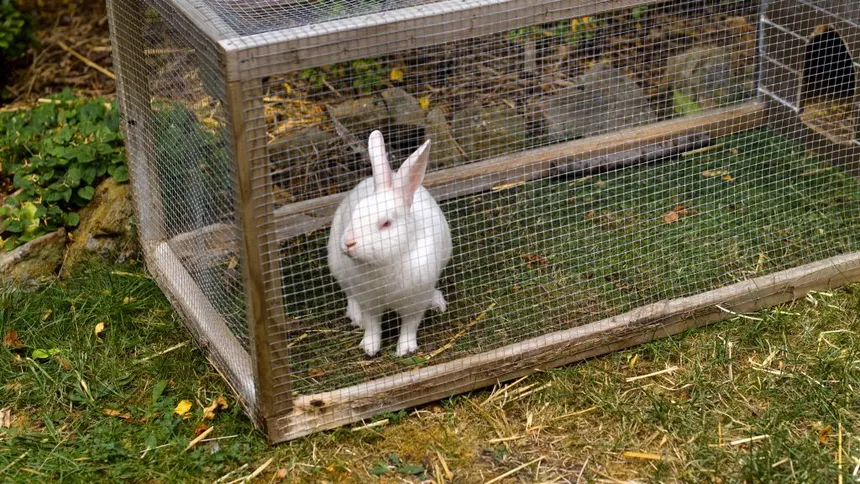
- Site Selection: Choose a quiet, well-ventilated location away from direct afternoon sunlight and loud noise sources like busy roads or generators.
- Cage Construction: Build wooden or metal hutches elevated at least 3 feet off the ground. Elevation improves air circulation beneath the cages and makes daily cleaning far more manageable.
- Flooring: Use wire mesh floors so droppings fall through automatically. This keeps rabbits dry and dramatically reduces the risk of coccidiosis and other moisture-related diseases.
- Predator Control: Reinforce the entire area with fencing. Snakes, dogs, and cats are common threats on Ghanaian farms and can cause significant losses overnight.
For small-scale setups, a basic wooden hutch with four to six compartments is enough to start. As your herd grows, you can expand cage rows systematically.
Stock and Feeding
The quality of your foundation stock and your feeding routine will define your farm’s productivity more than any other factor.
Recommended Breeds for Ghana:
- New Zealand White is the most popular meat breed globally. It is fast-growing, docile, and adapts well to the Ghanaian climate.
- Hyla is a hybrid breed known for exceptional feed-to-meat conversion rates and is well-suited for commercial production.
Feeding Guidelines:
- Stock quality rabbit pellets as the base diet. Pellets provide balanced nutrition and consistent growth results.
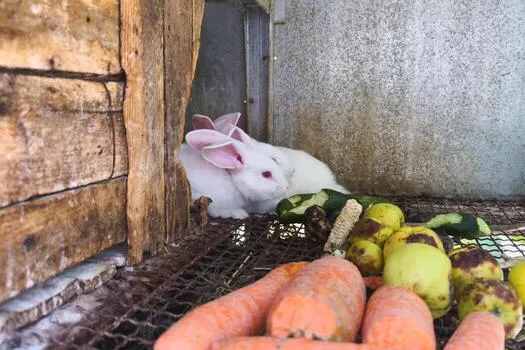
- Supplement with locally available forage such as potato leaves, cassava leaves, guinea grass, or hay. These reduce feed costs without sacrificing growth when properly managed.
- Set up a clean water system using nipple drinkers or heavy clay bowls that rabbits cannot tip over. Rabbits that run out of water stop eating and lose weight quickly.
Commercial Rabbit Farming in Ghana
Commercial rabbit farming in Ghana is still relatively young compared to poultry and fish farming, but that works in your favor. The market is not yet saturated, and early entrants who build consistent supply chains have a real advantage.
The most common production model is meat rabbit farming. A doe (female rabbit) can produce four to seven litters per year, with each litter averaging six to ten kits. From birth to slaughter weight (1.8 to 2.5 kg), a rabbit takes about 12 weeks. This means a well-managed farm can be turning over stock every three months.
Commercial rabbit farmers in Ghana sell through several channels. Hotels and restaurants in Accra, Kumasi, and Takoradi buy rabbit meat as a premium protein option. Expatriate communities and health-focused consumers are also a growing market. Some farmers also sell live rabbits to homesteads and small backyard farmers, which fetches a higher price per animal.
Rabbit fur and pelts are a secondary product that most Ghanaian farmers currently discard. As the industry matures, there is potential to develop this into an additional revenue stream for larger operations.
Cost-Effective Rabbit Farming in Ghana
One of the biggest benefits of rabbit farming is how lean the startup costs are compared to cattle, pigs, or even large-scale poultry.
Approximate Startup Costs for a Small Farm (20 does, 4 bucks):
| Item | Estimated Cost (GHS) |
|---|---|
| Cage construction (wood/wire) | 2,000 to 4,000 |
| Foundation breeding stock | 1,500 to 3,000 |
| Feed supply (first 3 months) | 1,500 to 2,500 |
| Water system and equipment | 300 to 600 |
| Medications and dewormers | 200 to 400 |
| Total | 5,500 to 10,500 |
These figures will vary depending on your location, material costs, and whether you build cages yourself or hire someone to do it.
Ways to reduce costs further:
- Use locally sourced timber for cage frames instead of buying pre-fabricated metal hutches.
- Grow your own forage crops (guinea grass, sweet potato vines) to cut feed costs by 20 to 30%.
- Start with a smaller herd of 10 does and expand using your own farm’s offspring once you have mastered management.
- Sell rabbit manure and urine to vegetable farmers as organic fertilizer. This is a consistent secondary income that many rabbit farmers overlook.
Profitability of Rabbit Farming in Ghana
Rabbit farming can be genuinely profitable when managed well. Here is a realistic breakdown of what a small commercial operation looks like.
Revenue Projection (20 does, conservative estimates):
- Each doe produces 5 litters per year, averaging 7 kits per litter = 35 young per doe annually.
- 20 does x 35 young = 700 rabbits per year.
- After accounting for mortality (10 to 15%), you are marketing approximately 600 rabbits.
- At a farm gate price of GHS 80 to 120 per rabbit (1.8 to 2.5 kg), annual revenue ranges from GHS 48,000 to GHS 72,000.
Costs to watch:
- Feed is your largest recurring expense. Poorly managed feeding schedules or low-quality pellets will eat into your margins fast.
- Labor costs should be factored in early, even if you start managing the farm yourself.
- Veterinary care, even routine deworming and cage sanitation, is not optional. Treating a disease outbreak costs far more than preventing one.
The bottom line is that a small rabbit farm with 20 does, managed properly, can pay back its startup costs within the first production year and generate steady income from the second year onward.
Management and Sales
Day-to-day management is what separates a profitable farm from a struggling one.
- Mating Schedule: Keep a calendar to track all breeding dates. Always bring the female to the male’s cage, never the other way around, to avoid territorial aggression.
- Health Routine: Establish a strict cleaning schedule for all cages. Keep a basic kit for deworming, mite treatment, and wound care. Isolate any sick rabbit immediately.
- Record Keeping: Track birth dates, litter sizes, mortality, feed consumption, and sales. Simple records show which does are most productive and which are costing you more than they earn.
- Market Outreach: Build your buyer relationships at least six weeks before your rabbits reach slaughter weight. Hotels, restaurants, catering companies, and individual buyers should know you exist before you have product to sell.
- Waste Management: Bag rabbit manure and urine-soaked bedding separately. Both are highly valued by vegetable farmers and can be sold or used to subsidize your own feed garden.
List Your Rabbit Farm on QuePosts
Once your farm is producing consistently, getting found by the right buyers is the next challenge. QuePosts is a digital business directory and discovery portal built specifically for Ghanaian brands and entrepreneurs. It gives your rabbit farm a professional online listing where hotels, restaurants, retailers, and individual buyers can find your contact details and see what you offer.
What makes QuePosts stand out is that it goes beyond a basic directory. It also integrates job posting features, so when your farm grows to the point where you need to hire a farm attendant, delivery driver, or sales person, you can post that vacancy on the same platform and reach local job seekers directly.
Success in rabbit farming in Ghana depends on your ability to balance technical care with aggressive marketing. While the animals multiply quickly and offer high revenue potential, your real profit will come from minimizing feed costs and maintaining a zero-tolerance policy for poor hygiene.
Building a loyal customer base among local restaurants and health-conscious families ensures that your stock moves quickly once they reach market weight. You can transform a small backyard setup into a highly productive and sustainable commercial enterprise if you stay consistent with your breeding cycles and build relationships with local buyers. This business rewards the disciplined entrepreneur who treats every hutch as a unit of production and every litter as a step toward long-term financial independence.