

There is a particular frustration that comes with posting a TikTok video that performs well organically, watching it rack up views and comments from people who clearly love it, and then wondering how many more of the right people would have seen it if it had just a little push behind it. That is exactly the problem TikTok Spark Ads were built to solve.
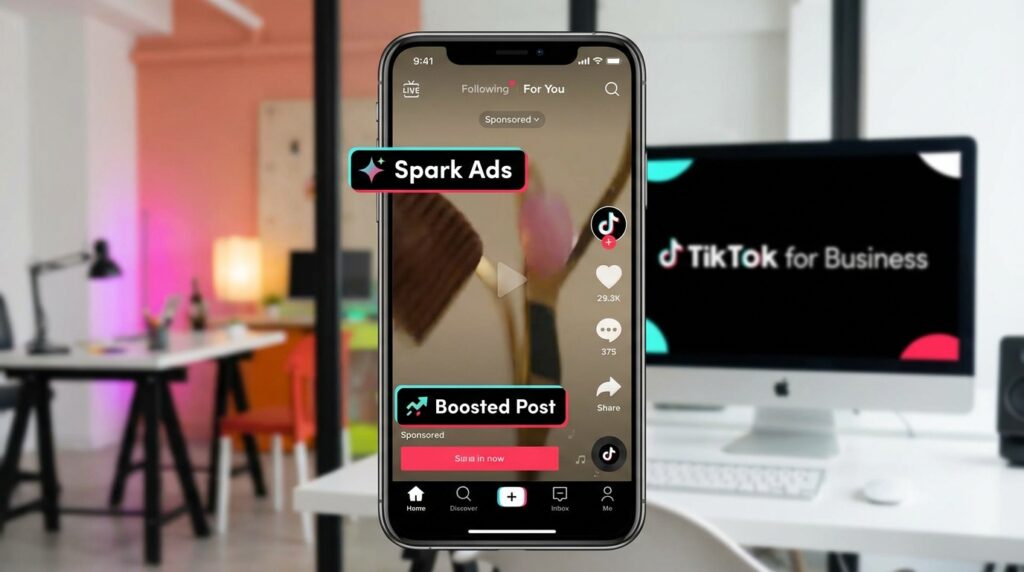
Unlike traditional TikTok ads that look like ads because they are created specifically for advertising, Spark Ads boost content that already exists, either your own videos or content other creators have posted about your brand. The result is a paid promotion that looks and feels completely native to TikTok because it genuinely is. The post stays on your profile. The likes, comments, and shares it earns during the campaign count toward your organic engagement. And because it does not have the polished, scripted look of a traditional ad, audiences tend to trust it more.
For Nigerian businesses and creators who want to extend the reach of content that is already connecting with people, Spark Ads are one of the smartest tools available on the platform right now. This guide walks you through exactly how to run TikTok Spark Ads from start to finish, what to expect, and how to get the most out of every naira you spend.
What Makes Spark Ads Different from Regular TikTok Ads
To understand why Spark Ads matter, it helps to know how they compare to TikTok’s standard advertising format, which is called Non-Spark or Dark Ads.
A regular TikTok ad is created from scratch inside TikTok Ads Manager. It does not live on your profile, it does not carry your existing engagement, and viewers often recognise it as an advertisement because it looks slightly more produced than organic content. It still works, but it has a ceiling when it comes to authenticity.
A Spark Ad, on the other hand, starts with a real post. You take a video that is already on your TikTok profile or on a creator’s profile, and you put paid distribution behind it. When someone sees that ad in their feed, they can click through to your actual TikTok account. They can see all your other content. They can follow you directly from the ad. And every engagement the boosted post receives during your campaign, every like, comment, share, and follow, adds to your organic profile metrics rather than disappearing when the campaign ends.
That last point is significant. With regular ads, the engagement generated during your campaign is essentially lost when the campaign stops. With Spark Ads, it stays. For Nigerian creators and businesses that are simultaneously trying to grow their TikTok presence while running paid campaigns, this makes Spark Ads a far more efficient use of budget.
What You Need Before You Start
Getting set up to run Spark Ads requires a few things in place before you open TikTok Ads Manager. Going through this checklist now will save you frustration later.
You need a TikTok Business Account. If you currently have a personal account, switching to a Business Account is straightforward. Go to your profile settings, tap “Manage Account,” and select “Switch to Business Account.” This does not delete your content or your followers. It simply unlocks the business tools you need, including the ability to run ads.
You need a TikTok Ads Manager account. This is separate from your regular TikTok account. Go to ads.tiktok.com and sign up using your TikTok Business Account credentials. During setup, you will be asked for your business information, your billing country, and your time zone. Select Nigeria as your country.
You need a payment method. TikTok Ads Manager charges in US dollars, so you will need a dollar-capable card to fund your account. Virtual dollar cards from platforms like Grey, Chipper Cash, and Barter by Flutterwave work reliably for most Nigerian advertisers. Dollar debit cards from GTBank, Access Bank, Zenith Bank, and UBA are also commonly used. Load your card before you begin your campaign setup so billing does not interrupt your launch.
You need the content you want to boost. This should already be posted on your TikTok profile. Spark Ads can only boost content that exists as an actual published post, not drafts or saved videos. Before you decide which post to boost, look at your recent content analytics and identify the video that has the strongest organic performance. High watch time, strong completion rate, and genuine engagement in the comments are the signals you want to see. Starting with your best-performing content almost always produces better Spark Ad results than trying to rescue a video that underperformed organically.
Setting Up Your TikTok Ads Manager Account
Once you are inside TikTok Ads Manager for the first time, the interface can feel a little overwhelming. Take a breath. The structure is logical once you understand it, and you only need to navigate a few key areas to run your first Spark Ad campaign.
The dashboard shows you your campaign performance, your ad account balance, and notifications. Before you do anything else, go to your account settings and make sure your billing information is correctly configured. Add your dollar card and confirm that it processes a small verification charge successfully. TikTok sometimes holds your first campaign for review while the payment method is being validated, so getting this done early avoids delays when you are ready to go live.
Next, go to the Creative Library section and familiarise yourself with where your ad content will live. When you set up a Spark Ad, your video assets and authorisation codes will appear here.
You are now ready to build your first campaign.
Generating a Spark Ad Code for Your Content
This step is unique to Spark Ads and is the one that trips up most beginners, so pay close attention.
To run a Spark Ad using your own TikTok post, you need to generate an authorisation code from your TikTok app and then enter that code inside TikTok Ads Manager. This is how TikTok links the organic post on your profile to the paid campaign you are building.
Open your TikTok app and go to the post you want to boost. Tap the three-dot menu on the right side of the video. Scroll through the options until you find “Ad Settings” or “Spark Ads,” depending on your app version. Tap it, then select “Authorize other accounts to promote this video.” A unique code will be generated. Copy it. This code has an expiry, typically seven to thirty days, so use it promptly.
Back inside TikTok Ads Manager, when you reach the stage of building your ad creative, you will see the option to add a Spark Ad. Select “Use TikTok Post” and paste the authorisation code you copied from the app. Your video will load inside the Ads Manager interface, confirming the connection is active.
If you are a brand wanting to boost content that a creator posted about your products, the process works the same way. The creator generates the authorisation code from their account for their post, shares it with you, and you enter it into your Ads Manager. This is how branded content partnerships on TikTok work in practice.
Building Your Spark Ad Campaign
TikTok Ads Manager organises campaigns the same way Meta does, in three levels: Campaign, Ad Group, and Ad. Each level controls different things, and understanding the purpose of each one will save you from making costly setup mistakes.
The Campaign Level
At the Campaign level, you choose your objective. For most Nigerian businesses and creators running Spark Ads, the most relevant objectives are Reach (showing your content to as many relevant people as possible), Video Views (optimising for people who will actually watch your video rather than just scroll past it), Traffic (sending people to a specific link, your website, your WhatsApp, or your online store), and Community Interaction (growing your TikTok following directly from the ad).
If you are a creator whose primary goal is to grow your TikTok audience, Community Interaction is the objective to choose. If you are a business trying to drive sales or enquiries, Traffic or Conversions will serve you better.
One important decision at the Campaign level is whether to enable Campaign Budget Optimization. When this is turned on, TikTok automatically distributes your budget across your ad groups to get the best overall results. For a first campaign with a single ad group, it does not make much difference. For more complex campaigns with multiple audiences, it can improve efficiency.
The Ad Group Level
This is where you define who sees your ad, when they see it, and how much you spend.
For targeting, TikTok gives you the option of Automatic Targeting, where TikTok’s algorithm decides who to show your ad to based on the content of your video, or Custom Targeting, where you manually set your audience parameters. For most Nigerian beginners, starting with Automatic Targeting is sensible because TikTok’s algorithm is genuinely good at finding the right audience for content it has already seen perform well organically.
If you prefer Custom Targeting, set your location to Nigeria. You can narrow further by city if your business is location-specific. Set the age range that reflects your actual customer or target audience. Use the Interest and Behavior targeting to add relevant categories. A Lagos-based fashion brand might target interests like Fashion and Style, Online Shopping, and Lifestyle. A personal finance creator might target interests like Business, Investing, and Career Development.
For your budget, TikTok requires a minimum daily budget of around five US dollars per ad group, which converts to roughly four thousand to five thousand naira at current exchange rates. This is enough to run a meaningful test campaign. Do not feel pressured to spend more than you are comfortable with in the early stages. A focused campaign on a modest budget that teaches you how your audience responds is worth more than a large spend on a campaign you do not understand.
For scheduling, you can run your campaign continuously or set specific start and end dates. Setting dates is usually the better approach for beginners because it gives you a defined window to evaluate results rather than an open-ended campaign you forget to monitor.
The Ad Level
At the Ad level, your Spark Ad content is already set because you entered the authorisation code in the setup step. What you add here is the call-to-action that appears on the ad.
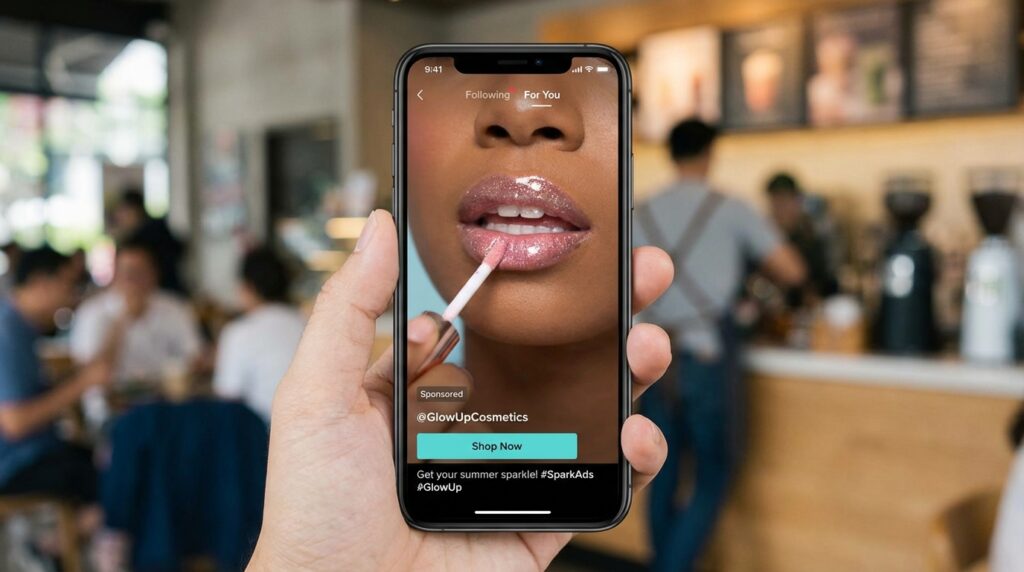
TikTok offers several call-to-action button options, including Learn More, Shop Now, Contact Us, Download Now, and Sign Up, among others. Choose the one that matches what you want people to do when they engage with your ad. If you want them to message you on WhatsApp, use a link that opens a WhatsApp chat directly. If you want them to visit your website, use your website URL. If your goal is purely audience growth, some campaign objectives will show a Follow button automatically.
Review everything carefully before hitting Publish. Check that your authorisation code has loaded the correct video. Confirm your targeting settings. Verify your budget and dates. Then submit your campaign for review.
TikTok typically reviews new campaigns within a few hours, though first-time accounts sometimes take up to twenty-four hours. You will receive a notification when your campaign is approved and live.
What to Watch Once Your Campaign Is Running
Once your Spark Ad is live, resist the urge to make changes immediately. TikTok’s algorithm needs a short learning period to optimise your delivery, and adjusting the campaign too early interrupts that process and often makes results worse, not better.
After two to three days, open your Ads Manager dashboard and look at the metrics that tell you whether the campaign is doing what you wanted it to do.
If you chose a Video Views objective, your primary metrics are Video Views, Average Watch Time, and Video Completion Rate. A high completion rate means people are watching your content to the end, which is a strong signal that the content is resonating with the audience TikTok is reaching.
If you chose Community Interaction, watch your follower growth rate during the campaign period and your Cost Per Follow. This tells you how efficiently your budget is converting into new audience members.
If you chose Traffic, your Click-Through Rate (CTR) and Cost Per Click (CPC) are the numbers that matter most. A CTR above one percent is generally considered healthy for TikTok. A low CTR usually points to a creative or targeting issue rather than a budget issue.
If the campaign is performing well, you can increase the budget gradually. If it is underperforming, pause it, review what the data is telling you, and consider whether the issue is the content itself, the targeting, or the objective selection.
Spark Ads for Creators Versus Spark Ads for Businesses
The mechanics of setting up a Spark Ad are the same whether you are a creator or a business owner, but the way you use them strategically tends to differ.
For creators, Spark Ads are primarily a growth tool. Boosting your best organic content to a wider audience accelerates the follower growth that makes brand partnerships and monetisation possible. Many Nigerian creators who have grown their accounts significantly in a short period of time have used small, targeted Spark Ad campaigns on their highest-performing content to amplify what was already working. If you are working toward the follower thresholds that open up income opportunities on TikTok, Spark Ads can meaningfully shorten the timeline.
For businesses, Spark Ads serve both a growth function and a conversion function. A business can boost a product demonstration video to drive sales, a testimonial video to build trust with new audiences, or a behind-the-scenes video to build brand personality and following simultaneously. Because Spark Ads keep the engagement on your profile rather than on a separate dark ad, they also contribute to social proof over time. A video with five thousand likes and two hundred genuine comments on your profile does more for your credibility than any amount of paid reach on a disposable ad.
Common Mistakes Nigerian Advertisers Make with Spark Ads
Boosting underperforming content is the most common error. There is a temptation to use paid promotion to rescue a video that did not perform well organically, but this rarely works. If the content did not connect with people who already follow you and have opted into your content, paid distribution to strangers is unlikely to produce better results. Always boost your winners.
Setting and forgetting is another mistake. A Spark Ad campaign needs to be monitored at least every two to three days. Costs can fluctuate, audience fatigue can set in if you run the same creative for too long, and small optimisations made early in a campaign can significantly improve the final result.
Ignoring the mobile preview before publishing is a surprisingly costly oversight. Your ad will be seen almost exclusively on mobile screens in a vertical format. Always preview it on the mobile view inside Ads Manager before submitting. Cropping issues, text cut off at the edges, and audio problems are all things that are easy to catch in preview and impossible to fix once the campaign is live.
Finally, choosing the wrong objective undermines everything. If your actual goal is to get people to buy from your online store but you select Video Views as your objective, TikTok will optimise to find people who watch videos, not people who make purchases. Be honest with yourself about what you actually want the campaign to achieve, and let that guide your objective choice.
How Spark Ads Fit Into a Bigger TikTok Strategy
Running Spark Ads is one piece of what should be a broader approach to TikTok growth and monetisation. Paid promotion amplifies content that is already working, but it does not replace the need for a consistent content strategy, genuine audience engagement, and a clear sense of what you are building toward on the platform.
If you are still working out how to build a sustainable income from your TikTok presence alongside your advertising efforts, the strategies and timelines covered in our guide on monetisation are worth reading alongside this one.
Also Read: How to Make Money on TikTok in Nigeria: Monetisation Strategies That Actually Work — a full breakdown of the eight monetisation strategies Nigerian TikTok creators are actually using to earn from the platform, from brand partnerships and product sales to live gifting and digital products. If you are running Spark Ads to grow your audience, this guide explains what to do with that audience once you have it.