
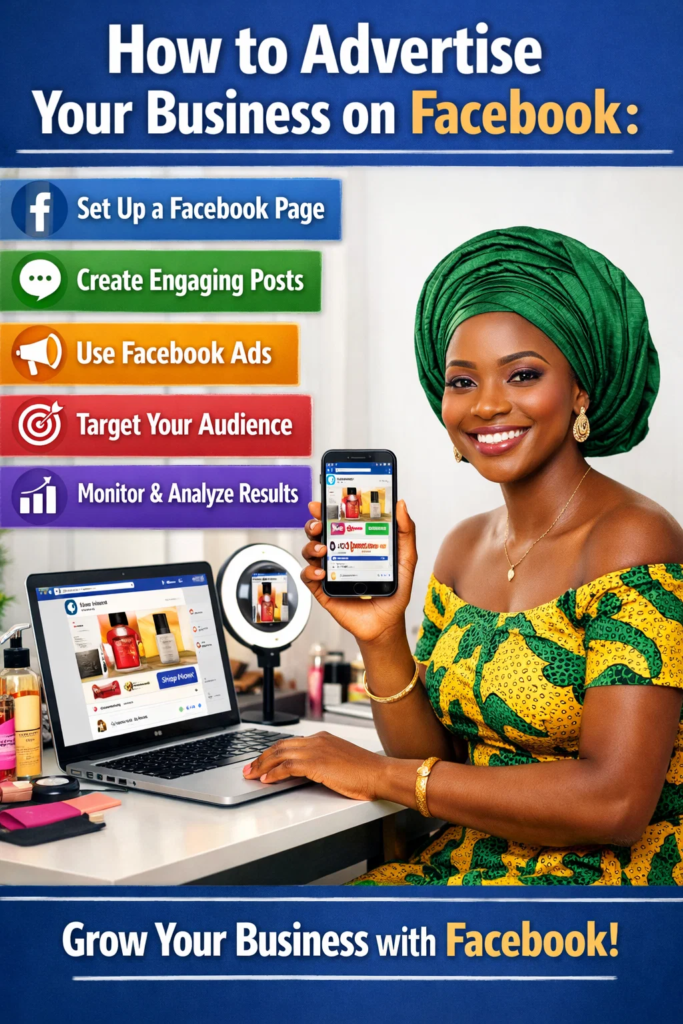

In today’s digital age, Facebook remains one of the most powerful platforms for businesses in Nigeria and worldwide. With over 3.8 billion active users globally and millions in Nigeria alone, Facebook provides an unprecedented opportunity to reach potential customers, grow your brand, and increase sales. Whether you run a small food business, a boutique, a tech startup, or a service-based company, advertising on Facebook can be a game-changer for your growth.
For many beginners, the idea of running Facebook ads can seem overwhelming. From choosing the right audience to setting a budget and designing the ad itself, there are several steps to master. The good news is that Facebook offers a user-friendly ad manager that simplifies the process, even for first-time advertisers.
This guide will walk you through a step-by-step process to advertise your business on Facebook, covering everything from setting up your page to creating high-converting ads. By the end, you’ll have a clear roadmap to start reaching your target audience effectively and efficiently.
Why Facebook Advertising Is Crucial for Your Business
Before diving into the steps, it’s important to understand why Facebook advertising is so effective:
- Massive Reach: Facebook allows you to target millions of users locally and globally.
- Targeted Advertising: You can define your audience by age, gender, location, interests, and behavior.
- Cost-Effective Marketing: Facebook ads can be run with budgets as low as ₦500–₦1,000 daily.
- Performance Tracking: Facebook Ads Manager provides detailed analytics to measure your ad’s effectiveness.
- Boosts Engagement: Ads can increase likes, shares, and comments, improving your brand’s visibility.
These features make Facebook a highly effective platform for small and medium businesses looking to grow in Nigeria and beyond.
Step-by-Step Guide to Advertise Your Business on Facebook
Here is a detailed step-by-step guide on how to advertise your business on Facebook.
Step 1: Create a Facebook Business Page
Before running ads, you need a Facebook Business Page. This acts as the hub for all your advertising and engagement.
Tips for beginners:
- Use your business name and brand logo
- Include clear contact information
- Add a description of your business and services
- Include a call-to-action button like “Shop Now” or “Contact Us”
A well-optimized page builds credibility and trust with your audience.
Step 2: Set Up Facebook Business Manager
Facebook Business Manager is a free tool that helps you manage your ad accounts, pages, and assets in one place.
Steps to set it up:
- Go to business.facebook.com and click “Create Account”
- Enter your business name, email, and details
- Link your Facebook Business Page
- Add your ad account and payment method
Business Manager allows you to run multiple ads, track performance, and manage teams if you expand.
Step 3: Define Your Target Audience
One of the biggest advantages of Facebook advertising is targeting. You can focus your ads on users who are most likely to buy from you.
Audience options include:
- Location: City, state, or country
- Age and gender: Tailor based on your product’s market
- Interests: People interested in topics related to your business
- Behavior: Online shopping habits, device usage, etc.
Pro tip: Start with a small, specific audience. You can expand later once you see which group engages most.
Step 4: Choose the Right Ad Objective
Facebook offers different ad objectives depending on your goal:
- Brand Awareness: Introduce your business to new people
- Reach: Show your ad to as many people as possible
- Traffic: Drive users to your website or landing page
- Engagement: Boost likes, comments, and shares
- Conversions: Encourage actions like purchases or sign-ups
Choosing the right objective ensures your ad is optimized for the desired outcome.
Step 5: Set Your Budget and Schedule
Facebook allows you to set daily or lifetime budgets, giving you control over how much you spend.
Tips:
- Start with a small budget if you’re a beginner
- Run your ads for at least 3–5 days to gather enough data
- Use Facebook’s optimization tools to maximize results within your budget
Remember: Facebook ads can be cost-effective even with a limited budget if targeted correctly.
Step 6: Create Your Ad
Your ad should capture attention and motivate action. Facebook supports multiple formats:
- Image ads: Simple and effective
- Video ads: Great for storytelling and engagement
- Carousel ads: Showcase multiple products in one ad
- Collection ads: Allow users to browse products within the Facebook app
Tips for ad creation:
- Use high-quality visuals
- Write clear, persuasive copy
- Include a strong call-to-action like “Shop Now” or “Sign Up”
Step 7: Monitor and Optimize Your Ads
Once your ad is live, monitoring its performance is critical. Use Facebook Ads Manager to track:
- Impressions and reach
- Click-through rate (CTR)
- Conversions and sales
- Cost per result
Optimization tips:
- Pause ads that underperform
- Adjust targeting based on results
- Test different images, headlines, or audience groups
Continuous testing helps you get the best return on investment.
Step 8: Retargeting Your Audience
Retargeting allows you to reach people who have already interacted with your business but haven’t converted yet.
Examples of retargeting:
- Show ads to people who visited your website
- Target users who added items to their cart but didn’t purchase
- Re-engage past customers with new offers
Retargeting often leads to higher conversion rates and more sales.
Read Also: Fast Growing Local Businesses in Nigeria: 10 Profitable Opportunities to Explore
Tips for Successful Facebook Advertising
Running successful Facebook ads is not just about setting up a campaign; it’s about doing the small things right consistently. These simple but powerful tips can help you get better results, even if you’re just starting out.
1. Use Clear, Bright, and Eye-Catching Images
Your visual is the first thing people notice when they scroll through Facebook. If it doesn’t grab attention instantly, your ad will likely be ignored.
Why this matters:
- High-quality visuals increase engagement and clicks
- Bright, clean images stand out in crowded feeds
- Good design builds trust and professionalism
How to do it right:
- Use well-lit, high-resolution images
- Avoid cluttered backgrounds
- Showcase your product or service clearly
- Use colors that match your brand
If possible, invest in simple design tools or a graphic designer, it can make a huge difference.
2. Keep Your Message Simple and Direct
Many beginners try to say too much in one ad. The truth is, people scroll quickly, so your message needs to be clear and easy to understand within seconds.
Why this matters:
- Short messages are easier to read and remember
- Clear communication increases conversions
- Avoids confusing your audience
How to do it right:
- Focus on one main message per ad
- Highlight the key benefit of your product or service
- Use simple language (avoid jargon)
- Add a strong call-to-action like “Order Now” or “Send a Message”
Think: What’s the one thing I want this person to do?
3. Focus on Your Target Audience
A successful Facebook ad speaks directly to a specific group of people—not everyone.
Why this matters:
- Targeted ads perform better and cost less
- You attract people who are more likely to buy
- It improves your return on investment
How to do it right:
- Define your ideal customer (age, location, interests)
- Tailor your message to their needs or problems
- Use language and visuals they can relate to
For example, an ad for students should look very different from one targeting working professionals.
4. Test Different Ads to See What Works Best
There is no “perfect” ad on the first try. The best-performing ads usually come from testing and experimenting.
Why this matters:
- Helps you discover what your audience responds to
- Improves performance over time
- Prevents wasting money on ineffective ads
What to test:
- Different images or videos
- Headlines and captions
- Call-to-action buttons
- Audience groups
Start small, compare results, and then focus your budget on the ads that perform best.
5. Be Consistent—Don’t Give Up Too Early
One of the biggest mistakes beginners make is stopping too soon. Facebook ads often need time to gather data and optimize.
Why this matters:
- Consistency builds brand awareness
- Results improve as Facebook learns your audience
- Long-term effort leads to better returns
How to stay consistent:
- Run your ads for at least a few days before judging performance
- Keep testing and improving your strategy
- Learn from each campaign instead of quitting
Success in Facebook advertising is not about luck, it’s about patience, learning, and consistency.
Common Mistakes Beginners Make When Advertising on Facebook
Running Facebook ads as a beginner can be exciting, but many new advertisers unknowingly make mistakes that reduce the effectiveness of their campaigns. Understanding these pitfalls is crucial to avoid wasting money and to maximize results.
1. Targeting Too Broad an Audience
One of the most common mistakes is trying to reach everyone at once. Beginners often think casting a wide net will increase sales, but in reality, it can drain your budget quickly without generating meaningful results.
Why it’s a problem:
- Your ad is shown to people who may have no interest in your product or service.
- Lower engagement rates reduce the effectiveness of Facebook’s algorithm.
- Increased cost per click or conversion.
How to fix it:
- Use Facebook’s detailed targeting options to focus on specific demographics, interests, and behaviors.
- Start with a small, well-defined audience, then expand gradually based on performance.
2. Ignoring Ad Analytics and Performance Data
Many beginners fail to monitor their ad performance closely. Facebook Ads Manager provides insights on impressions, reach, click-through rates, and conversions, but these are often overlooked.
Why it’s a problem:
- You don’t know which ads are performing well
- Money is wasted on underperforming campaigns
- Opportunities to optimize and improve are missed
How to fix it:
- Check your analytics daily or weekly
- Track key metrics like CTR, cost per result, and engagement
- Adjust targeting, ad copy, or visuals based on the data
3. Using Low-Quality Images or Videos
Visuals are critical in Facebook advertising. Low-resolution or poorly designed images and videos can immediately turn potential customers away.
Why it’s a problem:
- Ads look unprofessional and untrustworthy
- Lower engagement and fewer clicks
- Reduced ad relevance score, increasing costs
How to fix it:
- Use high-quality images or professionally edited videos
- Ensure visuals match your brand and message
- Test different designs to see which works best
4. Not Testing Multiple Ad Variations
Beginners often create a single ad and expect it to perform perfectly. However, what works for one audience may not work for another.
Why it’s a problem:
- You miss opportunities to find the most effective combination of headline, image, and call-to-action
- Ads may underperform simply because a small change could have improved them
How to fix it:
- Use A/B testing (split testing) to compare multiple ad variations
- Test headlines, visuals, copy, and targeting options
- Focus your budget on the top-performing ads
5. Expecting Immediate Results Without Patience
Many beginners expect instant sales or leads from their first Facebook ad. While some ads may perform well quickly, most campaigns need time to gather data and optimize.
Why it’s a problem:
- Impulsive changes or stopping campaigns too early can prevent success
- Misjudging the ad’s effectiveness leads to frustration
How to fix it:
- Allow your ad to run for at least 3–5 days before making significant changes
- Monitor results regularly and optimize based on performance
- Understand that building a strong Facebook campaign is a gradual process
Avoiding these common mistakes can save you money, increase engagement, and significantly improve your ad performance. By targeting the right audience, monitoring analytics, using quality visuals, testing variations, and exercising patience, even beginners can run successful Facebook ad campaigns that drive real results.
Frequently Asked Questions (FAQs)
1. Do I need a business page to advertise on Facebook?
Yes, a Facebook Business Page is required to run ads effectively.
2. How much does it cost to advertise on Facebook?
You can start with as little as ₦500 per day, depending on your goals and audience size.
3. Can I run Facebook ads without a website?
Yes, you can direct users to your Facebook page, Messenger, or WhatsApp Business account.
4. How long does it take to see results?
Results vary, but beginners should run ads for at least 3–5 days to gather meaningful data.
5. Is Facebook advertising effective for small businesses in Nigeria?
Absolutely! With proper targeting and optimization, even small businesses can generate leads and sales efficiently.
Conclusion
Facebook advertising is one of the most cost-effective ways for Nigerian entrepreneurs to reach customers, build brand awareness, and increase sales. While the platform may seem complex at first, following a step-by-step approach from creating a business page to monitoring and optimizing your ads makes it manageable for beginners.
The key to success is understanding your audience, testing different strategies, and staying consistent. Even with a small budget, you can achieve significant results if your ads are targeted and engaging.
By leveraging Facebook’s tools and insights, your business can grow faster, connect with more customers, and remain competitive in Nigeria’s dynamic market. Start today, experiment, and watch your brand reach new heights!