
You have finally decided to put some money into advertising. You have heard people talk about running ads, seen competitors getting results, and now you are ready. But then you sit down, open your browser, and the question hits you — do I go with Google Ads or Meta Business Suite?
Both platforms promise results. Both have success stories. And both will happily collect your money whether or not the ads are working. So before you spend a single naira, let us break this down in a way that is actually useful for someone running a business in Nigeria today.
First, Understand What Each Platform Is Actually Built to Do – Google Ads or Meta Business Suite
Think of it this way. Imagine two scenarios.
In the first scenario, Emeka’s air conditioning unit breaks down on a hot Tuesday afternoon in Lagos. He picks up his phone and types “AC repair near me in Lagos” into Google. He is not browsing. He is not exploring options. He needs someone — right now. The businesses that show up at the top of that search result are there because of Google Ads and sometimes good SEO. Emeka clicks the first one, calls the number, and books a technician within minutes.
In the second scenario, Chioma is scrolling through Instagram on a Sunday evening, unwinding after a long week. She is not looking for anything in particular when a beautifully styled video of a lace fabric collection catches her eye. The colours are gorgeous. The model looks stunning. She taps the ad, visits the page, saves a few designs, and three days later — after seeing the brand pop up again on Facebook — she places an order. That is Meta Ads at work.
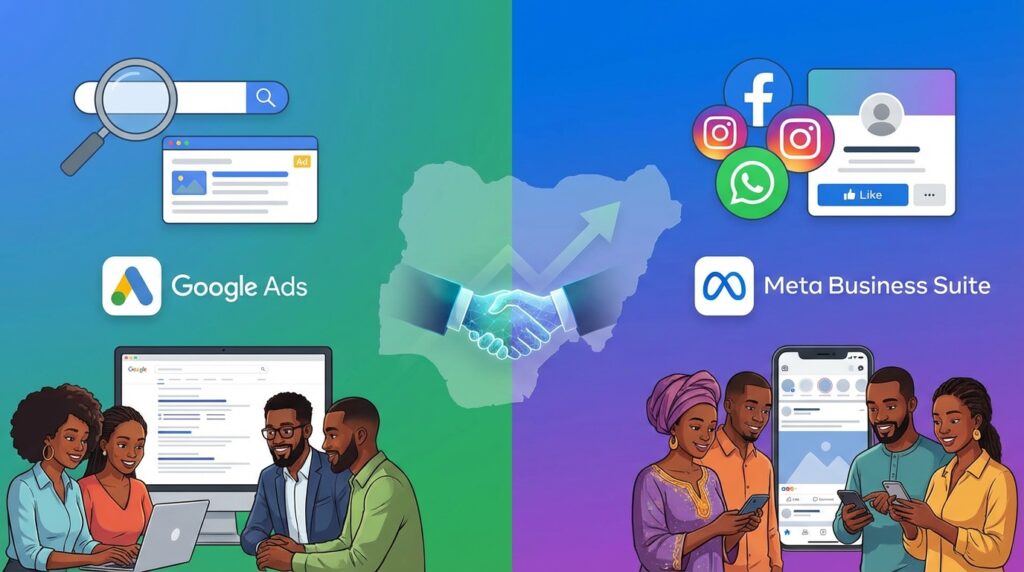
These two scenarios capture everything you need to know about the difference between the two platforms. Google Ads puts you in front of people who are actively searching for what you offer. Meta Ads puts you in front of people who did not know they needed you yet — but once they see you, they want you.
Neither approach is superior. They serve different moments in a customer’s journey, and the best Nigerian businesses use both.
Why the Nigerian Context Changes Everything
Before you copy what you have seen foreign businesses do with ads, you need to understand the environment you are operating in. Nigeria is not a smaller version of the US or UK. It has its own digital behaviour, and if your advertising strategy does not reflect that, you will waste money.
Over 103 million Nigerians are online — the largest internet population on the continent. More than 80% of them access the internet through their smartphones, which means your ads, your landing pages, and your website must all be built for mobile first. If your page takes time to load on a phone, you are losing customers.
Facebook has over 33 million Nigerian users, and Instagram’s base is growing fast, especially among urban professionals and young people between 18 and 35. Google, meanwhile, dominates search with a 97% market share — meaning if someone in Nigeria is looking something up online, they are almost certainly using Google.
One more thing worth knowing: Nigerian internet users are most active between 7pm and 11pm. If you are running ads and not scheduling them to peak during these hours, you are fighting an uphill battle.
What Google Ads Can Do for Your Business
Let us go back to Emeka and his broken air conditioner. His experience illustrates the single greatest strength of Google Ads — intent. The people searching on Google are not casual browsers. They are buyers. They have a problem, and they are looking for a solution, which means your ad is not an interruption; it is a welcome answer.
For businesses that depend on this kind of high-intent traffic, Google Ads is almost unbeatable. Picture a lawyer in Lagos who handles property disputes. His ideal clients are not sitting on Instagram waiting to be inspired to hire a lawyer. They are typing things like “property dispute lawyer Victoria Island” into Google because they have a problem that needs solving today. Google Ads puts that lawyer’s name at the very top of the search results — above every other result on the page.
The same logic applies to a clinic in Abuja, a logistics company in Kano, an engineering firm in Port Harcourt, or a training institute in Ibadan. Any business where customers come looking for you — rather than stumbling upon you — is a business that should be running Google Ads.
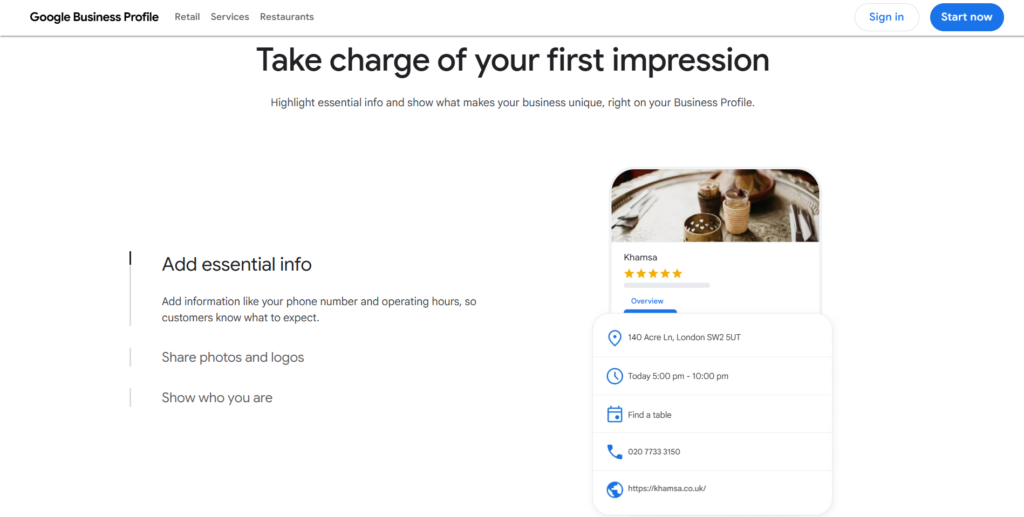
Beyond search, Google also offers Display Ads (banners that appear across websites), YouTube Ads (which are incredibly powerful in Nigeria given how much Nigerians consume YouTube content), and Google Business Profile — a free listing that puts your business on Google Maps whenever someone searches for nearby services. If your business has a physical location and you have not claimed your Google Business Profile yet, stop reading and do that first. It is free and it works.
The honest limitation of Google Ads is that it requires some technical understanding to set up properly. Done wrong, you will burn through your budget fast. Keywords that are too broad, a website that loads too slowly, or an ad that sends people to the wrong page can all make your campaigns expensive and ineffective.
What Meta Business Suite Can Do for Your Business
Now imagine Ronke. She runs a catering business in Lagos, specialising in small chops and event catering. Her problem is not that people are not searching for caterers — they are. But she is one of hundreds of caterers in Lagos, and most people do not search for a caterer until they already have an event in mind. By then, they often already know who they want to call.
Adaeze’s real opportunity is to become the caterer people already have in mind before they start planning their event. That is where Meta Ads shine. By running beautifully shot videos of her small chops on Instagram — the steam rising off the puff-puff, the perfect arrangement of the platters, the faces of guests at an event lighting up — she builds a warm, familiar presence in the minds of Lagos event planners and party hosts. When the time comes to book a caterer, Adaeze is the first name they think of. That is brand building, and Meta is the best tool for it in Nigeria.
Meta Business Suite manages your ads across both Facebook and Instagram from one dashboard. Facebook reaches a broader, slightly older Nigerian demographic — the 25 to 55 age group with real spending power. Instagram reaches the younger, more trend-driven audience that responds to aesthetics and lifestyle imagery.
What makes Meta particularly powerful in Nigeria is the Click-to-WhatsApp Ad — an ad format that sends people directly from an Instagram or Facebook ad into a WhatsApp chat with your business. Given that WhatsApp is the communication backbone of Nigerian commerce, this integration is genuinely game-changing. Customers do not have to visit a website or fill in a form. They tap the ad, land in your WhatsApp inbox, and the conversation — and the sale — begins immediately.
Meta also gives you exceptional audience targeting tools. You can reach Nigerians by age, gender, city, interests, income bracket, and even behaviour — like people who have recently engaged with competitor pages or who have shown interest in specific categories. You can also upload your existing customer list, and Meta will find other Nigerians who look just like them. That feature alone is worth its weight in gold.
The honest limitation of Meta Ads is that users are in a scrolling, passive mindset. They are not in buying mode the way a Google searcher is. You have to work harder to capture their attention — which means your creative (the images and videos in your ads) must be genuinely excellent. Blurry photos and dull captions do not cut it.
The Real Question: What Kind of Business Are You Running?
Here is a simple way to think about which platform suits your business better.
If customers come looking for you when they have a specific need, a problem to solve, a service to book, or a product to purchase, then Google Ads should be your priority. This is true for professional services, repair and maintenance, medical and healthcare, logistics, legal services, educational institutions, and most B2B businesses.
If your business depends on people discovering you, falling in love with what you offer, and building a desire to buy over time, then Meta Ads should lead your strategy. This is where fashion brands, food businesses, event planners, beauty and wellness brands, hospitality businesses, and lifestyle products live.
Some businesses sit comfortably in both camps. A real estate company in Lekki, for example, can run Google Ads to capture people actively searching for properties while simultaneously running Instagram ads that showcase stunning property interiors to people who are quietly daydreaming about their next home. A fintech startup can use Meta to build brand awareness among young professionals while running Google Ads for people searching for specific financial solutions.
The Smart Way to Use Both Platforms Together
The most effective Nigerian businesses do not treat this as an either-or decision. They build what marketers call a full-funnel strategy — using both platforms to guide a customer from first discovering the brand all the way to making a purchase.
Here is how it works in practice. Consider a furniture brand in Lagos called Okay Home. They start by running Instagram video ads showing beautifully furnished Nigerian living rooms — aspirational, warm, and relatable. People who have never heard of Okay Home see these videos while scrolling, and some of them engage: they watch the video, visit the Instagram page, or click through to the website.
Now, Okay Home knows who these people are. They set up retargeting — showing those same interested people follow-up ads on Facebook, Instagram, and even across websites through Google Display. The customer keeps seeing Okay Home, and familiarity builds trust.
Then, when that customer finally types “quality furniture store in Lagos” into Google two weeks later, Okay Home’s Search Ad appears at the top of the results. The customer clicks, recognises the brand, and because they have already seen it multiple times, they feel comfortable enough to make an enquiry. The sale closes.
That entire journey — from a stranger scrolling Instagram to a paying customer — was orchestrated across both platforms. Neither alone would have been as effective as the two working together.
Do Not Make These Mistakes
On Google Ads, the most common money-wasters are bidding on keywords that are too broad — attracting clicks from people who have no intention of buying, sending ad traffic to a website that loads too slowly on mobile, and not using negative keywords. A plumbing company in Abuja, for example, should add “DIY” and “how to fix” as negative keywords so their budget is not spent on people who want to fix their pipes themselves.
On Meta Ads, the biggest mistakes are using poor-quality images and videos (your creative is your first impression — make it count), running the same ad for too long without refreshing it (Nigerian audiences scroll a lot and will tune out your ad quickly), and ignoring the comments section. Nigerian audiences talk in ad comments. They ask questions, share opinions, and sometimes post critical feedback publicly. Responding promptly and professionally is not optional — it is part of your advertising strategy.
Where Queposts Fits Into All of This
Here is something that does not get talked about enough: paid advertising works best when your business already has a credible, findable presence online. When someone sees your Google or Meta ad and decides to check you out further — maybe they Google your business name, or they ask a friend, or they look you up before placing an order — what do they find?
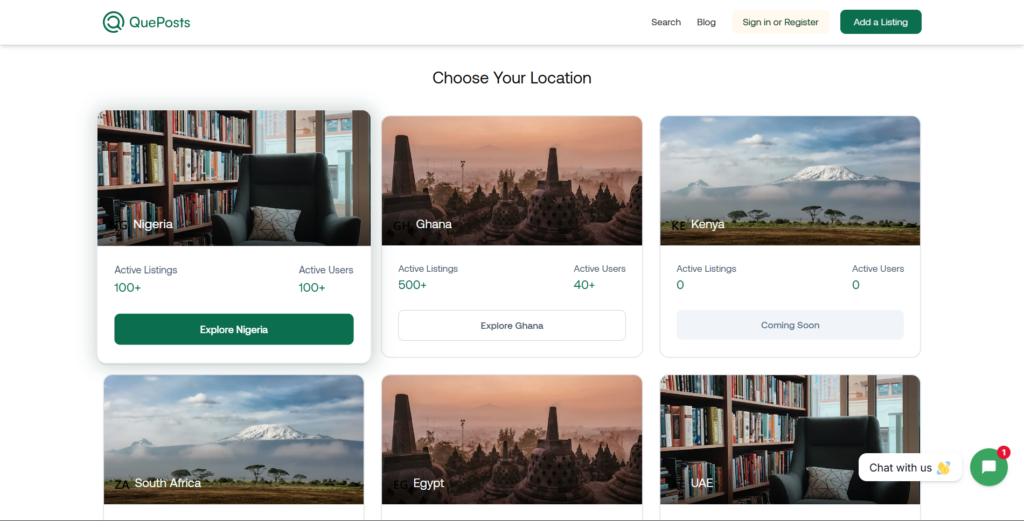
This is where Queposts matters. Queposts is a modern business portal built for local and global discovery, and it fills a critical gap in the advertising journey. Think of it as the foundation that makes everything else work better.
Unlike paid ads that stop working the moment your budget runs out, your Queposts listing works for your business continuously — 24 hours a day, seven days a week, without requiring ongoing spend. It gives your business a permanent presence in the places customers look when they are deciding whether to trust you.
For Nigerian businesses trying to reach customers both locally and in the global diaspora, this cross-border visibility is particularly valuable. A Queposts listing signals to both local buyers and international audiences that your business is established, professional, and worth engaging with.
Google and Meta drive traffic. Queposts helps convert that traffic into trust. Together, they give your business the kind of online presence that consistently wins customers.
Get your business listed on Queposts and make sure every naira you spend on advertising lands on a foundation built for discovery and trust.
Conclusion
If you are just starting out and your budget is tight, begin with Meta Ads. The barrier to entry is lower, the visual format lets you tell your brand story quickly, and the Click-to-WhatsApp feature makes it remarkably easy to convert interest into conversation. Build your audience, learn what your customers respond to, and use that knowledge to sharpen your strategy.
As your budget grows and you want to capture buyers who are actively searching for what you sell, bring Google Ads into the mix. Layer it on top of your Meta strategy rather than replacing it. The combination — awareness built through Meta, intent captured through Google — is the formula that Nigeria’s fastest-growing brands are quietly using to dominate their markets.
The businesses that will be leading their industries five years from now are not waiting to figure all of this out perfectly before they start. They are starting, learning, improving, and staying visible. Every day you are not advertising is a day your competitor is being found instead of you.
Start where you are. Spend wisely. Track everything. And keep showing up.
Also Read: How to Advertise Your Business for Maximum Exposure in Nigeria: A Complete Guide — a full breakdown of every advertising channel available to Nigerian businesses, from social media and Google to radio, WhatsApp marketing, influencer partnerships, and beyond. If you are serious about growing your business in Nigeria, this is the only guide you need.