


Nigeria is widely known as one of Africa’s most entrepreneurial countries, and for good reason. With a population exceeding 200 million people and a rapidly evolving economy, the demand for goods and services continues to rise daily. This has created countless fast growing local businesses in Nigeria, many of which are turning ordinary individuals into successful entrepreneurs. If you’ve been thinking about starting a business, now is one of the best times to take advantage of these opportunities.
In recent years, economic realities such as inflation, unemployment, and currency fluctuations have pushed more Nigerians toward self-employment and small-scale enterprises. Interestingly, this shift has also opened doors for innovation and creativity. From food services to digital ventures, several profitable businesses in Nigeria are growing at an impressive rate, driven by high demand and relatively low startup costs.
This article explores the most profitable small businesses in Nigeria, focusing on ventures that are not only trending but also sustainable in the long term. Whether you’re looking for low capital business ideas in Nigeria or scalable opportunities, you’ll find practical insights here to help you make the right decision.
Why Local Businesses Are Thriving in Nigeria
Before diving into the list, it’s important to understand why small businesses in Nigeria are growing so fast:
- High population demand: More people means more customers
- Urbanization: Cities are expanding, increasing need for services
- Digital adoption: Social media and mobile banking have made it easier to run businesses
- Low entry barriers: Many businesses require little startup capital
- Youth-driven entrepreneurship: A large young population eager to create income
These factors make Nigeria a fertile ground for fast growing businesses across multiple industries.
Top Fast Growing Local Businesses in Nigeria
Here are 10 profitable small business Ideas in Nigeria.
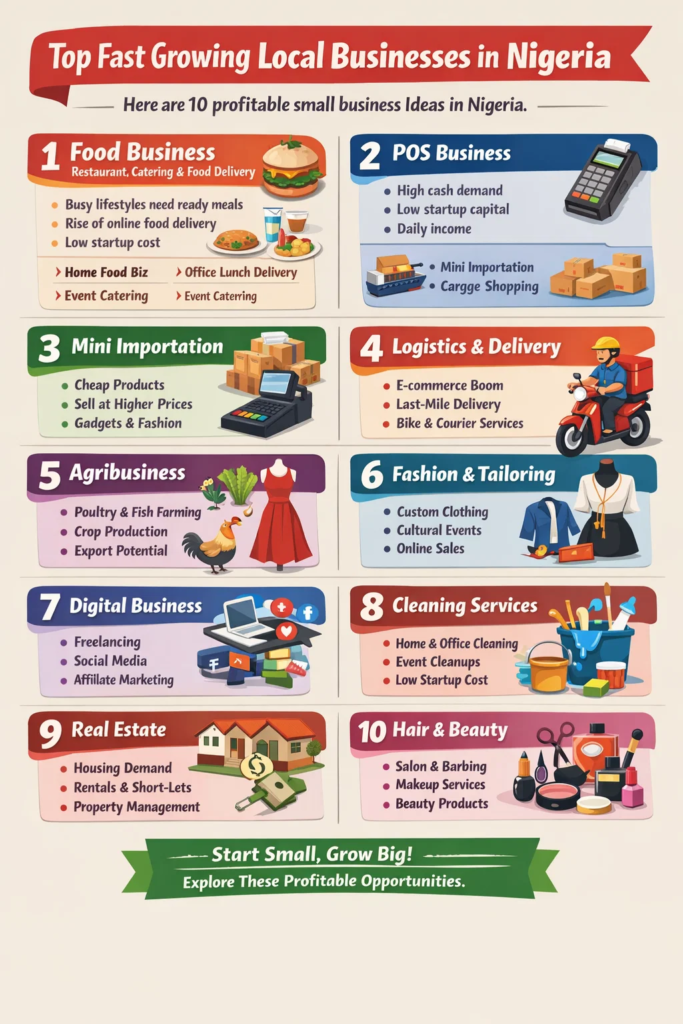
1. Food Business (Restaurant, Catering, and Food Delivery)
The food industry remains one of the most profitable businesses in Nigeria because food is a daily necessity. Whether it’s a small roadside food stand, a buka, or a modern food delivery service, there is always demand.
Why it’s growing:
- Busy lifestyles increase demand for ready-made meals
- Rise of online food delivery services
- Low to moderate startup cost
Opportunities to explore:
- Home-based food business
- Office lunch delivery
- Small chops and event catering
2. POS (Point of Sale) Business
The POS business has exploded across Nigeria, especially in areas with limited access to banks.
Why it’s a fast growing business in Nigeria:
- High demand for cash withdrawals and transfers
- Low startup capital compared to traditional banking
- Daily income potential
With just a POS machine, a good location, and some capital, you can start earning almost immediately.
3. Mini Importation Business
Mini importation is one of the most popular low capital business ideas in Nigeria today.
Why it’s profitable:
- Access to cheap products from platforms like Alibaba and 1688
- Ability to sell at higher local prices
- Strong demand for gadgets, fashion items, and accessories
You can start small, test products, and scale gradually.
4. Logistics and Delivery Services
With the rise of e-commerce, logistics has become a fast growing industry in Nigeria.
Why it’s booming:
- Increase in online shopping
- Need for last-mile delivery
- Growth of small businesses needing delivery partners
You can start with:
- A bike delivery service
- Local courier service
- Partnership with online vendors
5. Agribusiness (Poultry, Fish Farming, Crop Farming)
Agriculture remains one of the most sustainable and profitable businesses in Nigeria.
Why it’s growing:
- Constant demand for food
- Government support for agriculture
- Export opportunities
Popular options:
- Poultry farming
- Catfish farming
- Vegetable farming
Though it may require patience, agribusiness offers long-term profitability.
6. Fashion and Tailoring Business
Nigeria’s fashion industry continues to grow rapidly, making it a strong small business opportunity in Nigeria.
Why it’s profitable:
- High demand for custom clothing
- Cultural events and celebrations
- Opportunities for branding and online sales
You can start as:
- A tailor
- Fashion designer
- Ready-to-wear brand owner
7. Digital and Online Businesses
The internet has opened up endless opportunities for online businesses in Nigeria.
Examples include:
- Social media management
- Freelancing (writing, graphics, programming)
- Affiliate marketing
- Blogging and content creation
Why it’s fast growing:
- Low startup cost
- Global market access
- Flexible work structure
8. Cleaning Services Business
Cleaning services are becoming increasingly popular, especially in urban areas.
Why it’s in demand:
- Busy professionals outsource cleaning
- Offices require regular maintenance
- Event cleaning services are needed
Startup cost is relatively low, and demand is steady.
9. Real Estate and Property Management
Real estate remains one of the most lucrative business opportunities in Nigeria.
Why it’s growing:
- Increasing population and housing demand
- Opportunities in rentals and short-let apartments
Even without owning property, you can earn through:
- Property management
- Agency services
10. Hair and Beauty Business
The beauty industry is one of the most resilient sectors in Nigeria.
Why it’s profitable:
- Constant demand for grooming services
- Repeat customers
- Opportunities to sell beauty products
Options include:
- Hair salon
- Barbing salon
- Makeup artistry
How to Choose the Right Business for You
With so many profitable business opportunities in Nigeria, it’s easy to feel overwhelmed or even make the wrong choice out of excitement. The truth is, not every fast-growing business will suit you. The key is to choose a business that aligns with your financial capacity, skills, environment, and long-term goals. Below is a more detailed guide to help you make a smart and sustainable decision:
1. Start with Your Budget: Choose a Business That Fits Your Financial Capacity
Your budget is one of the most important factors when choosing a business. Many entrepreneurs make the mistake of chasing “trending” businesses without considering whether they can truly afford to start and sustain them.
Why this matters:
- Running out of capital too early can kill a business before it stabilizes
- Some businesses require ongoing expenses (rent, fuel, salaries)
- Unexpected costs are very common in Nigeria
What to do:
- Calculate how much you currently have and how much you can realistically invest
- Set aside emergency funds for the first 3–6 months
- Choose a business with flexible startup options (start small and expand)
Starting within your means reduces pressure and gives your business room to grow.
2. Consider Your Skills: Leverage What You Already Know
One of the smartest ways to succeed in business is to build on what you already know or can easily learn.
Why this matters:
- You’ll spend less time and money on training
- You’ll make fewer mistakes in the early stages
- You’ll be more confident running the business
Examples:
- If you know how to cook -consider a food business
- If you’re good with social media -explore digital marketing
- If you have technical skills -consider repairs or IT services
Pro tip:
Even if you’re entering a new field, make sure it’s something you’re genuinely interested in. Passion and curiosity make it easier to stay committed.
3. Study Demand in Your Area: Location Matters
A business can be profitable in one location and fail in another. Understanding your immediate environment is crucial.
Why this matters:
- Demand varies from place to place
- Competition levels differ across locations
- Customer behavior is not the same everywhere
What to look out for:
- What do people around you need daily?
- What services are missing or poorly delivered?
- Are there too many people already doing the same thing?
Example:
A POS business may thrive in a rural or semi-urban area but struggle in a place with many bank branches and ATMs.
Choosing a business based on local demand increases your chances of quick success.
4. Start Small and Scale Gradually
Many entrepreneurs fail because they try to start too big. While ambition is good, starting small is often the smarter move.
Why this matters:
- Reduces financial risk
- Allows you to test your business idea
- Helps you learn and adjust before expanding
How to apply this:
- Begin with the minimum viable version of your business
- Focus on getting your first customers
- Reinvest profits to grow gradually
Example:
Instead of opening a large restaurant immediately, you can start with a home-based food business and expand as demand increases.
5. Be Consistent and Patient
Success in business rarely happens overnight, especially in Nigeria. Many profitable businesses today took years to build.
Why this matters:
- Customers need time to trust your brand
- Income may be slow at the beginning
- Challenges are inevitable
What to focus on:
- Show up every day and keep improving
- Deliver quality products or services consistently
- Build strong customer relationships
Consistency is what separates successful entrepreneurs from those who give up too early.
6. Understand the Profit Potential and Sustainability
Not all businesses are equal in terms of long-term profitability. Some may bring quick cash but are not sustainable.
What to consider:
- Is the demand seasonal or year-round?
- Can the business grow over time?
- Are profit margins reasonable after expenses?
Choose a business that doesn’t just make money today but can continue generating income in the future.
7. Evaluate the Level of Competition
Competition is not always a bad thing; it often means there is demand. However, too much competition can make it difficult to stand out.
What to do:
- Study your competitors
- Identify what they are doing well
- Find gaps you can fill (better service, pricing, or uniqueness)
Your goal should not be to avoid competition completely but to differentiate yourself.
8. Consider Ease of Entry and Regulations
Some businesses are easier to start than others due to fewer regulatory requirements.
Why this matters:
- Complex regulations can delay your startup
- Some industries require licenses or approvals
- Compliance costs can add up
Tip:
If you’re just starting out, consider businesses with fewer barriers to entry, then expand into more complex industries later.
9. Assess Risk and Prepare for Challenges
Every business comes with risks, especially in Nigeria where factors like power supply and inflation can affect operations.
What to do:
- Identify potential challenges early
- Have backup plans
- Start with a risk level you can handle
Being realistic about risks helps you stay prepared instead of discouraged.
10. Align the Business with Your Long-Term Goals
Finally, think beyond immediate profit. Choose a business that aligns with your bigger vision.
Ask yourself:
- Do I want this business to grow into a large company?
- Am I willing to commit to this for years?
- Does it fit the lifestyle I want?
When your business aligns with your long-term goals, it becomes easier to stay motivated and focused.
Challenges of Running a Local Business in Nigeria
While there are many profitable business opportunities in Nigeria, it’s important to be aware of the common challenges entrepreneurs face. Understanding these early helps you prepare and stay resilient.
- Unstable Power Supply: Frequent outages increase operating costs due to reliance on generators and fuel.
- Inflation and Rising Costs: Prices of goods, transportation, and raw materials keep increasing, affecting profit margins.
- Competition: Many businesses offer similar products or services, making it harder to stand out.
- Regulatory Requirements: Business registration, permits, and compliance can be time-consuming and costly.
- Limited Access to Funding: Getting loans or investment can be difficult, especially for small or new businesses.
- Poor Infrastructure: Bad roads and transport issues can disrupt supply and increase logistics costs.
- Customer Trust & Payment Delays: Some customers delay payments or prefer buying on credit, affecting cash flow.
- Economic Instability: Policy changes and currency fluctuations can impact pricing and planning.
- Security Concerns: Theft or safety issues may require additional spending on security.
- Skilled Labor Shortage: Finding reliable and skilled workers can be challenging.
The key is to plan ahead, stay flexible, and adapt quickly to changes.
Frequently Asked Questions (FAQs)
1. What is the most profitable business in Nigeria right now?
Food business, POS services, and mini importation are among the most profitable due to high demand.
2. Which business can I start with low capital in Nigeria?
POS business, mini importation, and online freelancing are great low-cost options.
3. What business moves fast in Nigeria?
Businesses that meet daily needs like food, transportation, and financial services—tend to grow quickly.
4. Is Nigeria a good place to start a business?
Yes, due to its large population and high demand for goods and services.
5. How can I make my business successful in Nigeria?
Focus on consistency, customer satisfaction, and adapting to market trends.
Which of the Businesses will you choose?
Nigeria remains one of the best places in Africa to start and grow a business. The combination of a large population, increasing demand, and a strong entrepreneurial culture creates endless opportunities for those willing to take the leap. From food services to digital ventures, there are numerous fast growing local businesses in Nigeria that can generate steady income and long-term success.
However, success doesn’t come from simply choosing a profitable idea; it comes from execution. Starting small, understanding your market, and staying consistent are key factors that determine whether your business will thrive or struggle. Every successful entrepreneur started somewhere, often with limited resources but a strong determination to succeed.
As you explore these profitable opportunities in Nigeria, remember that the best business for you is one that aligns with your skills, passion, and available resources. Take action, stay focused, and build something that not only generates income but also creates value.