

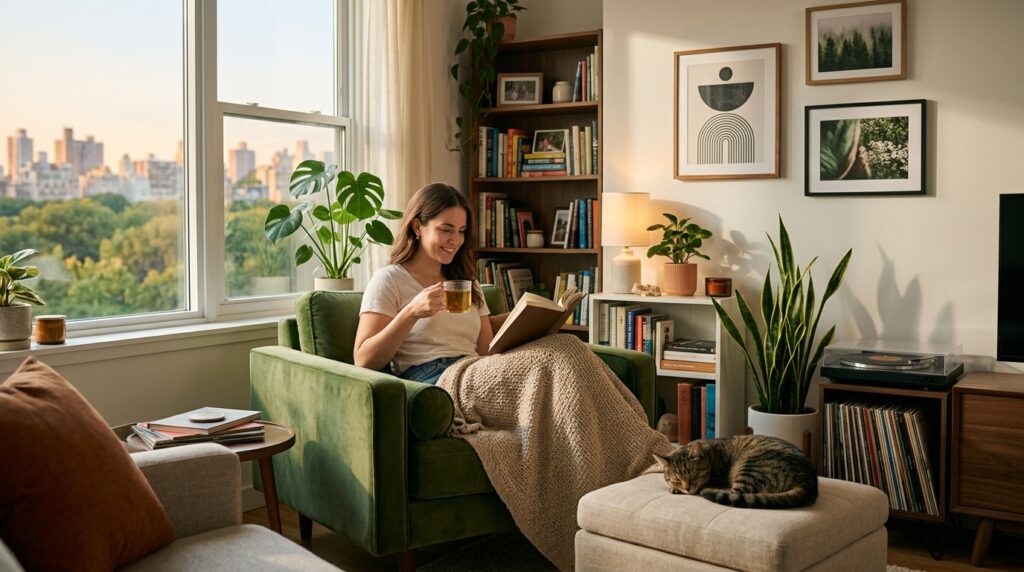

So you’re living alone. Maybe you chose it. Maybe life chose it for you. Either way, you’ve got a whole place to yourself, and depending on the day, that can feel like the best thing that ever happened to you, or the loneliest stretch of your life.
Here’s what nobody tells you upfront: both things can be true at once. You can love living alone and hate it in the same week. Sometimes in the same afternoon.
But there’s a version of solo living that feels genuinely good. Not “I’ve made peace with this” good. Actually, actively living alone and loving it good. This guide is about getting there.
Why Living Alone Hits Different
There’s a before and after that comes with living alone. Before, your home was shared, sounds, routines, and someone else’s dishes in the sink. After, it’s just you. And “just you” can go one of two ways.
For most people, the early days are a weird mix of relief and quiet dread. Relief because nobody’s touching your leftovers or controlling the thermostat. Dread because, well, it’s quiet. Like really quiet.
That silence is the thing people don’t expect. It’s not just the absence of noise. It’s the absence of someone else’s presence; the subtle background hum of another human life running parallel to yours. When that goes away, it takes some getting used to.
The good news? Most people who’ve lived alone long enough will tell you the same thing: the silence stops being empty and starts being yours. You fill it with your own routines, your own music, your own pace. That shift, from “there’s no one here” to “I’m here, fully, without compromise”, is where living alone and loving it actually begins.
The Real Benefits Nobody Talks About Enough
People love to joke about living alone. Eating cereal for dinner. Leaving the TV on at 2am. Not wearing pants. Those things are real perks, sure.
But the deeper benefits don’t get talked about as often.
You get to know yourself. When there’s no one else to adapt to, you find out who you actually are without the constant subtle negotiation of shared space. You learn your own sleep rhythms, your social battery limits, what genuinely lights you up, and what bores you flat. A lot of people discover — sometimes with surprise — that they actually like themselves.
Your energy stops leaking. Sharing a home with someone, even someone you love, uses a low-level, constant amount of social energy. You’re always aware of another person. When you live alone, that energy stays with you. People who’ve made the switch often say they feel more present during the time they do spend with others because they’re not burning through a baseline of shared-space awareness all day.
Decisions happen faster. No consulting anyone. No compromise on where to put the couch. The version of your life you actually want to live starts happening in real time.
Healing has space. Coming out of a difficult stretch, a breakup, a loss, a period where you couldn’t fully be yourself, living alone can be quietly transformative. There’s nobody to perform okayness for. The healing happens honestly.
The Hard Parts (Because Pretending They Don’t Exist Doesn’t Help)
Living alone and loving it isn’t about pretending it’s perfect. There are real challenges, and glossing over them doesn’t do anyone any favors.
Loneliness is real. Not the manageable kind where you just need a phone call. Sometimes it’s the 9pm on a Tuesday kind, where the apartment feels very quiet, and you’ve already texted everyone you feel like texting. That kind is harder. It doesn’t mean something’s wrong with you. It means you’re human.
Everything is on you. There’s no one to split the practical or emotional load with. When the sink breaks, you deal with it. When you’ve had a brutal week, nobody is coming through the door to just be there. That weight is real, and you have to build systems around it.
Social maintenance takes deliberate effort. When you live with people, connection happens passively; you’re just in the same space. When you live alone, you have to make connections happen. On days when you’re tired, it’s easy to skip it, which leads to the slow drift a lot of solo livers experience without quite realizing it.
Safety is something to think about. If something goes wrong, a health scare, an accident, you’re on your own. Having a plan matters more than people admit.
Building a Life That Actually Works
Here’s where most advice about living alone goes soft. “Join a club.” “Practice gratitude.” That’s not what this guide is about.
The people who genuinely thrive living alone have figured out something specific: they stopped treating solo living as a situation to manage and started treating it as a life to design.
Create Genuine Rituals (Not Just Routines)
Routines are about function. Rituals are about meaning. The difference matters more than it sounds.
Making coffee is a routine. Making coffee slowly, with the window open, before you look at your phone, that’s a ritual. It signals to yourself that your morning belongs to you.
When you live alone, nobody else’s rhythm structures your day. That freedom can feel untethering at first. Rituals give your days a shape that comes from inside, rather than outside: morning rituals, evening rituals, weekend rituals. Whatever they are, the goal is that they feel like yours rather than like defaults you fell into.
Get Deliberate About Socializing
The passive socializing that happens when you live with others doesn’t exist when you live alone. You have to replace it with intentional connection, and that means treating your social life with the same seriousness as any other part of your life that matters.
That might look like a standing weekly dinner with friends. A regular phone call with someone you care about. A class or club where you see the same people consistently, not just occasionally. The goal isn’t quantity of social time. It’s regularity — seeing the same people often enough that your relationships develop actual depth.
Think of it like any worthwhile journey: the connections you invest in early become the ones that carry you through harder stretches. If you’re thinking about the stages of life and what each one asks of you, Powerful Journey Quotes for Every Stage of Life — Love, Work, and Everything Between is worth a read. There’s something useful in recognizing that the season you’re in right now is a real stage, not just a gap between other ones.
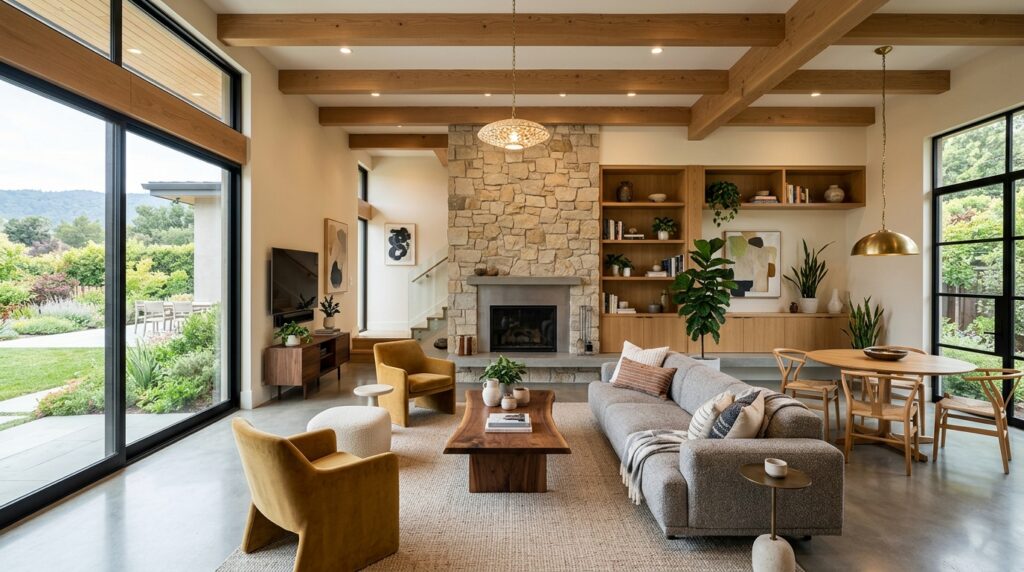
Design Your Space Intentionally
Your home should feel like you live there, not like a rental someone hasn’t quite moved into yet. This doesn’t mean spending a lot of money. It means making decisions about what you want to see, what you want to feel when you walk in, and what the space should actually support.
A lot of people who live alone keep their spaces in a provisional state, like they’re waiting for their “real” life to start before they commit to making it feel like home. That waiting doesn’t serve you. Your life is happening right now. Make the space feel like that.
Take Your Own Wellbeing as Seriously as You’d Take Anyone Else’s
When you live with people, their well-being is often visible to you. You notice when they’re run down, when they’re not eating well, when they need rest. When you live alone, there’s no one to notice that for you. You have to do it yourself.
This means being honest, actually honest, about sleep, about what you’re eating, about how much you’re moving your body versus how much you intend to move it. It means noticing when you’ve been isolated for too long and doing something about it before you’re in the pit rather than after.
It also means building things into your life that refill you. Not just things you should do. Things that work for you specifically. Part of living alone and loving it is knowing, with some precision, what you actually need.
The Mindset Shift That Changes Everything
A lot of people spend their time living alone, waiting to stop living alone. Waiting for the relationship, the roommate, the next chapter. The apartment is a staging ground for the real life that’s coming eventually.
That’s a rough way to live.
The shift that changes things is deciding, actually deciding, that your life is happening now. Not as a placeholder. Not as a chapter to get through.
This connects to something bigger than just living arrangements. When you’re in a period of real change, becoming someone, figuring out who that is, the uncertainty is real. But the people who come out of that process with something solid have usually stopped treating the middle as something to endure and started treating it as something to inhabit. Uplifting Quotes About Change and Growth for Anyone in the Middle of Becoming captures this well. The middle of a transition isn’t a waiting room. It’s where the actual work happens.
Living alone is one of the rare situations in life where you get to be entirely yourself, without the constant negotiation that shared living requires. Most people never get extended stretches of it. You have it right now.
The question isn’t “how do I get through this?” The question is: what do you want to build with it?
Practical Things That Actually Help
A few specific, non-obvious things people who’ve lived alone for a while tend to figure out:
Get comfortable with restaurants and movies solo. The first time feels awkward. By the fifth time, it’s just what you do. There’s a particular pleasure in eating a meal at your own pace, reading or just thinking, without any obligation to make conversation. Sounds small. It’s actually a decent marker of being settled in yourself.
Have a check-in system. Tell someone — a friend, a family member — that you’ll text them every day or every few days. If they don’t hear from you, they check in. This is less about paranoia and more about the practical reality that when something goes wrong for someone living alone, it can take longer for anyone to know.
Build for the hard days now. When you’re doing well, it’s easy to coast. But eventually, there’s a week where work is brutal, you’re getting sick, the apartment feels claustrophobic, and you’ve seen nobody in three days. Having systems already in place means you’re not starting from zero when you need them most.
Know the difference between solitude and isolation. Solitude is chosen, nourishing, and temporary. Isolation is when the quiet stops being restorative and starts being a symptom. Learning to tell the difference in yourself — honestly, not defensively — is one of the more important skills of living alone well.
Let yourself enjoy it. This sounds obvious, but isn’t. A lot of people feel vaguely guilty for liking living alone, like it means they’re antisocial or settling for less. They’re not. Enjoying your own company is genuinely healthy. If you want some words that speak to what it actually means to build a life you believe in, The Ultimate Guide to Inspirational Quotes — Words That Actually Inspire is a better starting point than the generic advice floating around most of the internet. Knowing yourself is the foundation of everything else, and the words that stick are usually the ones that confirm something you already half-knew.
When Living Alone Gets Hard: What Actually Helps
Some practical, honest advice for the rougher stretches:
Don’t white-knuckle through loneliness. It won’t cure itself if you stay in your apartment thinking about it. Get outside. Go somewhere with other humans, even if you’re not talking to them. A coffee shop, a library, a park. The presence of other people, even strangers, does something. It’s not the same as connection, but it’s better than four walls.
Tell someone what’s actually going on. Not a vague “I’m fine”; the real thing. “I’ve been pretty isolated lately, and it’s getting to me” is a full sentence you’re allowed to say. Most people who’ve lived alone have been there. Someone who knows what’s actually happening can show up in useful ways.
Check whether your social life has quietly shrunk. When you live alone, you’re introverted, and you’re busy, it’s genuinely easy to let weeks pass with less and less contact. Then you look up, and you haven’t seen anyone in person in two weeks. It’s not a moral failure. It just happens. The fix is reaching out, which feels harder than it should, but is almost always worth it.
Consider whether the difficulty is temporary or structural. Sometimes living alone is hard because of a specific season — a breakup, a new city, a rough patch at work. Sometimes it runs deeper, and it might be worth talking to someone professionally. There’s no version of that, which is a weakness.
What Living Alone and Loving It Actually Looks Like
The people who do this well didn’t arrive there by accident. They built something, intentional social connections, a space that feels like home, rituals that give their days shape, and an honest relationship with themselves.
It takes time. There are harder months and better months. There are nights where the apartment feels exactly right, and nights where it feels too quiet.
But here’s what’s also true: a life that’s genuinely yours, built to your own specifications, with the time and space to actually figure out who you are and what you want. Most people don’t get extended stretches of that.
You do. Might as well use it.