

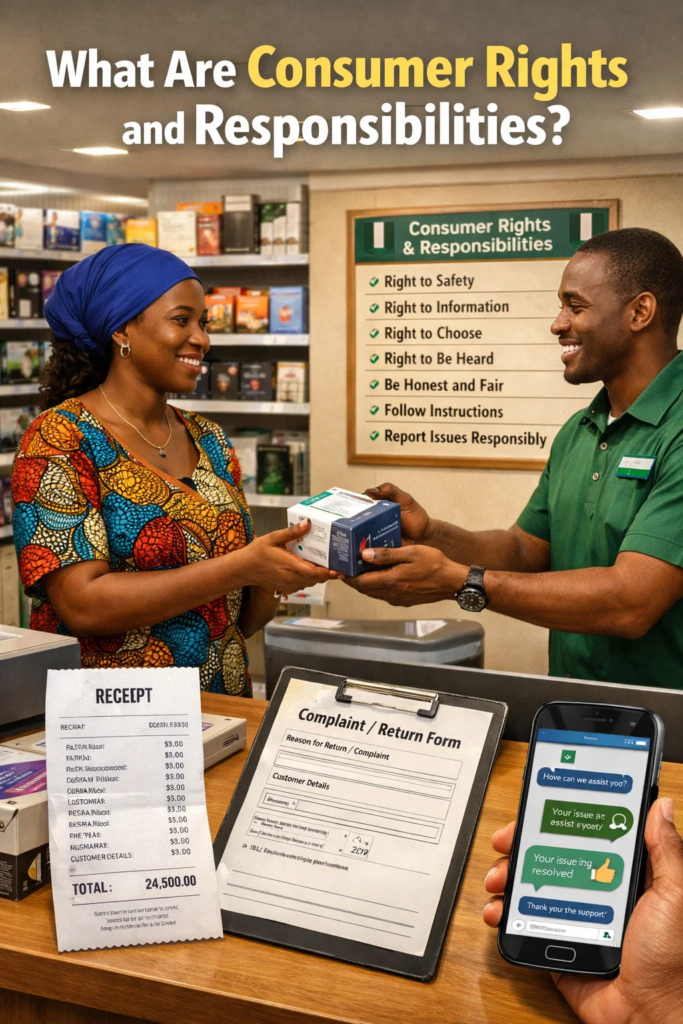

Every day, millions of people purchase goods and services from groceries and clothing to electricity and online subscriptions. In fact, global retail sales reached over $29 trillion in 2023, showing just how active the consumer marketplace has become. With such a massive volume of transactions happening daily, protecting consumers from unfair practices has become an important part of modern economies. This is where consumer rights come into play.
In Nigeria, consumer protection has gained increasing attention as more people shop online, use digital banking, and subscribe to various services. According to the Federal Competition and Consumer Protection Commission (FCCPC), consumer protection laws exist to ensure that businesses treat customers fairly and provide safe, reliable products and services. These laws are especially important in sectors like electricity, telecommunications, banking, and retail, where disputes between companies and consumers can easily arise.
Understanding consumer rights in Nigeria is essential for every buyer. When consumers know their rights, they are better equipped to demand quality products, request refunds for faulty goods, and avoid exploitation by businesses. At the same time, consumers also have responsibilities that help maintain fairness in the marketplace. This guide explains what consumer rights and responsibilities are, the eight basic rights of consumers, examples of consumer rights, and why they are important.
What Are Consumer Rights and Responsibilities?
Consumer rights are the legal and ethical protections given to individuals who purchase goods or services. These rights ensure that consumers receive safe products, truthful information, and fair treatment from businesses.
Consumer responsibilities, on the other hand, refer to the duties consumers must follow when purchasing or using products and services. These responsibilities help maintain fairness between consumers and businesses.
In simple terms:
- Consumer rights protect buyers from exploitation.
- Consumer responsibilities ensure consumers act honestly and responsibly.
When both sides respect these principles, the marketplace becomes safer and more efficient.
Some examples of consumer rights and duties include:
Consumer rights:
- Receiving safe products
- Getting accurate product information
- Being protected from deceptive advertising
- Requesting refunds for faulty goods
Consumer responsibilities:
- Reading product labels and instructions
- Paying for goods and services honestly
- Using products safely
- Reporting unfair practices
Understanding what are consumer rights and responsibilities helps consumers make smarter purchasing decisions and hold businesses accountable.
What Are the 8 Basic Consumer Rights?
The concept of the eight basic rights of consumers was developed by international consumer protection organizations and adopted by many countries, including Nigeria.
These rights ensure that consumers are treated fairly and safely in the marketplace.
The eight consumer rights include:
- Right to Safety
- Right to Information
- Right to Choose
- Right to Be Heard
- Right to Satisfaction of Basic Needs
- Right to Redress
- Right to Consumer Education
- Right to a Healthy Environment
These rights apply to both physical and digital purchases.
Right to Safety
The right to safety means consumers must be protected from products and services that could harm their health or life.
Manufacturers and businesses are responsible for ensuring that the products they sell meet safety standards. Unsafe products such as contaminated food, defective electronics, or faulty medicines can pose serious risks to consumers.
Examples of safety protection include:
- Electrical appliances that meet safety standards
- Food products that are properly inspected
- Safe medicines approved by regulatory agencies
- Vehicles that meet road safety regulations
In Nigeria, agencies like NAFDAC and the Standards Organisation of Nigeria (SON) help enforce safety standards to protect consumers.
This right ensures that consumers are not exposed to dangerous products in the marketplace.
Right to Information
The right to information ensures that consumers receive accurate and truthful details about products and services before making a purchase.
Businesses must provide clear information regarding:
- Price
- Ingredients
- Expiry date
- Product usage
- Potential risks
Without accurate information, consumers may unknowingly purchase harmful or unsuitable products.
For example, food packaging must include:
- Nutritional information
- Ingredients
- Manufacturing and expiry dates
- Storage instructions
This right helps prevent misleading advertisements and deceptive marketing practices. When consumers have accurate information, they can make better purchasing decisions.
Read also: Names of Companies in Nigeria: Top Registered Businesses Across Industries
Right to Choose
The right to choose allows consumers to select from a variety of products and services at competitive prices.
In a healthy market, consumers should have access to multiple brands and service providers. This prevents monopolies where one company controls the entire market and limits consumer options.
Examples include:
- Choosing between different telecom networks
- Selecting among various grocery brands
- Comparing electricity service providers where available
- Choosing between online and physical stores
Competition benefits consumers because it encourages companies to improve product quality and pricing. The right to choose empowers consumers to select products that best meet their needs.
Right to Be Heard
The right to be heard means consumers can express complaints, concerns, and opinions about products or services.
Businesses and regulatory agencies must provide channels through which consumers can report problems.
Examples of these channels include:
- Customer service departments
- Complaint hotlines
- Consumer protection agencies
- Online complaint portals
In Nigeria, consumers can report unfair treatment to agencies such as the Federal Competition and Consumer Protection Commission (FCCPC).
This right ensures that businesses cannot ignore customer complaints or operate without accountability.
Right to Satisfaction of Basic Needs
The right to satisfaction of basic needs ensures that consumers have access to essential goods and services necessary for survival.
These basic needs include:
- Food
- Shelter
- Healthcare
- Clean water
- Electricity
- Education
Governments and businesses must work together to ensure that these essential services are accessible and affordable for consumers.
For example, electricity consumers in Nigeria have certain rights related to:
- Accurate billing
- Reliable power supply
- Fair tariff structures
- Proper customer service
Protecting these rights helps improve living standards and economic development.
Right to Redress
The right to redress allows consumers to receive compensation when they are sold faulty or defective products.
This right is particularly important in cases involving:
- Faulty electronics
- Damaged goods
- Expired food items
- Misleading advertisements
Consumer rights for refunds may include:
- Replacement of the product
- Refund of money
- Repair of the defective item
- Compensation for damages
For example, if a customer purchases a defective phone, they may be entitled to a refund or replacement depending on the store’s policy and consumer protection laws.
This right ensures that consumers are not forced to bear the cost of business mistakes.
Right to Consumer Education
The right to consumer education ensures that people receive adequate knowledge about their rights and responsibilities as consumers.
Consumer education helps individuals:
- Understand product information
- Avoid scams and fraud
- Make informed purchasing decisions
- Report unfair business practices
Many governments and consumer organizations conduct awareness programs to educate the public about their rights.
Schools and universities may also include consumer rights topics in their curriculum, often referred to as consumer rights class.
When consumers are educated, they are less likely to be exploited by unethical businesses.
Right to a Healthy Environment
The right to a healthy environment protects consumers from environmental hazards caused by unsafe products or irresponsible business practices.
Businesses are expected to operate in ways that do not harm the environment or public health.
Examples include:
- Proper waste disposal
- Environmentally friendly packaging
- Pollution control
- Safe manufacturing processes
Consumers also play a role by supporting eco-friendly companies and reducing waste.
Protecting the environment ensures a safer and healthier future for everyone.
What Are Consumer Rights in Nigeria?
Consumer rights in Nigeria are protected by several laws and regulatory agencies. One of the most important laws is the Federal Competition and Consumer Protection Act (FCCPA) of 2018, which established the Federal Competition and Consumer Protection Commission (FCCPC).
This law was created to protect consumers from unfair business practices and ensure fair competition in the marketplace.
Under Nigerian consumer protection laws, consumers have the right to:
- Safe products and services
- Honest advertising
- Fair pricing
- Refunds for faulty goods
- Protection from exploitation
In addition to the FCCPC, other regulatory bodies help enforce consumer rights in Nigeria, including:
- NAFDAC (food and drug safety)
- Standards Organisation of Nigeria (SON) (product quality)
- Nigerian Communications Commission (NCC) (telecom services)
These organizations ensure that companies follow regulations and respect consumer rights.
Why Are Consumer Rights Important?
Consumer rights play a vital role in protecting individuals and strengthening the economy.
Without consumer protection laws, businesses could sell unsafe products, provide false information, or charge unfair prices without consequences.
The usefulness of consumer rights includes:
- Protecting consumers from exploitation
- Promoting fair business practices
- Encouraging product quality and safety
- Increasing consumer confidence
- Supporting healthy market competition
When consumers feel protected, they are more likely to participate actively in the marketplace.
This leads to economic growth and improved business standards.
Examples of Consumer Rights in Everyday Life
Consumer rights apply to many situations in everyday life.
Examples include:
- Returning defective electronics to a store
- Requesting refunds for faulty goods
- Reporting misleading advertisements
- Challenging incorrect electricity bills
- Filing complaints about poor service
For example, if an electricity provider sends an inaccurate bill, consumers have the right to dispute the charge and request an investigation.
Similarly, if a product is defective, consumers may be entitled to repair, replacement, or refund depending on the circumstances.
Understanding these rights empowers consumers to protect themselves.
Frequently Asked Questions (FAQs)
What are consumer rights and responsibilities?
Consumer rights are protections that ensure buyers receive safe products, accurate information, and fair treatment from businesses. Consumer responsibilities are the duties buyers must follow, such as using products properly, paying fairly, and reporting unfair business practices.
What are the 8 basic consumer rights?
The eight basic rights of consumers are:
- Right to safety
- Right to information
- Right to choose
- Right to be heard
- Right to satisfaction of basic needs
- Right to redress
- Right to consumer education
- Right to a healthy environment
What are consumer rights in Nigeria?
Consumer rights in Nigeria are protected by laws such as the Federal Competition and Consumer Protection Act (FCCPA). These rights include access to safe products, honest advertising, fair pricing, and the ability to request refunds or replacements for faulty goods.
What are consumer rights for faulty goods?
If a product is defective or damaged, consumers have the right to request a refund, repair, or replacement depending on the situation and the seller’s policy.
Why are consumer rights important?
Consumer rights protect buyers from exploitation, ensure product safety, encourage fair business practices, and help consumers make informed purchasing decisions.
What Every Consumer Should Remember
Consumer rights are essential protections that ensure fairness, safety, and transparency in the marketplace. The eight basic rights of consumers, including the right to safety, information, choice, and redress help create a balanced relationship between businesses and customers. When these rights are respected, consumers can purchase goods and services with confidence, knowing they are protected from exploitation and harmful practices.
At the same time, consumers must also fulfill their responsibilities by making informed decisions, using products properly, and reporting unfair practices. Understanding consumer rights in Nigeria not only protects individuals but also promotes ethical business practices and economic development. By learning and exercising these rights, consumers contribute to a marketplace that is fair, safe, and beneficial for everyone.