
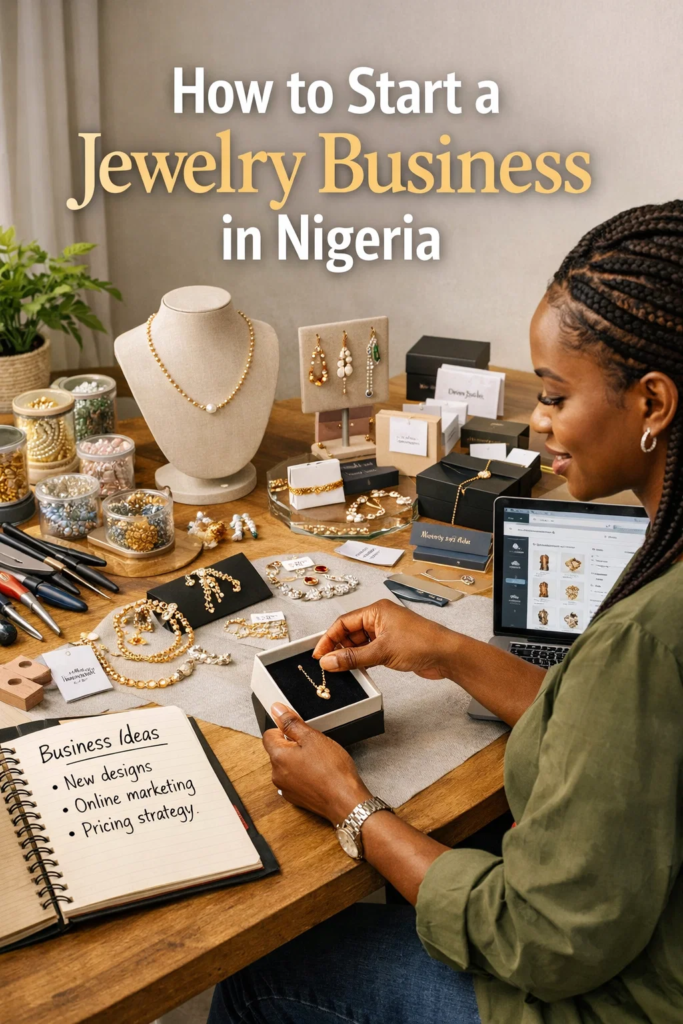

Starting a jewelry business in Nigeria can be both profitable and creatively fulfilling. Jewelry is more than decoration, jewelry making is entrenched in Nigerian culture and African culture at large. It is a form of art, tells stories, expresses identity, and celebrates life’s special moments. From weddings and birthdays to everyday fashion, Nigerians love beautiful accessories, and the demand for unique pieces continues to grow. If you’ve ever dreamed of turning your love for jewelry into a business, now may be the perfect time to begin.
Nigeria has one of the fastest-growing jewelry markets in Africa. The country accounts for about 74% of jewelry consumption in Africa, making it the continent’s largest jewelry consumer. Demand has expanded significantly over the past decade as fashion trends evolve and more Nigerians embrace stylish accessories for everyday wear.
The industry itself is also expanding rapidly. Nigeria’s jewelry market was valued at about $1.4 billion in 2023 and is projected to reach $2.2 billion by 2028, showing strong growth potential for entrepreneurs and small business owners. With the rise of social media marketing, e-commerce platforms, and creative design trends, starting a jewelry brand today is more accessible than ever.
If you’re ready to begin your journey, this complete beginner’s guide will walk you through everything you need to know, from choosing your niche to launching your brand successfully.
Types of Jewelry Business in Nigeria
Before starting, it’s essential to identify which type of jewelry business in Nigeria aligns with your passion, skills, and resources. Here are some popular options in Nigeria:
- Handmade jewelry: Unique pieces crafted using beads, stones, metals, and wires. Ideal for creative entrepreneurs.
- Bridal and occasion jewelry: Elegant sets designed for weddings, engagements, and special events.
- Fashion jewelry: Affordable, trendy accessories targeted at young people.
- Luxury gold and silver jewelry: High-end pieces for customers seeking premium quality.
- Traditional or cultural jewelry: Beaded or ethnic designs reflecting Nigeria’s rich heritage.
- Wholesale and reselling: Buying jewelry in bulk and selling under your brand.
Choosing your business type helps you narrow your target audience and focus on developing a strong brand identity.
How to Learn or Source Jewelry Products
Once you decide your business type, the next step is either learning to make jewelry or sourcing reliable products.
- Learning jewelry-making skills: Crafting your own jewelry allows for unique designs and creative freedom. Materials like beads, gemstones, and metals can be purchased locally or imported.
- Sourcing from suppliers: If you prefer not to craft, work with wholesalers or manufacturers. Focus on quality and select items that align with your brand’s style.
Quality is crucial. Beautiful, durable jewelry increases customer trust and ensures repeat sales.
A Complete Guide to Starting your Jewelry Business—10 Steps
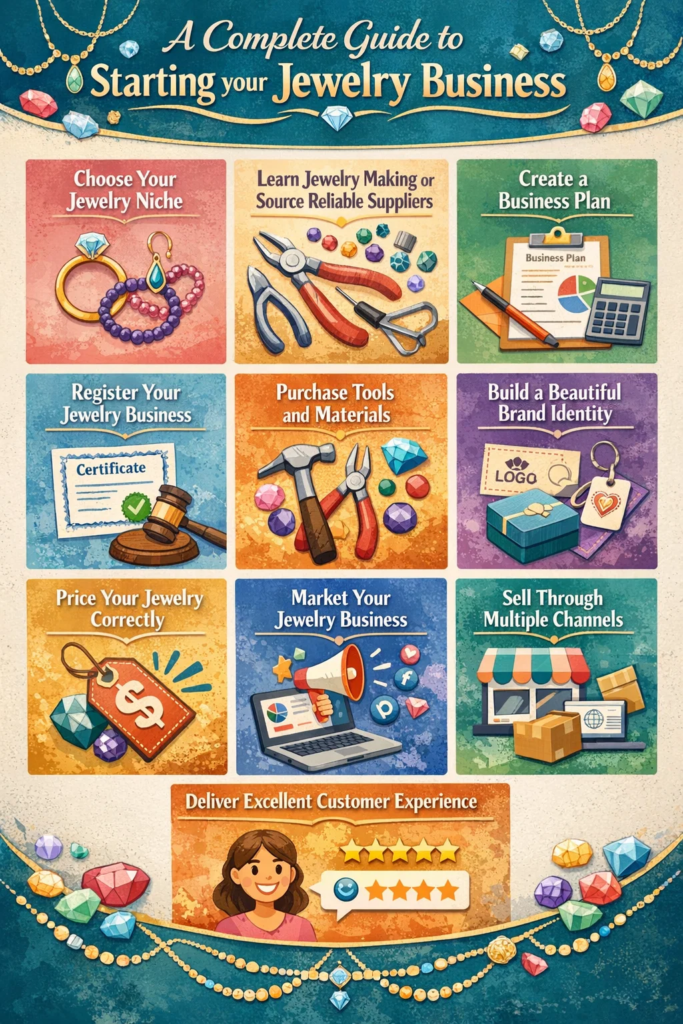
1. Choose Your Jewelry Niche
The first step in starting a jewelry business is deciding what type of jewelry you want to sell. The jewelry industry is broad, so narrowing your focus helps you stand out and attract the right customers.
Some popular niches in Nigeria include:
- Beaded jewelry
- Bridal jewelry sets
- Luxury gold and silver jewelry
- Fashion jewelry (affordable accessories)
- Handmade jewelry
- Cultural or traditional bead pieces
Choosing a niche allows you to develop a recognizable brand identity. For example, some entrepreneurs focus exclusively on handmade bead necklaces for weddings, while others specialize in minimalist jewelry for everyday fashion.
When selecting your niche, think about your passion, the materials available to you, and your target market. A well-defined niche makes marketing easier and helps customers immediately understand what your brand represents.
2. Learn Jewelry Making or Source Reliable Suppliers
Once you decide on a niche, you must determine whether you will create the jewelry yourself or source it from suppliers.
If you enjoy crafting, learning jewelry-making skills can give your business a unique edge. Many successful entrepreneurs begin by creating handmade pieces using materials like beads, crystals, gemstones, and metals. Handmade jewelry often attracts customers looking for originality and artistic expression.
However, if crafting isn’t your strength, you can partner with reliable suppliers or wholesalers. Many jewelry businesses import materials or finished pieces from global markets while focusing on branding and marketing locally.
Whichever route you choose, prioritize quality. Jewelry is closely associated with elegance and personal style, so customers value durability and beautiful finishing.
3. Create a Business Plan
Even small jewelry brands benefit from a clear business plan. A business plan helps you organize your ideas, estimate startup costs, and identify growth opportunities.
Your plan should include:
- Business name and brand identity
- Target audience
- Product range
- Pricing strategy
- Startup budget
- Marketing approach
- Sales channels
For instance, you might target young women aged 18–35 who love trendy accessories. Your plan could focus on affordable fashion jewelry sold through Instagram and online marketplaces.
A simple business plan keeps your goals clear and helps you make smarter decisions as your brand grows.
4. Register Your Jewelry Business
Registering your business is an important step toward building credibility and long-term success. In Nigeria, many entrepreneurs register their businesses with the Corporate Affairs Commission (CAC).
Registering your business offers several benefits:
- Legal recognition
- Ability to open a business bank account
- Increased customer trust
- Opportunities for partnerships
A registered brand also looks more professional when dealing with suppliers, retailers, and online marketplaces.
Although some small jewelry sellers start informally, formal registration helps position your brand for future growth.
Read also: CAC Business Name Registration Fees in Nigeria: Complete Guide
5. Purchase Tools and Materials
If you plan to create jewelry yourself, investing in the right tools is essential. Basic jewelry-making tools are affordable and easy to find.
Common tools include:
- Jewelry pliers
- Beading needles
- Wire cutters
- Crimping tools
- Jewelry glue
- Storage organizers
You’ll also need materials such as beads, chains, clasps, gemstones, and wires.
Starting small is perfectly fine. Many successful jewelry brands began with simple tools and gradually expanded their equipment as demand increased.
6. Build a Beautiful Brand Identity
Jewelry is a visual product, which means branding plays a huge role in attracting customers.
Your brand identity should reflect elegance, creativity, and personality. Consider developing:
- A memorable brand name
- A stylish logo
- Consistent brand colors
- Elegant packaging
Packaging is especially important in the jewelry business. A beautiful jewelry box or pouch can make customers feel special and increase the perceived value of your products.
Brand storytelling also matters. Customers love to know the inspiration behind a jewelry brand—whether it’s cultural heritage, craftsmanship, or personal creativity.
7. Price Your Jewelry Correctly
Pricing is one of the most challenging aspects of running a jewelry business. Many beginners make the mistake of underpricing their products.
Your pricing should consider:
- Cost of materials
- Labor or production time
- Packaging
- Marketing expenses
- Profit margin
For example, if it costs ₦3,000 to produce a necklace, selling it for ₦3,500 may not sustain your business. Pricing should allow room for profit while remaining competitive in the market.
Customers are often willing to pay more for high-quality jewelry with excellent presentation.
8. Market Your Jewelry Business
Marketing is the heartbeat of your jewelry brand. Thankfully, digital platforms have made it easier than ever to reach customers.
Popular marketing channels include:
- TikTok
- WhatsApp Business
- Online marketplaces
Posting beautiful photos of your jewelry can significantly boost sales. Lifestyle images showing people wearing your pieces tend to perform particularly well.
Influencer collaborations can also help expand your reach. A fashion influencer showcasing your jewelry can introduce your brand to hundreds or thousands of potential customers.
Consistency is key; regular posts, engaging captions, and storytelling help build a loyal audience.
9. Sell Through Multiple Channels
Many jewelry businesses grow faster by selling through multiple channels instead of relying on just one platform.
Common sales channels include:
- Instagram shops
- WhatsApp orders
- E-commerce websites
- Online marketplaces
- Physical boutiques or pop-up stores
Online marketplaces are especially helpful for beginners because they already have an existing customer base.
Combining online sales with occasional physical pop-up stores can also help customers experience your jewelry in person.
10. Deliver Excellent Customer Experience
Customer experience can determine whether your jewelry business thrives or struggles. Happy customers not only return; they also recommend your brand to others.
Simple ways to create a great experience include:
- Responding quickly to inquiries
- Offering beautiful packaging
- Providing care instructions
- Delivering orders promptly
Many jewelry brands also include thank-you cards or small gifts in their packages. These thoughtful touches make customers feel valued and strengthen brand loyalty. Over time, loyal customers become powerful ambassadors for your brand.
Frequently Asked Questions
How much does it cost to start a jewelry business in Nigeria?
The startup cost varies depending on your business model. A small handmade jewelry business can start with as little as ₦50,000–₦150,000, while a luxury jewelry brand may require several hundred thousand naira for materials, branding, and marketing.
Do I need jewelry-making skills to start?
No. While jewelry-making skills can give your brand uniqueness, many successful entrepreneurs simply source products from reliable suppliers and focus on branding and sales.
Is jewelry business profitable in Nigeria?
Yes. With Nigeria dominating jewelry consumption across Africa and demand continuing to rise, the jewelry industry offers strong opportunities for entrepreneurs who focus on quality and branding.
Where can I buy jewelry materials in Nigeria?
Jewelry materials can be purchased from craft markets, bead markets, local wholesalers, and online suppliers. Many entrepreneurs also import materials in bulk from international marketplaces.
How can I promote my jewelry brand online?
Social media marketing is one of the most effective strategies. Posting attractive photos, working with influencers, running giveaways, and sharing behind-the-scenes content can help build brand awareness quickly.
Conclusion
Starting a jewelry business in Nigeria is an exciting journey filled with creativity, opportunity, and personal expression. With the growing demand for stylish accessories and the influence of social media on fashion trends, jewelry entrepreneurs have more tools than ever to build successful brands. Whether you create handmade pieces or curate beautiful collections, there is space in the market for unique ideas and fresh perspectives.
The most important ingredients for success are consistency, creativity, and a strong connection with your customers. When you combine beautiful designs with thoughtful branding and excellent service, your jewelry business can blossom into a brand people truly love. With patience and passion, your small idea today could become tomorrow’s thriving jewelry empire.