

The rise of e-commerce has transformed how people buy and sell goods worldwide, and Nigeria is no exception. With increasing smartphone penetration, improved digital payment systems, and a growing culture of online shopping, many Nigerians are exploring low-capital business models that can be run from home. One model gaining significant attention is the dropshipping business.
Globally, the growth of dropshipping mirrors the explosive expansion of e-commerce. According to Statista and market research insights, the global dropshipping market has grown rapidly in recent years and is projected to reach over $470 billion by 2026, reflecting the rising demand for online retail and low-barrier business models.
Dropshipping business is a flexible, low-risk way to start an online venture. Hence, understanding how it works could open the door to financial independence for you. This complete beginner’s guide explains what dropshipping is, how it works in Nigeria, startup steps, costs, tools, and practical strategies to build a successful dropshipping business.
What is a Dropshipping Business?
A dropshipping business is a retail e-commerce model in which products are sold online without the seller keeping inventory. Instead of purchasing goods in bulk and storing them, the seller partners with suppliers who ship products directly to customers after each sale. In essence, the dropshipper acts as an intermediary between the supplier and the buyer.
While this direct-to-customer model is common in many parts of the world, We “Nigerians” approach often differs slightly. In most cases, products are first delivered to the dropshipper, who then inspects, repackages, and forwards them to the final customers. This hybrid method helps ensure quality control, faster local delivery, and improved customer trust.
Meaning of Dropshipping Business in Simple Terms
- You create an online store.
- A customer orders from your store.
- You forward the order to a supplier.
- The supplier ships the product to the customer or you directly.
- You keep the profit margin.
While the traditional dropshipping model eliminates the need for warehousing, large startup capital, and inventory management, the Nigerian approach often requires additional logistics planning. In this system, you may need funds to cover shipping from suppliers, packaging materials, local delivery costs, and maintaining consistent communication with customers to ensure smooth order fulfillment and trust.
Dropshipping Business Model Explained
The Nigerian dropshipping business model involves three key players:
- Retailer (You) – markets and sells the product to customer.
- Supplier – stores inventory and ships items to retailer.
- Customer – purchases the product from retailer.
Your primary responsibility is marketing, customer service, and managing the online store.
Why Dropshipping is Growing in Nigeria
Nigeria’s digital economy is expanding rapidly. More people shop online due to convenience and access to wider product choices. Several factors make dropshipping business in Nigeria attractive:
- Low startup costs compared to traditional retail.
- No need for warehouse or physical shop.
- Increasing trust in online payments.
- Growth of logistics and delivery services.
- Access to global suppliers through platforms like AliExpress.
For beginners and students, dropshipping offers an entry point into entrepreneurship without heavy financial risk.
How Dropshipping Business Works
Understanding how dropshipping works helps you see why it is appealing.
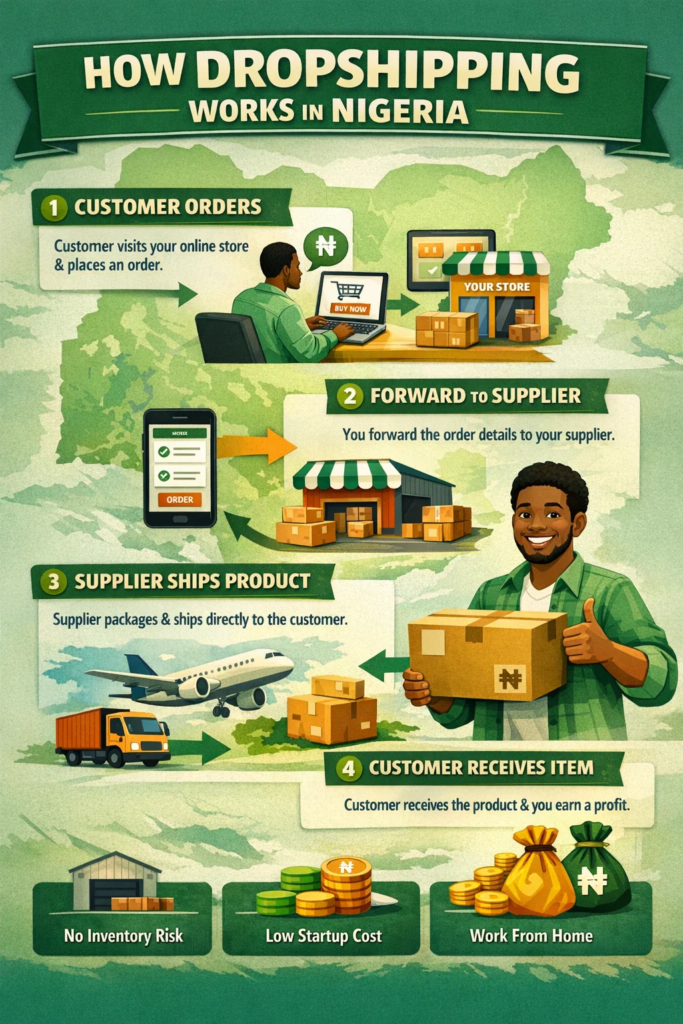
- You set up an online store.
- You list products from suppliers.
- A customer places an order and pays retail price.
- You forward the order to your supplier at wholesale cost.
- Supplier ships directly to you and then you ship to your customers.
- You keep the profit difference.
For example:
- Customer pays ₦25,000 for a product.
- Supplier charges ₦15,000.
- Your profit = ₦10,000 (excluding ads & fees).
Is Dropshipping Business Profitable in Nigeria?
Yes it is especially when done correctly. Profitability depends on product demand, marketing strategy, supplier reliability, pricing and margins, and customer satisfaction.
Successful dropshippers earn consistent income by focusing on trending products, strong branding, and effective marketing.
How to Start a Dropshipping Business in Nigeria
Starting a dropshipping business involves clear, actionable steps.
1. Choose a Profitable Niche
Selecting the right niche is critical. Avoid selling random products. Focus on categories with demand and repeat buyers. Choose a niche that solves problems or fulfills daily needs in your immediate environment. For example, a student is more likely to sell out beauty products and accessories than car accessories.
2. Research Winning Products
Winning products are items people actively want to buy.
Look for products that:
- Solve a common problem
- Are lightweight and easy to ship
- Have viral potential
- Are not easily available locally
Use platforms like:
- AliExpress trending products
- TikTok product trends
- Amazon best sellers
- Facebook ads library
3. Find Reliable Dropshipping Suppliers
Your supplier determines product quality and delivery speed.
Popular dropshipping suppliers:
- AliExpress
- CJ Dropshipping
- Zendrop
- Alibaba
- Local Nigerian wholesalers
When choosing suppliers:
- Check reviews and ratings.
- Order samples.
- Confirm delivery timelines.
- Ensure product quality.
4. Create an Online Store
You need a professional online storefront to sell products.
Popular platforms:
- Shopify (most beginner-friendly)
- WooCommerce (WordPress users)
- Flutterwave Store
- Selar
- Paystack Storefront
A good store should include:
- Clear product photos
- Detailed descriptions
- Easy checkout
- Mobile-friendly design
- Secure payment options
5. Set Up Payment Methods
Make it easy for customers to pay. A prospective customer is more likely to rescind purchase if the payment process is tedious. Hence, providing a seamless payment process is another form of good customer service that will keep customers coming back.
Payment options in Nigeria include:
- Paystack
- Flutterwave
- Bank transfer
- Debit cards
- Mobile wallets
Offering multiple payment options increases trust and conversion rates.
6. Determine Pricing and Profit Margins
Set up your pricing in a way that you don’t end making losses. Making money is the primary reason you started the business and poor pricing will hamper your chances, Your pricing should cover:
- Supplier cost
- Shipping
- Advertising
- Platform fees
- Profit margin
Many dropshippers apply a 2x–3x markup.
Example:
Product cost: ₦8,000
Selling price: ₦20,000
Estimated profit: ₦12,000 (before expenses)
7. Launch and Market Your Store
Marketing is the engine of a successful dropshipping business.
Social Media Marketing
- Instagram reels & product videos
- TikTok viral marketing
- Facebook ads
- WhatsApp status promotion
Paid Advertising
- Facebook & Instagram ads
- TikTok ads
- Influencer promotions
Content Marketing
- Product demos
- Customer testimonials
- How-to videos for products
How to Start a Dropshipping Business with No Money
If you have limited funds, you can still begin:
- Use free store platforms.
- Promote products on WhatsApp and social media.
- Take orders first before paying suppliers.
- Partner with local vendors for delivery.
While paid ads accelerate growth, organic marketing can get you started.
AI Dropshipping Business: The New Trend

Artificial intelligence is transforming e-commerce. AI dropshipping involves using AI tools to automate product research, store design, and marketing.
AI tools you can use:
- AI product research tools
- ChatGPT for product descriptions
- Canva AI for graphics
- AI ad copy generators
- Chatbots for customer service
AI reduces workload and improves efficiency.
Dropshipping Business Ideas for Beginners in Nigeria
Choosing the right product is the foundation of a successful dropshipping business. In Nigeria, products that solve everyday problems, improve lifestyle, or follow social media trends tend to sell quickly.
Here are profitable, fast-moving product categories you can consider:
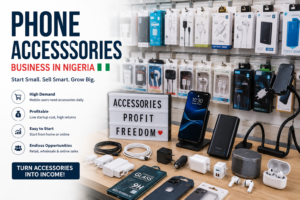
1. Smartphones & Mobile Accessories
Nigeria has a large mobile-first population, making phone-related products evergreen sellers.
Popular items include:
- Phone cases and screen protectors
- Wireless earbuds and headphones
- Power banks and fast chargers
- Phone holders and ring lights
Affordable accessories sell quickly because nearly everyone owns a smartphone.
2. Beauty & Personal Care Products
Beauty products have a massive market, especially among young Nigerians.
Hot-selling items:
- Skincare kits and facial cleansers
- Hair extensions and wigs
- Beard grooming kits
- Makeup tools and organizers
Focus on trending products seen on TikTok and Instagram.
3. Fashion Items & Accessories
Fashion never goes out of demand. Nigerians love stylish and affordable pieces.
Best sellers include:
- Wristwatches
- Sunglasses
- Handbags and backpacks
- Sneakers and casual footwear
- Jewelry and fashion accessories
Trendy and affordable items move faster than expensive luxury goods.
4. Fitness & Wellness Products
Health awareness is increasing, and many people are investing in home workouts.
Profitable products:
- Resistance bands
- Waist trainers
- Yoga mats
- Skimming ropes
- Massage guns
Compact and lightweight items are ideal for dropshipping.
5. Home & Kitchen Essentials
Practical household items sell consistently because they solve daily problems.
Top choices:
- Vegetable slicers and kitchen tools
- Storage organizers
- LED lights and rechargeable bulbs
- Electric kettles and mini blenders
Functional products with clear benefits perform best.
6. Smart Gadgets & Mini Electronics
Affordable gadgets attract tech-savvy buyers.
Trending gadgets include:
- Bluetooth speakers
- Mini projectors
- Rechargeable fans
- Smart LED strip lights
These products often go viral on social media.
7. Baby & Kids Products
Parents are always willing to spend on products that improve comfort and safety.
High-demand items:
- Baby carriers
- Feeding accessories
- Educational toys
- Kids’ backpacks
This niche offers repeat customers and long-term profitability.
8. Customized & Gift Items
Personalized items are popular for birthdays, anniversaries, and celebrations.
Examples:
- Custom name necklaces
- Photo frames
- Gift boxes and surprise packages
- Romantic gift sets
These products sell well during festive seasons.
Challenges of Dropshipping in Nigeria
While dropshipping is attractive, it comes with challenges:
1. Delivery Delays
International shipping may take weeks. The truth is there are very few suppliers with fast shipping options. The best thing to do to allay the worries of your customers is constant reassurance. If they ask you when their products are being delivered 20 times, you are obligated to reply 20 times.
2. Customer Trust Issues
Build trust with clear communication and reliable delivery services. Communicate the delivery duration for the products clearly. Deliver products promptly after they have been delivered to you.
3. Product Quality Concerns
Always order samples before selling. Purchasing poor quality products for your customers will do great harm to your business. By ordering and using samples before delivery, you can assure your customers of their quality.
4. Payment Refusals (Pay on Delivery)
Many customers prefer payment on delivery. Working with trusted logistics partners helps to ensure that your funds get to you. Better still, put out a disclaimer that you do not accept payment on delivery.
Tips to Create a Successful Dropshipping Business
Success requires strategy and consistency.
- Choose Problem-Solving Products: Products that improve daily life sell faster.
- Focus on Branding: Create a unique brand identity and packaging.
- Offer Excellent Customer Service: Quick responses build trust and repeat customers.
- Use High-Quality Product Images: Professional visuals improve conversion rates.
- Start Small and Scale: Test products before scaling ads.
- Build Customer Trust: Use testimonials, reviews, and clear return policies.
Beginner Marketing Plan for Dropshipping Success
Even the best product will not sell without proper marketing. A simple, consistent marketing strategy can help beginners attract customers and build trust.
1. Create Social Media Business Pages
Start with:
- TikTok
Post product photos, videos, and customer testimonials regularly.
2. Use Short Video Content
Short videos attract attention and drive sales.
Create videos showing:
- Product use demonstrations
- Before-and-after results
- Unboxing experiences
- Problem-solving benefits
TikTok and Instagram Reels can generate organic traffic quickly.
3. Leverage WhatsApp Marketing
WhatsApp is one of the most powerful sales tools in Nigeria.
Strategies include:
- Posting products on WhatsApp Status daily
- Creating a broadcast list for customers
- Sharing promo offers and discounts
- Encouraging referrals
Many small businesses generate daily sales via WhatsApp alone.
4. Run Affordable Social Media Ads
You don’t need a large budget to start advertising.
Start with:
- Promote best-selling products
- Target Nigerian cities with high buying power
Test multiple ads and scale the ones that perform best.
5. Offer Promotions & Discounts
Incentives encourage first-time buyers.
Examples:
- Free delivery within Lagos
- Buy 2 get 1 free
- Limited-time discounts
- Holiday promotions
Urgency increases conversions.
6. Build Trust with Customer Reviews
Nigerian buyers trust social proof.
Encourage customers to:
- Share testimonials
- Send pictures of delivered products
- Leave reviews
Post these reviews to boost credibility.
7. Partner with Micro-Influencers
Influencers with small but loyal audiences can boost sales.
Look for:
- Campus influencers
- Fashion influencers
- Lifestyle content creators
They often charge less but deliver strong engagement.
8. Provide Excellent Customer Service
Fast responses and professionalism build repeat customers.
Best practices:
- Reply quickly to inquiries
- Be polite and transparent
- Provide delivery updates
- Resolve complaints promptly
Satisfied customers become repeat buyers and brand ambassadors.
Frequently Asked Questions
What is the meaning of dropshipping business?
It is an online retail model where the seller markets products while suppliers handle storage and delivery.
Can I start a dropshipping business with no money?
Yes. You can start using free platforms and organic marketing.
How long does delivery take?
Local suppliers: 2–5 days
International suppliers: 10–25 days
Do I need a business registration?
Not mandatory at start, but recommended as you scale.
Is dropshipping legal in Nigeria?
Yes. It is a legitimate business model.
Final Thoughts
The dropshipping business model offers Nigerians a flexible, low-capital entry into the world of e-commerce. By understanding how dropshipping works, selecting profitable products, partnering with reliable suppliers, and implementing effective marketing strategies, beginners can build a sustainable online business.
Like any venture, success requires patience, consistency, and continuous learning. Start small, test products, focus on customer satisfaction, and reinvest profits to scale.
With Nigeria’s growing digital marketplace and increasing online shopping culture, now is an excellent time to start a dropshipping business and position yourself for long-term success in the evolving e-commerce landscape.