

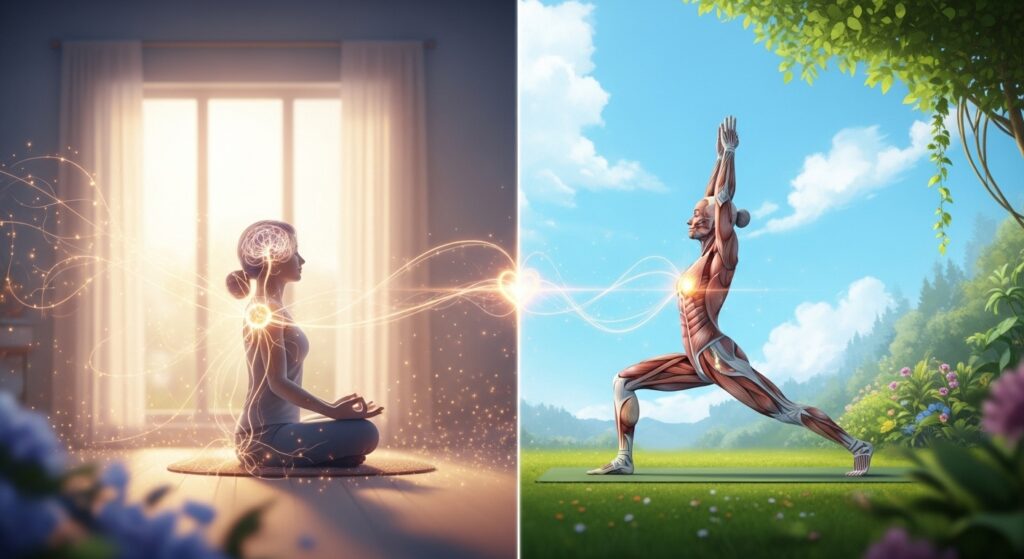

Your body keeps the score. That tension in your shoulders? It’s not just poor posture—it’s stress manifesting physically. The exhaustion that no amount of sleep seems to fix? It might be depression draining your energy at a cellular level. The racing heart and shallow breathing? Anxiety isn’t just in your head; it’s coursing through your entire system.
For too long, Western medicine has treated the mind and body as separate entities. We see specialists for physical ailments and different specialists for mental health, as if the two exist independently. But ancient healing traditions have always known what modern science is finally confirming: mental and physical health are inseparably intertwined.
This connection between mental health and physical balance isn’t just philosophical—it’s biological, neurological, and absolutely essential to understand if you want to achieve true wellness. When one suffers, the other follows. When one thrives, the other benefits. This is the fundamental truth of holistic health.
In this comprehensive guide, we’ll explore how mental and physical health influence each other, examine powerful quotes that illuminate this connection, and provide evidence-based strategies for achieving balance in both domains. Whether you’re a healthcare professional, wellness enthusiast, or someone seeking better health, understanding this relationship is foundational to your well-being.
The Science Behind Mental and Physical Health Balance
The mind-body connection isn’t mystical or metaphorical—it’s measurable and scientifically proven. Let’s examine the biological mechanisms that link mental health and physical balance:
The Gut-Brain Axis
Your gut and brain communicate constantly through the vagus nerve, hormones, and the immune system. This bidirectional relationship means that gut health affects mental health and vice versa. Studies show that 90% of serotonin (a mood-regulating neurotransmitter) is produced in the gut, not the brain.
When you experience chronic stress or anxiety, it disrupts your gut microbiome, leading to digestive issues, inflammation, and weakened immunity. Similarly, poor gut health contributes to depression and anxiety through inflammatory pathways.
The Stress Response System
When you experience mental stress, your body releases cortisol and adrenaline. In short bursts, these hormones help you respond to challenges. Chronically elevated levels, however, cause:
- Weakened immune function
- Increased blood pressure and heart disease risk
- Weight gain, particularly around the abdomen
- Disrupted sleep patterns
- Accelerated aging at a cellular level
- Increased inflammation throughout the body
This demonstrates how mental health and physical balance are biochemically linked—your thoughts literally change your body’s chemistry.
Inflammation and Mood
Research reveals that chronic inflammation doesn’t just cause physical disease; it’s directly linked to depression and anxiety. Inflammatory markers like C-reactive protein are consistently elevated in people with major depression. This explains why anti-inflammatory interventions sometimes improve mental health symptoms.
Neuroplasticity and Movement
Physical exercise doesn’t just build muscles; it changes your brain. Regular movement increases BDNF (brain-derived neurotrophic factor), which promotes neuroplasticity—your brain’s ability to form new neural connections. This is why exercise is one of the most effective treatments for depression and anxiety.
Understanding these mechanisms shows that achieving mental health and physical balance isn’t about treating symptoms separately—it’s about addressing the whole system.
Powerful Quotes About Mental and Physical Health Balance
These quotes capture the essential wisdom about the mind-body connection:
Ancient Wisdom on Holistic Health
- “The body benefits from movement, and the mind benefits from stillness.” — Sakyong Mipham
- “The greatest wealth is health.” — Virgil
- “To keep the body in good health is a duty… otherwise we shall not be able to keep our mind strong and clear.” — Buddha
- “Health is a state of complete harmony of the body, mind and spirit.” — B.K.S. Iyengar
- “Take care of your body. It’s the only place you have to live.” — Jim Rohn
Modern Perspectives on Mind-Body Connection
- “Physical fitness is not only one of the most important keys to a healthy body, it is the basis of dynamic and creative intellectual activity.” — John F. Kennedy
- “The mind and body are not separate. What affects one, affects the other.” — Unknown
- “Mental health and physical health are one and the same. You cannot separate them.”
- “Exercise is a celebration of what your body can do, not a punishment for what you ate.”
- “A healthy outside starts from the inside.” — Robert Urich
Quotes on Balance and Integration
- “Wellness is the complete integration of body, mind, and spirit—the realization that everything we do, think, feel, and believe has an effect on our state of well-being.” — Greg Anderson
- “To enjoy good health, to bring true happiness to one’s family, to bring peace to all, one must first discipline and control one’s own mind.” — Buddha
- “Your body hears everything your mind says. Stay positive.”
- “The body is your temple. Keep it pure and clean for the soul to reside in.” — B.K.S. Iyengar
- “Health is not valued until sickness comes.” — Thomas Fuller
Quotes on Self-Care and Prevention
- “Self-care is not selfish. You cannot serve from an empty vessel.” — Eleanor Brown
- “Rest when you’re weary. Refresh and renew yourself, your body, your mind, your spirit. Then get back to work.” — Ralph Marston
- “The greatest medicine of all is teaching people how not to need it.” — Hippocrates
- “An ounce of prevention is worth a pound of cure.” — Benjamin Franklin
- “He who has health has hope, and he who has hope has everything.” — Arabian Proverb
Expert Insights on Holistic Wellness
- “The natural healing force within each of us is the greatest force in getting well.” — Hippocrates
- “The doctor of the future will give no medicine, but will instruct his patients in care of the human frame, in diet, and in the cause and prevention of disease.” — Thomas Edison
- “Before you heal the body, you must first heal the mind.”
- “When the mind is at peace, the body is naturally healthy.”
- “True healthcare reform starts in your kitchen, not in Washington.” — Anonymous
How Mental Health Impacts Physical Balance
The relationship between mental health and physical balance operates through multiple pathways. Understanding these connections empowers you to address health holistically.
Depression and Physical Health
Major depression doesn’t just affect mood—it has profound physical consequences:
- Cardiovascular Disease: Depression increases heart disease risk by 40% and doubles the risk of a heart attack
- Chronic Pain: Depression and chronic pain share neural pathways and neurotransmitters, creating a bidirectional relationship
- Immune Function: Depressed individuals show reduced T-cell activity and increased susceptibility to infections
- Inflammation: Chronic depression elevates inflammatory markers associated with diabetes, heart disease, and autoimmune conditions
- Sleep Disruption: Depression interferes with restorative sleep, which impacts every bodily system
Anxiety and Physical Symptoms
Anxiety manifests physically in ways that many people don’t recognize as mental health-related:
- Digestive Issues: IBS, nausea, and digestive distress are common in anxiety disorders
- Muscle Tension: Chronic tension leads to headaches, TMJ, and musculoskeletal pain
- Respiratory Changes: Hyperventilation and shallow breathing reduce oxygen delivery
- Cardiovascular Strain: Chronic anxiety increases blood pressure and heart rate variability
- Weakened Immunity: Anxiety suppresses immune function through chronic cortisol elevation
Chronic Stress and Disease
The American Psychological Association identifies chronic stress as a contributing factor in the six leading causes of death. When mental health and physical balance are disrupted by ongoing stress, the consequences include:
- Accelerated cellular aging (shortened telomeres)
- Increased risk of Type 2 diabetes
- Weight gain and metabolic syndrome
- Reduced bone density
- Faster cognitive decline
This isn’t about blaming people for their illnesses—it’s about understanding that mental and physical health are inseparable, so we can address both effectively.
How Physical Health Influences Mental Balance
The relationship flows both ways. Your physical condition profoundly affects your mental state.
Exercise as Mental Health Medicine
Exercise isn’t just good for your body; it’s one of the most effective treatments for mental health conditions:
- Depression: Regular aerobic exercise is as effective as antidepressants for mild to moderate depression
- Anxiety: Physical activity reduces anxiety symptoms by metabolizing stress hormones and increasing calming neurotransmitters
- Cognitive Function: Exercise improves memory, focus, and executive function across all ages
- Sleep Quality: Regular movement improves sleep onset, duration, and quality
- Self-Esteem: Physical accomplishments build confidence that transfers to other life areas
The mental health and physical balance achieved through exercise demonstrate the profound interconnection between these domains.
Nutrition and Mood
What you eat directly influences your mental state:
- Omega-3 Fatty Acids: Essential for brain health and linked to reduced depression
- B Vitamins: Critical for neurotransmitter production; deficiencies contribute to depression
- Complex Carbohydrates: Stabilize blood sugar and support steady serotonin production
- Protein: Provides amino acids needed for neurotransmitter synthesis
- Gut-Healthy Foods: Probiotics and prebiotics support the microbiome-brain connection
The Mediterranean diet, rich in whole foods, healthy fats, and fiber, shows consistent mental health benefits in research studies.
Sleep as the Foundation
Sleep deprivation wreaks havoc on mental health and physical balance:
- One night of poor sleep increases anxiety by 30%
- Chronic sleep debt doubles depression risk
- Sleep loss impairs emotional regulation and stress resilience
- Physical recovery, immune function, and metabolic health all depend on quality sleep
Prioritizing sleep is simultaneously a mental health and physical health intervention.
Chronic Illness and Mental Health
The relationship works in reverse too. Physical illness increases mental health risk:
- 33% of people with serious medical conditions experience depression
- Chronic pain conditions have 50% comorbidity with anxiety disorders
- Managing chronic illness requires mental resilience and coping skills
This is why treating chronic disease requires addressing mental health and physical balance together.
Achieving Mental Health and Physical Balance: Evidence-Based Strategies
Understanding the connection is valuable, but transformation requires action. Here are research-backed strategies for achieving balance:
Integrate Movement Into Daily Life
You don’t need intense workouts to reap mental health benefits. The key is consistency:
- Aim for 150 minutes of moderate activity weekly (brisk walking, cycling, swimming)
- Include strength training twice weekly to build muscle and bone density
- Practice yoga or tai chi for combined physical and mental benefits
- Take movement breaks every hour if you work at a desk
- Walk in nature when possible for added mental health benefits
Movement is medicine for both mental health and physical balance.
Prioritize Sleep Hygiene
Create conditions for restorative sleep:
- Maintain consistent sleep-wake times, even on weekends
- Create a dark, cool sleeping environment (65-68°F is optimal)
- Limit screens 1-2 hours before bed to protect melatonin production
- Develop a calming bedtime routine that signals your body to wind down
- Address sleep disorders like apnea or insomnia with professional help
Nourish Your Body and Mind
Nutrition affects mental health and physical balance simultaneously:
- Eat regular, balanced meals to stabilize blood sugar and mood
- Include protein, healthy fats, and fiber at each meal
- Prioritize whole foods over processed options when possible
- Stay hydrated—even mild dehydration affects mood and cognition
- Limit alcohol and caffeine, which disrupt sleep and increase anxiety
Practice Stress Management
Chronic stress disrupts mental health and physical balance. Build resilience with:
- Mindfulness meditation (just 10 minutes daily shows benefits.)
- Deep breathing exercises to activate the parasympathetic nervous system
- Progressive muscle relaxation to release physical tension
- Time in nature to reduce cortisol and improve mood
- Creative expression through art, music, or writing
Cultivate Social Connection
Relationships profoundly impact both mental and physical health:
- Social isolation increases mortality risk as much as smoking 15 cigarettes daily
- Strong relationships improve immune function and reduce inflammation
- Social support buffers against stress and depression
- Meaningful connections provide purpose and motivation for self-care
Seek Professional Support When Needed
Achieving mental health and physical balance sometimes requires expert guidance:
- Therapy addresses mental health concerns and teaches coping skills
- Medical care treats physical conditions and identifies underlying issues
- Nutrition counseling provides personalized dietary guidance
- Personal training offers structured, safe exercise progression
- Integrative medicine combines conventional and complementary approaches
There’s no shame in seeking help—it’s an investment in your wellbeing.
Holistic Health Practices That Address Both Domains
Some practices inherently support mental health and physical balance simultaneously:
Yoga
Combines physical movement, breath work, and meditation for comprehensive benefits:
- Reduces anxiety and depression
- Improves flexibility, strength, and balance
- Lowers blood pressure and heart rate
- Enhances body awareness and mindfulness
Tai Chi
Gentle flowing movements with meditation benefits:
- Improves balance and prevents falls
- Reduces stress and anxiety
- Enhances cardiovascular health
- Builds strength and flexibility
Mindfulness-Based Stress Reduction (MBSR)
Structured program combining meditation, body awareness, and yoga:
- Clinically proven to reduce anxiety and depression
- Lowers inflammation markers
- Improves pain management
- Enhances overall quality of life
Forest Bathing (Shinrin-yoku)
Intentional time in nature:
- Reduces cortisol, blood pressure, and heart rate
- Boosts immune function through phytoncide exposure
- Improves mood and reduces rumination
- Enhances creativity and cognitive function
These practices demonstrate the powerful synergy possible when addressing mental health and physical balance together.
Creating Your Personal Balance Plan
Achieving mental health and physical balance requires a personalized approach. Here’s how to create your plan:
Assess Your Current State
Honestly evaluate both domains:
- What physical symptoms am I experiencing?
- How would I rate my mental health currently?
- Which area needs more attention right now?
- What barriers prevent me from making changes?
Set Realistic Goals
Start small and build momentum:
- Choose 1-2 areas to focus on initially
- Set specific, measurable goals
- Make changes sustainable, not perfect
- Celebrate small wins along the way
Build Your Support System
Identify resources and accountability:
- Who can support my wellness journey?
- What professional help might I need?
- What community resources are available?
- How can I track progress effectively?
Create Daily Rituals
Consistency creates lasting change:
- Morning routine that energizes body and mind
- Midday movement or mindfulness break
- Evening wind-down that promotes rest
- Weekly planning and reflection time
Adapt and Evolve
Your needs change over time:
- Reassess monthly and adjust as needed
- Be flexible when life circumstances change
- Learn from setbacks without self-judgment
- Recognize that balance is dynamic, not static
The Future of Holistic Healthcare
The integration of mental and physical health treatment is gaining momentum. Progressive healthcare systems now recognize that achieving mental health and physical balance requires:
- Integrated care teams where mental health providers and physicians collaborate
- Preventive focus rather than reactive treatment
- Lifestyle medicine as first-line intervention
- Patient education about mind-body connections
- Whole-person assessment at every healthcare encounter
This shift represents a return to ancient wisdom validated by modern science—true health requires treating the whole person.
Conclusion: Embracing the Wholeness of Health
The separation of mental health and physical balance was always artificial. Your anxiety isn’t just in your mind—it’s in your racing heart, tense muscles, and disrupted sleep. Your chronic pain isn’t just physical—it affects your mood, energy, and outlook.
When you exercise, you’re treating depression. When you meditate, you’re lowering your blood pressure. When you eat well, you’re supporting neurotransmitter production. When you sleep, you’re healing both body and mind.
This understanding is empowering. It means you have more control over your well-being than you might have thought. It means that every positive choice—a walk, a nutritious meal, a good night’s sleep—serves your entire being.
The quotes about mental health and physical balance shared throughout this article point to a timeless truth: we are integrated systems, not collections of separate parts. Wellness isn’t about perfecting your body or fixing your mind in isolation. It’s about honoring the connection, nurturing both aspects, and finding harmony between them. Get more similar quotes like this on Queposts.
As you move forward on your wellness journey, remember that achieving mental health and physical balance isn’t a destination—it’s a practice. Some days will feel easier than others. Progress won’t be linear. That’s not just okay; that’s being human.
Listen to your body. Tend to your mind. Recognize that caring for one means caring for both. And know that every step toward balance, however small, is a step toward the wholeness that is your birthright.
Your mental health and physical balance are not separate journeys—they’re one path to wellness. Walk it with compassion, patience, and the knowledge that true healing encompasses all of who you are.