

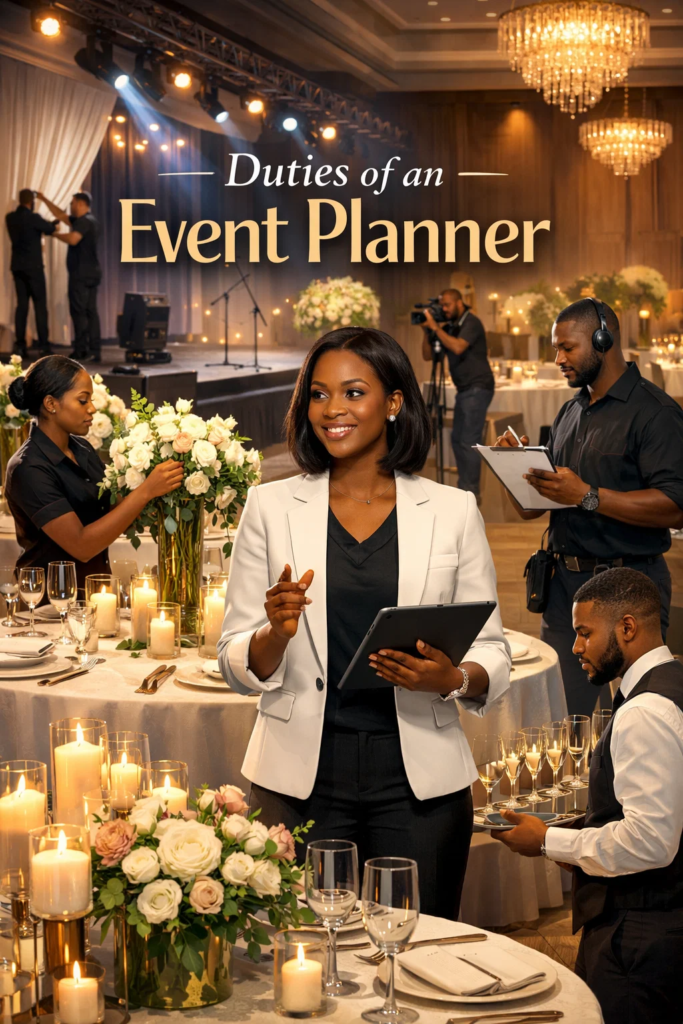

Event planning has evolved into a professional discipline that combines project management, creative direction, logistics coordination, and client service. Whether organizing a wedding, corporate conference, product launch, or community fundraiser, an event planner is responsible for turning a client’s vision into a seamless, memorable experience.
As celebrations and corporate activations continue to grow across Nigeria and globally, the demand for skilled event planners has increased significantly. Clients are no longer looking for someone to simply “decorate a venue.” They expect a professional who can manage budgets, coordinate vendors, anticipate challenges, and deliver a flawless event from start to finish.
Understanding the duties of an event planner is essential for anyone considering the profession, hiring a planner, or building a career in the events industry.
Here are eight core duties of an event planner, along with the responsibilities and skills required to excel in each area.
8 Duties of an Event Planner
1. Client Consultation and Needs Assessment
The foundation of every successful event begins with understanding the client’s vision, expectations, and priorities.
During the initial consultation, the planner gathers information about the event purpose, guest size, theme preferences, budget range, timeline, and special requirements. This stage also involves clarifying expectations and identifying potential constraints.
A skilled planner listens attentively, asks the right questions, and translates vague ideas into actionable plans. Strong communication and interpersonal skills are essential here, as clients often rely on the planner to guide decisions.
Key skills required: active listening, communication, emotional intelligence, professionalism.
2. Budget Planning and Financial Management
One of the most critical responsibilities of an event planner is managing the event budget. Clients depend on planners to allocate resources wisely and avoid unnecessary expenses.
This duty includes estimating costs, negotiating vendor rates, tracking payments, preventing overspending, and ensuring the event delivers value within financial limits.
Professional planners maintain detailed financial records and provide transparent cost breakdowns. They also identify areas where costs can be optimized without compromising quality.
Key skills required: financial planning, negotiation, transparency, attention to detail.

3. Venue Selection and Site Inspection
Selecting the right venue is crucial because it influences logistics, ambiance, accessibility, and overall guest experience.
Event planners research venues, compare pricing, evaluate capacity, assess parking availability, and inspect facilities such as restrooms, lighting, ventilation, and safety measures.
Site visits allow planners to visualize layouts, confirm measurements, and anticipate logistical challenges before the event day.
Key skills required: evaluation skills, spatial awareness, decision-making, planning.
4. Vendor Sourcing and Coordination
Event planners collaborate with multiple vendors, including caterers, decorators, photographers, sound engineers, rental companies, makeup artists, and entertainment providers.
They source reliable vendors, compare quotations, negotiate contracts, confirm service expectations, and ensure timely delivery on event day.
Effective vendor coordination ensures that all service providers work harmoniously toward a common goal.
Maintaining strong professional relationships with vendors is vital for securing quality services and favorable pricing.
Key skills required: negotiation, networking, coordination, relationship management.
5. Event Design and Experience Planning
Beyond logistics, event planners help shape the event’s visual identity and guest experience.
This includes theme development, décor concepts, lighting design, seating arrangements, color coordination, stage design, and ambience creation.
The goal is to create a cohesive experience that aligns with the client’s vision while leaving a lasting impression on attendees.
Creativity combined with practical planning ensures designs are both beautiful and functional.
Key skills required: creativity, aesthetics, attention to detail, innovation.
6. Timeline Development and Logistics Management
An event involves numerous moving parts that must happen in sequence. Event planners develop detailed timelines that outline setup schedules, vendor arrivals, program flow, and breakdown procedures.
Logistics planning also includes transportation arrangements, guest flow management, equipment setup, and contingency planning.
A well-structured timeline prevents confusion and ensures every component runs smoothly.
Key skills required: organization, time management, coordination, foresight.
7. On-Site Event Supervision and Problem Solving
On the event day, the planner acts as the operational leader. They oversee setup, coordinate vendors, monitor timing, and ensure everything aligns with the event schedule.
Unexpected challenges are inevitable. Equipment may fail, weather may disrupt plans, or vendors may arrive late. The planner must resolve issues quickly without disrupting the guest experience.
Remaining calm under pressure and making swift decisions are critical to successful event execution.
Key skills required: leadership, problem-solving, composure under pressure, adaptability.
8. Post-Event Evaluation and Client Follow-Up
The planner’s duties do not end when the event concludes. Post-event responsibilities include supervising breakdown, confirming vendor payments, reviewing service performance, and gathering client feedback.
Professional planners evaluate what worked well and identify areas for improvement. This process strengthens future performance and enhances service quality.
Maintaining communication after the event also helps build long-term client relationships and encourages referrals.
Key skills required: evaluation, customer service, accountability, relationship management.
Essential Skills Every Event Planner Must Have
Event planning is more than decorating a venue or sending invites; it requires a combination of creativity, organization, and interpersonal skills. To succeed in this competitive industry, every event planner must master a set of essential skills that allow them to manage logistics, meet client expectations, and deliver memorable experiences. Below is a detailed discussion of these key skills.
1. Organizational Skills
Event planning involves juggling multiple tasks simultaneously from coordinating vendors and scheduling timelines to managing budgets and guest lists. Strong organizational skills ensure that every detail is tracked and executed efficiently. An organized planner can prevent overlaps, missed deadlines, and logistical errors that could derail an event. The depth of your organizational skills matters because it helps streamline operations and ensures a seamless event experience.
2. Time Management
Events often involve strict schedules, whether for setup, ceremony, or program flow. Effective time management allows planners to allocate resources appropriately, keep vendors on track, and prevent last-minute chaos. It ensures deadlines are met and reduces stress on event day.
3. Communication Skills
Clear communication is vital when interacting with clients, vendors, and team members. Planners must convey ideas, negotiate contracts, clarify instructions, and handle client concerns diplomatically. Clear communications between event planners and their clients also builds trust, prevents misunderstandings, and ensures all stakeholders are aligned.
4. Budgeting and Financial Management
Events require careful financial planning. Planners must allocate funds, negotiate vendor costs, track expenses, and optimize the budget to deliver value without overspending. Budgeting helps to maintain profitability and client satisfaction, and prevents budget overruns.
5. Creativity and Vision
A successful planner must bring innovative ideas to life, from décor concepts and color schemes to themes and interactive experiences. Creativity ensures that every event feels unique and memorable. Creativity enhances guest experience and differentiates your services in a competitive market.
6. Problem-Solving and Adaptability
Unexpected challenges like vendor delays, weather disruptions, or technical glitches—are inevitable. An effective planner remains calm under pressure, quickly assesses solutions, and adapts plans on the fly. Being able to adapt to different situations minimizes disruptions and maintains client confidence in your abilities.
7. Attention to Detail
Even small oversights, like a missing table number or incorrect signage, can affect the overall success of an event. Attention to detail ensures that everything, from the smallest décor element to the larger logistics, is handled perfectly. This helps to create polished, professional events that leave lasting impressions.
8. Leadership and Team Management
Event planners often coordinate multiple vendors and staff. Strong leadership helps guide teams, delegate tasks effectively, and maintain workflow harmony. It also ensures smooth collaboration and efficient execution.
9. Negotiation Skills
Planners regularly deal with vendors, venues, and service providers. Negotiation skills help secure competitive pricing, favorable contracts, and added value for clients. Good negotiation skills goes a long way to maximize profitability and ensures the best quality within budget constraints.
10. Customer Service Orientation
Clients expect planners to anticipate needs, handle concerns professionally, and deliver exceptional experiences. A service-oriented mindset fosters loyalty and encourages referrals. It helps build a strong reputation and grows your business through satisfied clients.
How to Promote Your Business as an Event Planner
Starting an event planning business is just the first step. To attract clients and grow your reputation, you need effective promotion strategies that highlight your skills, creativity, and reliability. Successful marketing combines online and offline approaches to reach potential clients and establish your brand in a competitive market. Here’s a detailed guide on how to promote your event planning business.
1. Leverage Social Media Platforms
Social media is one of the most powerful tools for event planners. Platforms like Instagram, Facebook, TikTok, and LinkedIn allow you to showcase past events, creative setups, and client testimonials.
Tips:
- Post high-quality photos and videos of your events.
- Share behind-the-scenes content to highlight your professionalism.
- Use relevant hashtags like #EventPlanner, #WeddingPlanner, #CorporateEvents to increase visibility.
- Engage with your audience through polls, Q&A sessions, and live event coverage.
2. Build a Professional Website
A website acts as your digital portfolio and credibility booster. Include:
- Service offerings
- Portfolio of past events
- Client testimonials
- Contact information
- Blog posts on event planning tips or trends
Why it matters: A professional website improves trust and helps clients find your business online.
3. Network with Vendors and Clients
Word-of-mouth is extremely valuable in event planning. Build relationships with vendors (photographers, caterers, decorators) and other professionals in your niche.
Tips:
- Attend trade shows, expos, and networking events.
- Collaborate with vendors on styled shoots to showcase your creativity.
- Ask satisfied clients for referrals.
4. Offer Promotions and Packages
Attract new clients by offering promotional deals or bundled packages. For example:
- Discounts for first-time clients
- Event bundles (e.g., décor + coordination + photography)
- Seasonal promotions (weddings, birthdays, corporate year-end parties)
Why it works: Promotions create incentives for clients to try your services while showcasing your value.
5. Use Email Marketing
Collect emails from past clients and interested prospects to send newsletters, updates, and tips.
Tips:
- Share planning advice, seasonal trends, or upcoming availability.
- Include links to your portfolio and social media accounts.
- Personalize emails to make clients feel valued.
6. Engage in Community Events
Participating in local events or volunteering your services for community programs increases visibility.
Ideas:
- Coordinate charity events or school functions
- Sponsor small local events
- Offer to manage free events for exposure
Why it matters: Real-life interactions build trust and often lead to paying clients.
7. Leverage Online Marketplaces and Listings
Register your business on platforms where people search for event planners:
- Google Business Profile
- Event directories and marketplaces
- Local business listings
Benefit: Increases your discoverability and allows clients to find you when searching for planners nearby.
8. Create Engaging Content
Content marketing positions you as an expert in your field. Ideas include:
- Blog posts about planning tips, event trends, or mistakes to avoid
- Short video tutorials on décor, table setup, or DIY ideas
- Client success stories or testimonials
Why it works: Engaging content builds credibility, drives traffic, and attracts clients organically.
9. Ask for Reviews and Testimonials
Positive reviews and client testimonials are powerful trust signals. Encourage satisfied clients to leave feedback on:
- Social media pages
- Google Business Profile
- Your website
Pro tip: Share testimonials with photos or videos to increase authenticity and impact.
10. Invest in Paid Advertising (Optional)
Once you have a solid foundation, consider running ads to reach a wider audience:
- Facebook and Instagram Ads targeting your local area
- Google Ads for searches like “wedding planner near me”
- Sponsored posts on event-related blogs
Why it matters: Paid advertising can quickly boost visibility and generate leads if targeted properly.
Why Event Planners Are Indispensable
Event planners reduce stress for clients by managing complex logistics and ensuring flawless execution. They save time, prevent costly mistakes, and deliver polished experiences that reflect professionalism and attention to detail.
From intimate celebrations to large corporate gatherings, a competent planner ensures that events run smoothly and leave lasting impressions.
Final Thoughts
Event planning is far more than organizing decorations or booking vendors. It is a multifaceted profession that blends creativity, coordination, financial management, and leadership.
Understanding the duties of an event planner provides valuable insight into the professionalism required to succeed in the industry. For aspiring planners, mastering these responsibilities builds credibility and sets the foundation for a thriving career. For clients, recognizing these duties highlights the value a professional planner brings to any event.
As the demand for memorable experiences continues to grow, skilled event planners will remain essential in transforming ideas into seamless, impactful events.