



Expressing sympathy when someone has lost a loved one is one of life’s most challenging moments. You want to offer comfort, but finding the right words feels impossible. What do you write on a funeral wreath card? How do you express condolences without sounding trite or inadequate?
This comprehensive guide provides 35 thoughtful, heartfelt sympathy messages suitable for flower arrangements, funeral wreaths, and memorial tributes. Whether you’re expressing sympathy to a close friend, colleague, or distant acquaintance, you’ll find the appropriate words here.
Understanding Sympathy Messages: What to Consider
Key Principles for Sympathy Messages
Keep It Brief: Card space is limited. Aim for 1-3 sentences that convey genuine sentiment.
Be Authentic: Sincerity matters more than eloquence. Simple, honest words provide more comfort than elaborate phrases.
Acknowledge the Loss: Name the deceased when appropriate. It shows you recognize them as a unique individual, not just “the departed.”
Avoid Clichés: Phrases like “they’re in a better place” can feel dismissive. Focus on support and presence instead.
Consider Your Relationship: Your message should reflect how well you knew the deceased and the bereaved family.
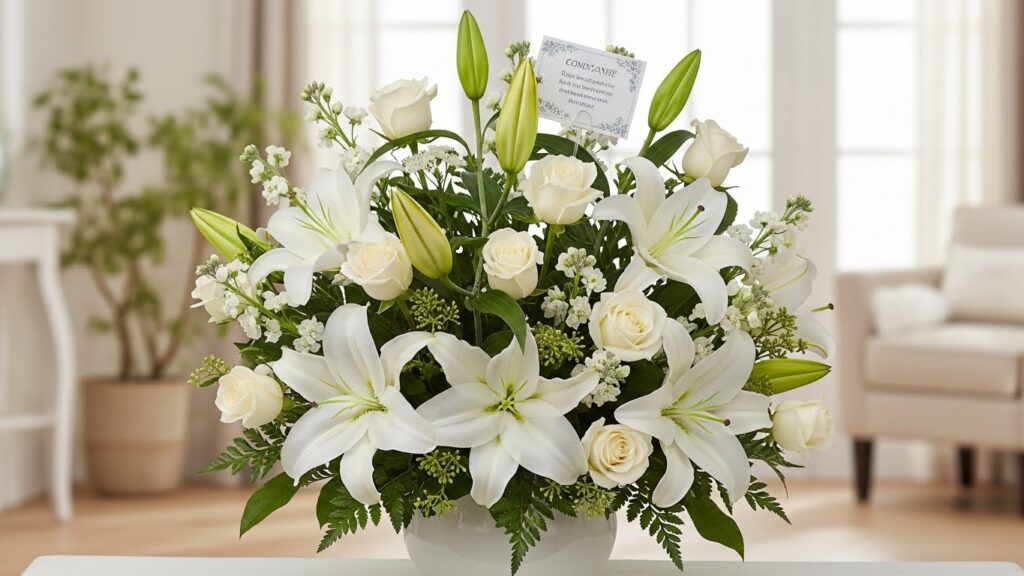
35 Heartfelt Sympathy Messages
For Close Friends and Family (1-10)
1. “In loving memory of [Name]. Your warmth, laughter, and kindness will forever remain in our hearts. With deepest sympathy and love.”
Best for: Close personal relationships where you knew the deceased well Why it works: Acknowledges specific qualities that made the person special
2. “Our hearts are broken with yours. [Name] was a beautiful soul who touched so many lives. Sending you strength, love, and prayers during this difficult time.”
Best for: Very close friends or family members. Why it works: Shares in their grief rather than standing apart
3. “Words cannot express our sorrow. [Name] brought light into this world, and that light will continue to shine through all who knew them. With love and deepest condolences.”
Best for: When the deceased had a notably positive impact. Why it works: Acknowledges inadequacy of words while still offering comfort
4. “In memory of [Name] – a cherished friend, loving [parent/sibling/spouse], and irreplaceable presence in our lives. May your memories bring comfort and peace.”
Best for: When you knew multiple roles the deceased played. Why it works: Recognizes their multifaceted life and relationships
5. “[Name] will be deeply missed but never forgotten. Their legacy of love and kindness lives on in all of us. Holding you close in thought and prayer.”
Best for: Someone who exemplified particular virtues. Why it works: Focuses on continuing impact rather than just loss
6. “Our dearest friend, gone but forever in our hearts. The memories we shared will comfort us always. With profound sympathy and enduring love.”
Best for: Personal friendships where shared memories exist. Why it works: Emphasizes the permanent nature of emotional bonds
7. “In celebration of [Name]’s remarkable life and in sympathy for your profound loss. May you find comfort knowing how deeply they were loved.”
Best for: When wanting to balance grief with celebration. Why it works: Acknowledges both the life lived and the loss felt
8. “Thinking of you during this heartbreaking time. [Name]’s spirit, humor, and generosity will remain with us forever. With love and sympathy.”
Best for: When specific personality traits stand out. Why it works: Personal details show genuine knowledge of the deceased
9. “There are no words adequate for your loss, but please know we share in your grief. [Name] was extraordinary, and we are blessed to have known them.”
Best for: Close relationships where you’re also deeply affected. Why it works: Honest about limitations while expressing shared loss
10. “In loving memory of [Name]. Though our hearts are heavy with sorrow, we find comfort in the beautiful memories and the love that will never fade.”
Best for: When you have many cherished memories together. Why it works: Balances grief with gratitude for time shared
For Colleagues and Professional Relationships (11-17)
11. “With heartfelt sympathy from your colleagues at [Company Name]. Our thoughts are with you and your family during this difficult time.”
Best for: Professional office collections. Why it works: Appropriate professional tone with genuine care
12. “In memory of [Name] – a valued colleague and friend. Their professionalism, kindness, and dedication will be greatly missed by all who had the privilege of working with them.”
Best for: When a colleague has passed. Why it works: Honors both professional and personal qualities
13. “Please accept our deepest condolences on your loss. You and your family are in our thoughts. From your [department/team] family.”
Best for: Workplace sympathy from a department or team. Why it works: Professional yet warm, acknowledges work “family.”
14. “With sincere sympathy from the [Company Name] team. Wishing you peace and comfort during this challenging time.”
Best for: Corporate or organizational condolences. Why it works: Respectful formality appropriate for business context
15. “[Name] was a respected colleague and will be remembered fondly. Our thoughts and prayers are with you and your family.”
Best for: When the deceased was a coworker. Why it works: Acknowledges the professional relationship respectfully
16. “In sympathy for your loss. May you find strength in the support of those around you. With sincere condolences from [Company/Team Name].”
Best for: Professional condolences from organizations. Why it works: Focuses on support rather than trying to diminish grief
17. “Extending our heartfelt sympathy and support. You are in our thoughts during this sorrowful time.”
Best for: Brief professional messages. Why it works: Concise, sincere, and appropriate for professional settings
For Acquaintances and Distant Relationships (18-23)
18. “With deepest sympathy on your loss. Our thoughts are with you and your family.”
Best for: When you didn’t know the deceased personally. Why it works: Respectful and appropriate without overstepping
19. “Please accept our sincere condolences. Wishing you peace and comfort in the days ahead.”
Best for: Formal acquaintances or distant relatives. Why it works: Gracious without claiming a close relationship
20. “In sympathy and with caring thoughts. May you find solace in the love of family and friends.”
Best for: Neighbors or casual acquaintances. Why it works: Warm without being overly familiar
21. “Our hearts go out to you during this difficult time. With sincere sympathy and condolences.”
Best for: General sympathy from acquaintances. Why it works: Genuine caring without presuming closeness
22. “Thinking of you with sympathy and wishing you moments of peace and comfort.”
Best for: Brief messages when the relationship is distant. Why it works: Thoughtful without being elaborate
23. “With heartfelt condolences on your loss. May loving memories bring you comfort.”
Best for: Standard sympathy message for any relationship level. Why it works: Universal appropriateness and genuine sentiment

For Loss of Parents (24-27)
24. “In loving memory of your [mother/father]. The love between parent and child is eternal. May beautiful memories sustain you during this painful time.”
Best for: Loss of someone’s parent. Why it works: Acknowledges the unique parent-child bond
25. “Honoring the memory of your beloved [mother/father]. Their legacy lives on through you. With deepest sympathy and love.”
Best for: When you know the family well. Why it works: Recognizes the continuing influence of the parent
26. “With profound sympathy on the loss of your [mother/father]. May you find comfort in the lifetime of love and memories you shared.”
Best for: Close friends who’ve lost a parent. Why it works: Emphasizes the richness of the relationship
27. “In memory of your dear [mother/father]. Though words seem inadequate, please know you are surrounded by love and support during this heartbreaking time.”
Best for: When you want to express deep empathy. Why it works: Honest about limitations while offering support
For Loss of Spouse or Partner (28-30)
28. “In memory of your beloved [husband/wife/partner]. May the love you shared comfort you, and may precious memories sustain you in the days ahead. With deepest sympathy.”
Best for: Loss of a spouse or life partner. Why it works: Acknowledges the depth of the partnership
29. “No words can ease the loss of your soulmate. [Name] was a beautiful person, and your love story will inspire all who knew you. With heartfelt condolences.”
Best for: When you know the couple well. Why it works: Honors their relationship specifically
30. “With profound sympathy on the loss of your [husband/wife/partner]. May you find strength in the enduring love you shared and the support of those who care.”
Best for: Close friends or family. Why it works: Recognizes both past love and present support
For Loss of a Child (31-33)
31. “No words can express our sorrow for your unimaginable loss. [Name] brought joy and love into this world. Holding you in our hearts and prayers.”
Best for: The devastating loss of a child. Why it works: Acknowledges the incomprehensible nature of the loss
32. “In memory of precious [Name]. Though their time with us was far too brief, the love and joy they brought will never fade. With deepest sympathy.”
Best for: When a young person has passed. Why it works: Recognizes the tragedy while honoring the life
33. “There are no adequate words. We hold you in our hearts as you navigate this unbearable loss. [Name] will be forever loved and remembered.”
Best for: Parents who’ve lost a child. Why it works: Honest about the inadequacy of comfort while offering presence
Universal Messages for Any Loss (34-35)
34. “With sympathy and love. May memories of happier times bring comfort to your heart.”
Best for: Any relationship level or type of loss. Why it works: Simple, sincere, and universally appropriate
35. “In loving memory. Though grief is heavy now, may the love surrounding you provide strength and peace. With heartfelt condolences.”
Best for: All circumstances. Why it works: Balances acknowledgment of pain with hope for comfort
Additional Elements to Consider
When to Include Religious or Spiritual References
Appropriate situations:
- You know the family’s faith tradition
- The funeral is held in a religious setting
- Religious comfort would be welcomed
Examples of religious additions:
- “May God’s love surround you.”
- “In our prayers during this difficult time.”
- “May [Name] rest in eternal peace.”
- “With faith in God’s mercy and love.”
When to avoid: If you’re unsure of the family’s beliefs, keep messages secular and focused on memory, love, and support.
Choosing Appropriate Flowers
Traditional Sympathy Flowers
Lilies: Symbolize the restored innocence of the departed soul
Roses: Express love (red), friendship (yellow), or innocence (white)
Chrysanthemums: A traditional funeral flower in many cultures
Carnations: Long-lasting and symbolize love and remembrance
Gladiolus: Represents strength of character
Orchids: Convey eternal love
Cultural Considerations
Western traditions: White flowers symbolize peace and purity
Asian traditions: White flowers are traditional; avoid red (celebration)
Some cultures: Yellow flowers represent death; research before sending
Personal preferences: Always trump traditional symbolism when known
Alternative Ways to Express Sympathy
Beyond Flowers
Sometimes actions speak louder than flowers:
Memorial Donations: “In place of flowers, a donation has been made to [Charity] in memory of [Name]”
Food Delivery: Practical support during difficult times
Service Offers: “Please let us know how we can help” followed by specific offers
Memorial Trees: Living tributes through organizations like The National Forest Foundation
Memory Books: Compile photos and stories for the family
Following Up After Sending Flowers
Continuing Support
Sending flowers is just the beginning. Meaningful support continues:
One Week Later: Check in with a call or message
One Month Later: Acknowledge that support hasn’t forgotten them
Important Dates: Remember birthdays, anniversaries, and death anniversaries
Specific Help: “I’m bringing dinner Thursday” beats “Let me know if you need anything.”
Special Circumstances
Sudden or Tragic Loss
Approach: Acknowledge the shock and pain without details. Example: “We are heartbroken by this devastating loss. [Name] will be deeply missed. We are here for you.”
Loss After Long Illness
Approach: Recognize both relief and grief. Example: “Though [Name]’s suffering has ended, we know your pain is profound. Honoring their courageous battle and celebrating their life.”
Miscarriage or Stillbirth
Approach: Acknowledge the baby as a real person. Example: “In memory of your precious baby. Your little one was deeply loved and will never be forgotten. With heartfelt sympathy.”
Loss of Pet
Approach: Recognize the genuine grief of pet loss. Example: “In loving memory of [Pet Name], who brought so much joy and unconditional love. Our hearts are with you during this difficult time.”
Final Thoughts: The Gift of Presence
The most important thing to remember is this: Your gesture matters more than perfect words. Bereaved families rarely remember exact wording, but they always remember who showed up, who reached out, and who acknowledged their loss.
Flowers with a heartfelt message say:
- “I’m thinking of you.”
- “Your loved one mattered.”
- “You’re not alone in your grief.”
- “This loss is worth acknowledging.”
Whether you choose an elaborate message or a simple “With sympathy and love,” your acknowledgment of their loss provides comfort during one of life’s most difficult experiences. For more content like this, go to Queposts.
Choose a message that feels authentic to your relationship, write it with sincerity, and know that your gesture—however imperfect it may feel to you—brings light during a very dark time.